Showing posts with label London zoo. Show all posts

Thursday, 21 February 2019

London Zoo Sumatran tiger Melati killed in fight


8 February 2019
An endangered Sumatran tiger has been killed by another tiger at London Zoo.
Male tiger Asim was brought to the zoo from a Danish safari park 10 days ago in the hope he would be the "perfect mate" for long-term resident Melati.
After spending time apart in the tiger enclosure to get used to the new arrangement, the two were then introduced to each other earlier.
But tensions "quickly escalated", things became "more aggressive" and Melati died in a fight, the zoo said.
A statement issued by the zoo said Asim was immediately moved to a separate paddock but despite the best efforts of the vets, 10-year-old Melati died.
It said: "Our focus right now is on caring for Asim, as we get through this difficult event."
Staff are "heartbroken by this turn of events", the zoo said.

Wednesday, 19 October 2016

Gorilla recaptured after escape at London zoo


Animal reportedly shot with tranquiliser dart after zoo said it was ‘managing an incident’
Kevin Rawlinson and agencies

Thursday 13 October 2016 18.52 BST Last modified on Friday 14 October 2016 12.01 BST 

London zoo was placed under lockdown on Thursday after a gorilla escaped from its enclosure.
Armed police were called to the central London attraction and visitors were evacuated as keepers tried to recapture the animal.

But Malcolm Fitzpatrick, curator of mammals at the zoo, described the escape of Kumbuka as a “minor incident” in which the male gorilla got into a secure keeper area that was not open to the public. 

Fitzpatrick said the western lowland had been tranquilised before being returned to the Gorilla Kingdom, where he was “up and grumbling and interacting with the rest of his gorilla family”.

He added: “It was a safe, secure keeper area, so at no time did he actually get out into the zoo.

“At no time were any of our visitors in any danger. The gorilla did not get out of the safe space, there were only about 100 visitors, it was the end of the day and I would like to thank all of those visitors for co-operating and moving in to buildings.”

Fitzpatrick said keepers would be staying on into the evening to check up on Kumbuka and giving him his “favourite treats”. 

Thursday, 4 June 2015

London zoo scraps Zoo Late parties

Friday night events that prompted a series of petitions over rowdy behaviour of visitors and their impact on animals is replaced by family-friendly Sunset Safaris


Thursday 4 June 2015 11.43 BST

London Zoo has retired its alcohol-fuelled Friday night Zoo Late parties in favour of more sedate, family-friendly events.

The move follows the Guardian revealing last year that sources at the zoo were concerned at the impact of visitors’ rowdy behaviour on animals after a series of incidents including a man pouring a beer over a tiger.

The revelations prompted a series of petitions signed by tens of thousands of people calling on the zoo to end the parties, and an investigation by Westminster council.

The new format, rebranded as Sunset Safaris, begins this Friday. Unlike the previous events, the gorilla kingdom, one of the zoo’s main attractions, will be off-limits to visitors due to the birth of a baby gorilla. The Guardian last year saw crowds at a Zoo Late event in the gorilla area shouting beneath a sign asking visitors to be quiet.

The zoo said the events manager who oversaw the Zoo Lates resigned in November last year, though the Guardian understands she was sacked. Sources at the zoo who raised the initial alarm over the evenings said they were “delighted” and the change of format “speaks volumes”.

Sunday, 9 November 2014

Live Meerkats at London Zoo broadcast using whitespace - via D R Shoop

Watch the meerkats live at ZSL London Zoo from our TV white space camera. 

This feed will be live for two months as part of a joint ZSL, Google and Ofcom trial to test the capabilities of TV white space technology. 


White spaces is the name given to parts of spectrum that are unused in a particular location and time. White space technology is now being piloted in the UK and the pilot is among the first of its kind in Europe. The pilot will use the white spaces that exist between airwaves primarily used for digital terrestrial TV broadcasting (470 MHz to 790 MHz).

Saturday, 13 September 2014

World’s rarest frogs saved from extinction and released in the Caribbean

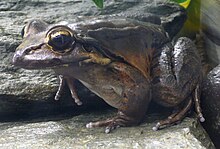
Leptodactylus fallax (1).jpgOne of the world’s rarest frogs, the mountain chicken frog, bred as part of an international project to save the species from extinction, has been successfully returned to its Caribbean home ahead of the global day on Saturday to highlight the plight of their species.

Fifty one Critically Endangered mountain chicken frogs, native only to the islands of Montserrat and Dominica, were released back onto Montserrat this summer following a hugely successful breeding programme at Zoological Society of London (ZSL) London Zoo.

In 2009 it was reported by conservationists from ZSL and the Durrell Wildlife Conservation Trust that the wild population of mountain chicken frogs in Montserrat had severely declined due to disease, and urgent action was needed to safeguard their future.

The frogs had been decimated by the spread of the Chytrid fungus, Batrachochytrium dendrobatidis, and facing the very real threat of extinction. A small population of the last remaining healthy frogs was airlifted from Montserrat in a dramatic rescue mission.

Transported to three custom-built centres at ZSL London Zoo, Durrell in Jersey and Parken Zoo in Sweden, the 50 rescued frogs were the founders of the conservation breeding programme established to preserve and develop a healthy population of the animals, which would have otherwise undoubtedly been destroyed by the fungal disease.

The Mountain Chicken Recovery Programme is a partnership between Durrell Wildlife Conservation Trust, ZSL, North of England Zoological Society Chester Zoo, Nordens Ark and the Governments of Montserrat and Dominica.

Tuesday, 15 July 2014

Rare crocociles born in UK for first time


10 July 2014, 10:31

Keepers at London Zoo have welcomed the first ever Philippine crocodiles to be bred in Britain.

The six new-born critically-endangered crocs - born over a 48 hour period - are among the world's rarest reptiles.

As they are native only to the Philippines the baby crocodiles were named after the islands they typically inhabit; Jolo, Luzon, Mindoro, Samar, Sulo, and Mindanao.

It is hoped that their arrival will help to boost the numbers of the species which has been hit by habitat loss and hunting for their skins.

The parent crocodiles. which play a significant role in the European breeding programme for the species, were born at a conservation centre in the Philippines.

Deputy Head of the Reptile House, Iri Gill, said: "The arrival of these six Philippine crocodiles at ZSL London Zoo is a massive cause for celebration for us, and we couldn't be more thrilled.

Friday, 18 April 2014

New London Zoo triplet tiger cubs in 'rude health'

Six months after a rare tiger cub died, London Zoo's new triplet cubs have been given a clean bill of health.

The Sumatran tigers born in February were examined, sexed, vaccinated and micro-chipped.

They were born in February to five-year-old Sumatran tigress Melati whose last cub - the first tiger to be born at London Zoo in 17 years - was found drowned aged four weeks.

Nic Masters, head vet at London Zoo, said they were in "rude health".

Saturday, 4 January 2014

Two by two: London Zoo counts its many inhabitants

LONDON (AP) — From aardvarks to zebras, the residents of London Zoo are coming forth to be counted.

Dozens of zookeepers — carrying clipboards and even snacks to coax out the most reluctant creatures — set out Thursday to record every resident mammal, bird, fish, invertebrate, reptile and amphibian as part of the zoo's annual animal census.

The zoo is home to some 19,000 animals of more than 850 species, from 400-pound (185 kilogram) silverback gorillas to insects such as the tiny leaf-cutter ant.

Ants and other extremely tiny creatures are counted in colonies, but all others are recorded individually.

Monday, 23 December 2013

Worldwide appeal finds last remaining Madagascan fish

ZSL London Zoo’s international campaign finds lost Mangarahara cichlids in the wild 

December 2013: Aquarists at ZSL London Zoo are celebrating the success of a worldwide appeal to find a female mate for a critically-endangered fish species – after a small population was found in remote Madagascar.

The Mangarahara cichlid (Ptychochromis insolitus) was believed to be lost in the wild due to intense deforestation and river diversions created for rice farming and agriculture drying up its native habitat of the Mangarahara River in Madagascar, and two of the last known individuals – both male – were residing in ZSL London Zoo’s aquarium.

Wednesday, 16 October 2013

London Zoo newborn Sumatran tiger cub found dead

London Zoo's newborn Sumatran tiger cub has drowned, the zoo has confirmed.

Five-year-old Sumatran tiger Melati gave birth to the cub on 22 September after a six-minute labour. The cub was the first tiger to be born at the zoo for 17 years.

On Saturday, zookeepers could not see the cub on the den cameras and its body was later discovered on the edge of a pool inside the enclosure.

A post-mortem test conducted on Sunday confirmed the cub had drowned.

It is thought that Melati carried the cub outside the den, but keepers are unclear as to how the cub got into the pool as there are no cameras in the wider enclosure.

The cub was born six months after the opening of the "tiger territory", designed to encourage the endangered sub-species of tiger to breed.

Melati's pregnancy lasted 105 days and was kept secret by zookeepers, who maintained a careful watch on the first-time mother through hidden cameras so they would not disturb her.

Monday, 13 May 2013

London Zoo launches worldwide appeal to find and save Critically Endangered fish

Male Seeking Female: Must Want Kids 

May 2013. Fish experts at ZSL London Zoo have launched an urgent worldwide appeal to find a female mate for the last remaining males of a critically endangered fish species.


Extinct in the wild - Only captive fish are male
The Mangarahara cichlid (Ptychochromis Insolitus) is believed to be extinct in the wild, due to the introduction of dams drying up its habitat of the Mangarahara River in Madagascar, and two of the last known individuals are residing in ZSL London Zoo's Aquarium. And as if the situation wasn't dire enough for this tropical fish species, the individuals at ZSL London Zoo are unfortunately both male. 

None known in captivity
The Curator of the Aquarium at ZSL London Zoo, Brian Zimmerman, along with colleagues at Zurich Zoo in Switzerland set about trying to find other Mangaraharan cichlids in zoos around the world - using international zoo and aquarium associations to reach as many experts and aquarists as possible, but had no luck finding surviving females. 

Thursday, 7 March 2013

London zoo to create map of city's cats


LONDON (AP) — The London zoo is taking stock of an animal you don't often find behind bars, launching what it says is the first interactive map of the British capital's domestic cats.
The zoo said Friday that its interface would allow Londoners to upload scientific survey-style photos, descriptions, and locations of their cats — creating a capital-wide census of the city's felines.

The map may not ultimately have much in the way of scientific value, but it could prove popular among Britain's cat owners.

Even ahead of its official launch, the site was filling up with dozens of felines, along with tongue-in-cheek field notes.

Among the early entrants was Ollie, a ginger cat from north London who "likes fish and octopus toy (but) dislikes biscuits." Another was Dorothy, a black tabby from south London who "has intimacy issues."

Quality control doesn't appear to be a strong suit of the site. At least one person uploaded a picture of a "Nyancat," the name given by Internet pranksters to an animated, space-dwelling cat with the body of a Pop-Tart.

But the other listings appeared legitimate and the map was already yielding its first figures. Nearly half of Britain's domestic cats are black or gray, according to the map, and roughly one-sixth are ginger or rust-colored.

Continued: http://news.yahoo.com/london-zoo-create-map-citys-cats-000247404.html;_ylt=ApXkSn1rl_jICPLtRJx8CGd4hMgF;_ylu=X3oDMTRhYm9jOXZiBG1pdANUb3BTdG9yeSBTY2llbmNlU0YgQW5pbWFsUGV0c1NTRgRwa2cDYWU0ZjdlNjQtMjUxNi0zYWQ2LThjYWMtOGJmNjI3NTMwNDQxBHBvcwM0BHNlYwN0b3Bfc3RvcnkEdmVyA2M5NzYwMDUxLTgyMDQtMTFlMi1iZmVmLWRkNzE2NDI4MDAzNg--;_ylg=X3oDMTI0MmNvNGRoBGludGwDdXMEbGFuZwNlbi11cwRwc3RhaWQDBHBzdGNhdANzY2llbmNlfGFuaW1hbHNhbmRwZXRzBHB0A3NlY3Rpb25z;_ylv=3

Sunday, 17 February 2013

Tortoise sex encouraged by French pianist Richard Clayderman at London Zoo

Endangered Galapagos tortoises in London zoo are serenaded by French pianist Richard Clayderman in a bid to make them mate. Clayderman hopes that the stunt will draw attention to the endangered tortoises' dwindling numbers. Despite being serenaded for the entire day, 70-year-old tortoise Dirk failed to copulate with Delores, Dolly, Priscilla or Polly


http://www.guardian.co.uk/environment/video/2013/feb/08/tortoise-sex-piano-richard-clayderman-video

Wednesday, 1 August 2012

London Zoo Mountain Chicken Frogs Making A Comeback, Produce Offspring


Critically endangered frogs rescued from possible extinction at the hands of a deadly fungus have successfully bred for the first time at the London Zoo, various media outlets reported Sunday.
According to Telegraph Science Correspondent Richard Gray, the mountain chicken frogs had been rescued from the island of Montserrat, where they had been threatened by the spread of the Chytrid fungus. Chytridiomycosis, a disease associated with that microbe have been wreaking havoc on amphibians all over the world, leading scientists to rescue 50 of the frogs and airlift them to the UK.
“Housed in a bio-secure, temperature-controlled breeding unit at the Zoological Society of London, two of the rescued females have now produced 76 young,” Gray said. “The mothers laid eggs in a self-made foam nest and guarded them as they developed into tadpoles, which they then fed every three to five days with unfertilized eggs… The offspring will be released back into a protected and disease-free area of the wild when they are fully grown.”
“We’re absolutely chuffed to bits,” Dr. Ian Stephen, a herpetologist at the zoo, told BBC Nature Reporter Matt Bardo. Twelve of the 50 rescued mountain chicken frogs were transported to the London Zoo, where they have been living in a biologically secure breeding unit since their arrival, Bardo said. Stephen told the BBC that he is hopeful that most of the offspring will survive and be able to be returned to the Caribbean once they become adults.

redOrbit (http://s.tt/1jpaQ)

Continued:  http://www.redorbit.com/news/science/1112665540/london-zoo-mountain-chicken-frogs-comeback/

Saturday, 14 May 2011

London Zoo's baby gorilla 'Tiny' killed in attack

Tiny the gorilla Tiny died after being injured by a new silverback male

A baby gorilla nicknamed "Tiny" by keepers at London Zoo has died after an attack by a new male silverback.

The seven-month-old western lowland gorilla was injured on Thursday when he and his mother Mjukuu were introduced to new male Kesho for the second time.

During a scuffle between the whole group the baby suffered a broken arm and suspected internal injuries.

The infant gorilla underwent a three-hour operation to pin his arm but vets were unable to revive him.

Zoological Society of London (ZSL) director David Field said everyone at the zoo was "completely heartbroken".

Kesho's arrival last year was recommended by experts to create a cohesive social group, after the death of the zoo's previous male gorilla.

In the wild male gorillas often attack the offspring of their rivals, so staff were cautious about introducing Kesho to the baby, who was the offspring of the former male.

Kesho had been gradually introduced to the two other female gorillas at the zoo but keepers waited many months for an introduction to the youngster and his mother.

Mr Field said Mjukuu had begun to interact confidently with Kesho and the The first introduction on Wednesday "went very well".

'Utterly devastated'

Kesho asserted his authority during a second attempt on Thursday, and during a scuffle between the whole group the baby's arm was seriously injured.

The gorillas were separated and the baby taken to the on-site vet hospital.

When he was brought off the anaesthetic, Tiny was unable to breathe by himself, and vets suspected he had also sustained internal injuries.

Despite repeated efforts he could not be revived, ZSL said.

Mr Field said: "We knew this was going to be an extremely difficult situation for the gorillas and their keepers and we've always been open about the challenges we would face introducing a new male in such difficult circumstances.

"Everyone here is utterly devastated. Although we had tried to be prepared for the worst, we are all completely heartbroken by this."

Keepers returned the baby's body to Mjukuu so she could come to terms with his death.

A post-mortem examination will be carried out and gorilla introductions between the adults will continue in order to create a stable, secure group, ZSL said.

http://www.bbc.co.uk/news/uk-england-london-13395331

Related Posts with Thumbnails

ShareThis