Showing posts with label climate change. Show all posts

Sunday, 1 March 2020

Hundreds of thousands of mussels cooked to death on New Zealand beach in heatwave

Northland residents describe ‘heartbreaking’ find as experts warn climate crisis could make it a more frequent sight

Hundreds of thousands of mussels have been cooked to death on a beach in New Zealand’s North Island, with experts saying more will die as the effects of the climate crisis accelerate.
The mass die-off in Northland was sparked by “an exceptional period of warm weather” combined with low tides in the middle of the day, which had exposed the shellfish, said Dr Andrew Jeffs, a marine scientist from the University of Auckland.
He said more marine life would soon be affected by climate change, and there was little that that could be done to protect the vulnerable shellfish, other than manual protection measures such as shadecloth, which were impractical and “unrealistic”.
Northland is experiencing drought conditions, with many parts of the region not seeing rain for a record-breaking 40 plus days. The effects of the drought have been severe, with Kiwi birds perishing as they search for water, and tankers of freshwater urgently trucked in to fill rainwater tanks in remote communities.

Sunday, 1 December 2019

Tropical fish shredding kelp forests in temperate zones

NOVEMBER 21, 2019 


Climate change is causing previously temperate oceans to become more tropical with coral reef fish moving south, settling in and changing how things work in their new temperate neighborhood, according to a study by The University of Western Australia and international researchers. 

The research, published today in Proceedings of the Royal Society B: Biological Sciences describes that as climate change is progressing, species from the tropics are shifting their distribution to cooler environments at higher latitudes around the world, settling on new temperate ecosystems in a process known as tropicalization. 

Salvador Zarco Perello, from UWA's School of Biological Sciences and Oceans Institute, said the researchers investigated the expansion of the tropical herbivore rabbitfish Siganus fuscescens on kelp forest in Western Australia. 

"Our research provided important evidence about how ecologically important tropical fish species moving south can impact the functioning of temperate reefs," Mr Zarco Perello said. 

These fish are eating canopy-forming seaweeds, which in turn threatens the habitats of those living there first, the team says. 

Additionally, by chewing up these habitat-forming seaweeds, the researchers say the poleward-journeying fish are increasing the detritus production; feeding different groups of invertebrate sea life and potentially changing the abundance of the species that recycle this biomass and, in turn, those that consume them. 

Around the world, important herbivorous fish including rabbitfish, parrotfish, surgeonfish and drummers are increasing in abundance in temperate seaweed forests. 

"Our research showed that the expansion and persistence of rabbitfish on WA kelp forests, following a marine heatwave in 2011, has led to a five-fold acceleration in kelp shredding year-round," Mr Zarco Perello said. "This is transforming solid kelp blades into micro particulate matter, a function usually attributed to invertebrates, such as sea urchins. 

Sunday, 10 November 2019

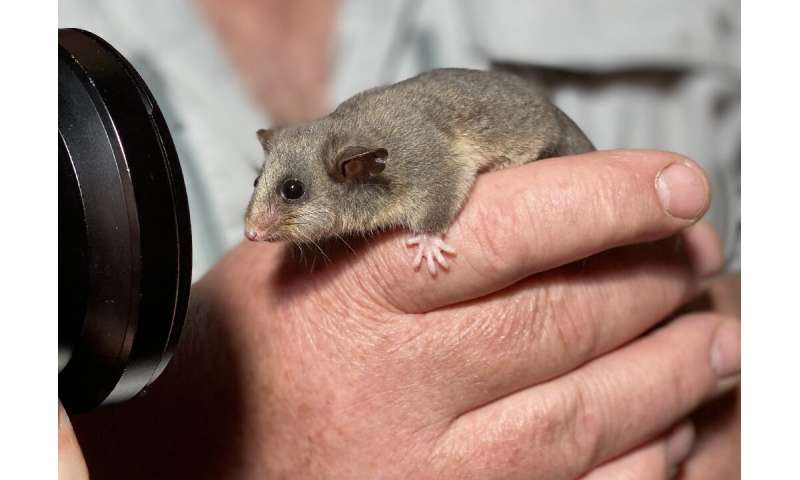
Aussie researchers mount rescue bid for endangered pygmy possum

NOVEMBER 4, 2019


The tiny mountain pygmy possum lives in Australia's alpine regions but less than 2,500 remain in the wild, according to estimates, with winter snowfall declines and warmer weather threatening extinction

Climate change is threatening to wipe out Australia's critically endangered mountain pygmy possum, but researchers are hoping to save the hibernating species by relocating the last remaining mammals to cooler lowlands.

The tiny mammal lives in alpine regions but less than 2,500 remain in the wild, according to estimates, with winter snowfall declines and warmer weather threatening extinction.

The possums hibernate deep inside humid rock piles that are insulated by snow during winter and provide shelter from high summer temperatures that can prove fatal.

The species—Australia's only hibernating marsupial—needs temperatures to hover just above freezing to hibernate successfully, but without enough snow the cold air outside penetrates the rocks and chills the atmosphere inside, University of New South Wales (UNSW) associate lecturer Hayley Bates said Monday.

"Anything less than 0.6 Celsius will wake them from their hibernation and they can shiver and starve to death," she added.

"You just need two bad winters like this and the species could collapse."

Scientists at UNSW have started a breeding program in a lowland area of New South Wales state in an attempt to acclimatise the possums to a new home, with hopes of establishing an inital colony of 25 animals.

Sunday, 15 September 2019

Climate change could bring short-term gain, long-term pain for loggerhead turtles - via Herp Digest


Date: September 5, 2019
Source: Florida State University

An overwhelming scientific consensus affirms that for thousands of species across the globe, climate change is an immediate and existential threat.

For the loggerhead turtle, whose vast range extends from the chilly shores of Newfoundland to the blistering beaches of Australia, the story isn't so cut and dried.

New research from conservation biologists at Florida State University and their collaborators suggests that while some loggerheads will suffer from the effects of a changing climate, populations in certain nesting areas could stand to reap important short-term benefits from the shifting environmental conditions.

In an investigation of 17 loggerhead turtle nesting beaches along the coast of Brazil, scientists found that hatchling production -- the rate of successful hatching and emergence of hatchling turtles -- could receive a boost in temperate areas forecasted to warm under climate change. But those improvements could be relatively short lived.

"Even though hatchling success is projected to increase by the year 2100 in areas that currently have lower temperatures, it is likely that as climate change progresses and temperatures and precipitation levels approach negative thresholds, hatchling production at these locations will start to decrease," said study author Mariana Fuentes, an assistant professor in FSU's Department of Earth, Ocean and Atmospheric Science.
The study was published in the journal Scientific Reports.

During the incubation process, marine turtle eggs are heavily influenced by their environments. Air and sand temperatures can determine the sex of hatchlings, spikes in moisture content can drown developing embryos, and excessive solar radiation exposure can affect turtles' morphology and reduce their chances of survival.

In their study, the FSU researchers evaluated current and projected hatchling production under a variety of different environmental conditions throughout the expansive Brazilian coastline.

In the northern equatorial nesting beaches where temperatures already soar, the team found persistent and accelerating climate change will increase air temperatures and escalate precipitation beyond the thresholds for healthy incubation -- a major hit to hatchling production.

For the temperate beaches farther down the coast, climate change will bring similar increases in air temperature and precipitation. But, hundreds of miles from the equator, the effects of those changes look considerably different.

"These cooler beaches are also predicted to experience warming air temperatures; however, productivity is predicted to increase under both the extreme and conservative climate change scenarios," said former Florida State master's student Natalie Montero, who led the study.
Over the coming decades, as the climate shifts and temperatures climb, these conventionally cooler beaches will become more suitable for healthy loggerhead incubation. But if climate change continues unabated, "these beaches could also become too warm for successful production, much like the warmer beaches in our study," Montero said.

The researchers also stress that changes associated with a warming climate -- beach erosion, unchecked coastal development and environmental degradation, for example -- pose urgent threats to marine turtle nesting beaches at all latitudes, regardless of air temperature or precipitation.

And while contemporary and future shifts in climate conditions could benefit select loggerhead populations, well-documented warming trends suggest the long-term prospects of these and other ancient sea turtle species remain precarious.

"Sea turtles have been around for a long time and have survived many changes to the global climate," Montero said. "However, climate changes of the past took a long time, allowing sea turtles to adapt to the changing conditions. Today's climate change is happening very quickly, and therefore sea turtles must adapt quickly or perish."

Story Source:
Materials provided by Florida State University. Original written by Zachary Boehm. Note: Content may be edited for style and length.

Journal Reference:
  1. Natalie Montero, Pilar Santidrian Tomillo, Vincent S. Saba, Maria A. G. dei Marcovaldi, Milagros López-Mendilaharsu, Alexsandro S. Santos, Mariana M. P. B. Fuentes. Effects of local climate on loggerhead hatchling production in Brazil: Implications from climate change. Scientific Reports, 2019; 9 (1) DOI: 10.1038/s41598-019-45366-x

Sunday, 25 August 2019

Lizards from cold climates may face rapid extinctions in next 60 years, study shows - via Herp Digest


Lizards that produce live young are significantly more likely to be driven to extinction through climate change than those that lay eggs, new research suggests.

The study, involving Nottingham Trent University and the University of Lincoln, suggests that live-bearing lizards face high risks of extinction within the next 60 years, driven predominantly by rising temperatures.
Researchers investigated how strategies for reproduction that live-bearing (viviparous) or egg-laying (oviparous) modern lizards evolved in the past can affect their chance to survive ongoing climate change caused by humans.

As part of the work, the team argue they have confirmed the emerging 'cul-de-sac' theory, which suggests that live-bearing reproduction evolved in lizards that colonized cold climates, such as high elevations and latitudes.

This adaptation, however, is dragging them to extinction.

The theory—developed by NTU's Dr. Daniel Pincheira-Donoso—suggests that following colonization of those harsh environments, mothers 'retained' the eggs in their bodies to act as incubators, and this provided embryos with stable conditions of temperature and oxygen.
It is thought that, over time, this egg retention evolved into birthing live young.

Reproducing live young is not very effective in hot environments, however, and once reptiles evolve in this way, they remain 'trapped' in cold areas.
As climate warming rapidly progresses towards higher elevations and latitudes, the 'suitable' cold climates where live birthing species live will be pushed towards mountain tops and continent edges until lizards run out of space and are eventually wiped out.

The study looked at three groups of highly-diverse lizards from South America: one which only has viviparous species, one with only oviparous species, and one which has evolved both forms of reproduction.

To investigate whether ongoing climate change will cause extinctions predicted by the theory, the researchers used computational modeling of current climate change, combined with real data on the conditions that lizards live under.

Their team, led by Dr. Pincheira-Donoso, found that live-bearing species will displace towards the mountain tops at significantly faster speeds than egg-laying species—displacing at a rate of 0.3% of the current geographical range per year.

While this means that viviparous lizards will face high extinction risks within just six decades, oviparous species will remain largely unaffected. Of all the climatic factors studied, temperature was the dominant factor responsible for these extinctions.

"Human-induced climate change has forced the modern world to face one of the most severe periods of global-scale extinctions of species since life began," said researcher Dr. Daniel Pincheira-Donoso, a bioscientist at Nottingham Trent University.

He said: "Our results highlight the extent of the extinction crisis that modern biodiversity is currently facing. By 2080, more than half of the current 'cold lands' in the area we investigated in South America will have become warm, leading current resident species to extinction.

"Extinction risks are known to increase as a result of rapid climatic alterations and environmentally sensitive species traits that fail to adapt to those changes.

"Viviparous lizards appear to have undergone a 'double-edged adaptation' – life births evolved because it was the critical adaptation that reptiles needed to colonize cold climates, but it will also accelerate their extinctions.

"This work provides us with an opportunity to identify specific areas that need more urgent protection—such as high mountain elevations where extinction risks will concentrate.

"This phenomenon would apply to other reptiles, such as snakes, anywhere in the world.”

Researcher Manuel Jara, who was at the University of Lincoln when the work was carried out, added: "Live-bearing lizards are predicted to follow their dramatically shrinking cool habitats, increasing their risk of extinction."

More information: Manuel Jara et al. Alternative reproductive adaptations predict asymmetric responses to climate change in lizards, Scientific Reports (2019). DOI: 10.1038/s41598-019-41670-8
Journal information: Scientific Reports 

Monday, 19 August 2019

Mass starvation of reindeer linked to climate change and habitat loss


AUGUST 6, 2019
by Ilona Kater, The Conversation
Reindeer are incredibly hardy creatures—they survived the last Ice Age and today live in some of the world's most inhospitable landscapes. Despite their fine-tuned adaptations to life in the Arctic and after over 600,000 years of living there, reindeer are struggling to survive the rapid changes happening all around them.
In the winter of 2013-14, 61,000 reindeer starved to death in the Yamal peninsula of Russia. The population crashed, devastating the Yamal Nenets—an indigenous people who herd the reindeer for food. A more recent census found that 200 reindeer in Svalbard, Norway didn't survive the winter of 2018-19.
These mass starvations were largely due to climate change, which is causing unusual spikes of warm winter weather in the Arctic. The higher winter temperatures cause snow to melt and refreeze, or to fall as rain which also refreezes. The icy sheet encases lichen on the ground—the reindeers' main winter food supply. The reindeer can't dig through it and often the ice freezes over such a large area that they starve while wandering, trying to reach the plants they can smell beneath them.

Sunday, 4 August 2019

Forest elephants are allies in the fight against climate change, finds research


JULY 17, 2019

by Ahimsa Campos-Arceiz, The Conversation
Forest elephant extinction would exacerbate climate change. That's according to a new study in Nature Geoscience which links feeding by elephants with an increase in the amount of carbon that forests are able to store.
The bad news is that African forest elephants—smaller and more vulnerable relatives of the better known African bush elephant—are fast going extinct. If we allow their ongoing extermination to continue, we will be also worsening climate change. The good news is that if we protect and conserve these elephants, we will simultaneously fight climate change.
Elephants are fascinating animals, and I have studied them for more than 15 years. They are intelligent, sentient, and highly social. But their single most remarkable feature is their size. Evolutionarily, elephants gambled on becoming massive enough to deter predators like lions and tigers.
In exchange, they became slaves to their appetite. Elephants need huge amounts of food everyday, something like 5-10 percent of their body mass. A typical three-tonne female could eat 200 kg of plant material in one day. Her family may need to consume more than a tonne of food per day.

Sunday, 21 July 2019

No new males: Climate change threat to Cape Verde turtles


JULY 11, 2019
Rising temperatures could mean no male loggerhead turtles hatch at a key breeding ground by the end of this century, new research suggests.
The University of Exeter study also warns that—by 2100—more than 90% of loggerhead nests on the Cape Verde islands could incubate at "lethally high temperatures," killing turtles before they hatch.
The sex of turtle hatchlings is determined by incubation temperature, and this study combined current temperature and hatchling data with projections from the Intergovernmental Panel on Climate Change (IPCC).
Even under a scenario based on low future emissions and warming, by 2100 just 0.14% of hatchlings would be male.
Under mid and high-emissions scenarios, hatching of male loggerheads could cease entirely.
"Cape Verde hosts one of the largest nesting population of loggerhead turtles in the world—up to 15% of the global nesting total," said Dr. Lucy Hawkes, of the University of Exeter.
"We estimate that 84% of current hatchlings are female, and warmer temperatures will increase this proportion.

Sunday, 9 June 2019

Climate change affects the genetic diversity of a species


An analysis of the alpine marmot's genome
Date:  May 24, 2019
Source:  Charité - Universitätsmedizin Berlin
What effects does climate change have on the genetic diversity of living organisms? In a new study, researchers studied the genome of the alpine marmot. Results were unexpected: the species was found to be the least genetically diverse of any wild mammal studied to date. The alpine marmot has lost its genetic diversity during ice-age related climate events and been unable to recover its diversity since.
What effects does climate change have on the genetic diversity of living organisms? In a study led by Charité -- Universitätsmedizin Berlin, an international team of researchers studied the genome of the alpine marmot, an ice-age remnant that now lives in large numbers in the high altitude Alpine meadow. Results were unexpected: the species was found to be the least genetically diverse of any wild mammal studied to date. An explanation was found in the marmots genetic past. The alpine marmot has lost its genetic diversity during ice-age related climate events and been unable to recover its diversity since. Results from this study have been published in the journal Current Biology.
A large rodent from the squirrel family, the alpine marmot lives in the high-altitude mountainous terrain found beyond the tree line. An international team of researchers has now successfully deciphered the animal's genome and found the individual animals tested to be genetically very similar. In fact, the animal's genetic diversity is lower than that of any other wild mammal whose genome has been genetically sequenced. "We were very surprised by this finding. Low genetic diversity is primarily found among highly endangered species such as, for instance, the mountain gorilla. Population numbers for the alpine marmot, however, are in the hundreds of thousands, which is why the species is not considered to be at risk," explains Prof. Dr. Markus Ralser, the Director of Charité's Institute of Biochemistry and the investigator with overall responsibility for the study, which was co-led by the Francis Crick Institute.

Thursday, 30 May 2019

Climate driving new right whale movement


MAY 29, 2019

A North Atlantic right whale breaches. New research shows that rapid warming in the Gulf of Maine's depths is changing food availability and increasing risk to these whales -- one of the world's most endangered animals. Credit: Anderson Cabot Center for Ocean Life, New England Aquarium
New research connects recent changes in the movement of North Atlantic right whales to decreased food availability and rising temperatures in Gulf of Maine's deep waters. Right whales have been showing up in unexpected places in recent years, putting the endangered species at increased risk. The study, which was published in Oceanography and conducted by scientists from more than 10 institutions, provides insights to this key issue complicating conservation efforts.
"The climate-driven changes rippling throughout the Gulf of Maine have serious consequences for the small number of remaining right whales," said Nick Record, a senior research scientist at Bigelow Laboratory for Ocean Sciences and lead author on the paper. "Climate change is outdating many of our conservation and management efforts, and it's difficult to keep up with the rapid evolution of this ecosystem."

Sunday, 26 May 2019

Climate change threatens 26 native species in Great Dividing Range, study finds


Australian researchers say governments must step up and protect critical habitats to give wildlife a chance
Thu 16 May 2019 00.00 BSTLast modified on Thu 16 May 2019 00.02 BST
More than 20 native animals would disappear from the Great Dividing Range before the end of the century if global emissions continue at business as usual rates, according to new analysis by Australian researchers.
The University of Queensland and Australian Conservation Foundation study, published this week in Global Ecology and Conservation, examines native fauna in a part of the country that is home to three-quarters of the population and much of Australia’s biodiversity.
The scientists and policy experts used climate models from the UN’s intergovernmental panel on climate change to assess how many endemic species could face extinction in the Great Dividing Range due to warming temperatures.
They examined 1,062 native species, and found 26 would go extinct by 2085 if the currently high global emissions trajectory continues. In that scenario, they assumed global warming of 3.7C by 2085.
Of the 26 species the researchers said would not survive, 11 are found only in the Great Dividing Range and nowhere else on earth.
Under a lower emissions pathway of 1.8C the Great Dividing Range would become climatically unsuitable for 16 species by 2085, including the 11 endemic species.
“The way emissions are tracking, we will lose a raft of species found nowhere else in the world, including the blue-winged parrot, Mount Claro rock wallaby, magnificent brood frog and painted spadefoot toad,” the study’s lead author, Sean Maxwell, said.
Another author, James Watson, said: “The fact is that there are 11 endemic species, which based off of this research, it appears they will be blasted off the face of the earth because there’s nowhere suitable for them to live.”


Climate change has long-term impact on species adaptability


 MAY 20, 2019
Historic climate change events can have a lasting impact on the genetic diversity of a species, reveals a new study published in Current Biology. This unexpected finding emerged from an analysis of the alpine marmot's genome.
An iconic animal known to tourists and mountaineers, the alpine marmot is a large rodent exquisitely adapted to cold climates. Since the disappearance of its ice-age habitat, the alpine marmot has resided in high-altitude meadows in the Alps.
In this new study co-led by the Francis Crick Institute, an international team of scientists sequenced the genomes of alpine marmots living in three sites in the French and Italian Alps, and found that the animal's genetic diversity is among the lowest of wild mammals. By reconstructing the marmot's genetic past with the help of fossil records, they discovered that it lost its genetic diversity during the last ice age as a consequence of multiple climate related adaptations.

Monday, 13 May 2019

Climate change: Scientists test radical ways to fix Earth's climate

By Pallab GhoshScience correspondent, BBC News

10 May 2019 

Scientists in Cambridge plan to set up a research centre to develop new ways to repair the Earth's climate.

It will investigate radical approaches such as refreezing the Earth's poles and removing CO2 from the atmosphere.

The centre is being created because of fears that current approaches will not on their own stop dangerous and irreversible damage to the planet.

The initiative is the first of its kind in the world and could lead to dramatic reductions in carbon emissions.

The initiative is co-ordinated by the government's former chief scientific adviser, Prof Sir David King.

"What we do over the next 10 years will determine the future of humanity for the next 10,000 years. There is no major centre in the world that would be focused on this one big issue," he told BBC News.

Some of the approaches described by Sir David are often known collectively as geoengineering.

What we do over the next 10 years will determine the future of humanity for the next 10,000 years.Prof Sir David King, Ex-Government Chief Scientist

The Centre for Climate Repair is part of Cambridge university's Carbon Neutral Futures Initiative, led by Dr Emily Shuckburgh.

Sunday, 21 April 2019

Insects have ‘no place to hide’ from climate change, study warns


Analysis of 50 years of UK data shows woodlands are not havens, while changing emergence times damage nature and farming
Damian Carrington Environment editor
Mon 1 Apr 2019 17.07 BSTLast modified on Mon 1 Apr 2019 20.40 BST
Insects have “no place to hide” from climate change, scientists have said after analysing 50 years’ worth of UK data.
The study found that woodlands, whose shade was expected to protect species from warming temperatures, are just as affected by climate change as open grasslands.
The research examined records of the first springtime flights of butterflies, moths and aphids and the first eggs of birds between 1965 and 2012. As average temperatures have risen, aphids are now emerging a month earlier, and birds are laying eggs a week earlier. The scientists said this could mean animals were becoming “out of sync” with their prey, with potentially serious ramifications for ecosystems.
Researchers are increasingly concerned about dramatic drops in populations of insects, which underpin much of nature. In February it was said that these falls could lead to a “catastrophic collapse of nature’s ecosystems”, and in March there was further evidence of widespread loss of pollinating insects in recent decades in Britain.
Other studies, from Germany and Puerto Rico, have shown falling numbers in the last 25 to 35 years. Another showed butterflies in the Netherlands had declined by at least 84% over the last 130 years.

Sunday, 14 April 2019

Climate change is a threat to dolphins' survival


Date:  April 1, 2019
Source:  University of Zurich
An unprecedented marine heatwave had long-lasting negative impacts on both survival and birth rates on the iconic dolphin population in Shark Bay, Western Australia. Researchers at UZH have now documented that climate change may have more far-reaching consequences for the conservation of marine mammals than previously thought.
Shark Bay in Western Australia in early 2011: A heatwave causes the water temperatures to rise to more than four degrees above the annual average. The extended period caused a substantial loss of seagrass, which drives the Shark Bay ecosystem, in this coastal area, a UNESCO world heritage site.
Researchers from UZH have now investigated how this environmental damage has affected survival and reproduction of dolphins. They used long-term data on hundreds of animals collected over a ten-year period from 2007 to 2017. Their analyses revealed that the dolphins' survival rate had fallen by 12 percent following the heatwave of 2011. Moreover, female dolphins were giving birth to fewer calves -- a phenomenon that lasted at least until 2017.
Negative influence of the heatwave is unprecedented
"The extent of the negative influence of the heatwave surprised us," says Sonja Wild, former PhD candidate at the University of Leeds and first author of the study. "It is particularly unusual that the reproductive success of females appears to have not returned to normal levels, even after six years." There are several possible explanations for this phenomenon, for instance neglect of calves, increased newborn mortality, delayed sexual maturity or a combination thereof, but researchers have not yet been able to investigate them in detail.


Friday, 5 April 2019

Climate change affecting fish in Ontario lakes


Date:  March 22, 2019
Source:  University of Guelph
Warmer temperatures are having a ripple effect on food webs in Ontario lakes, according to a new University of Guelph study.
Researchers have found warmer average temperatures over the past decade have forced fish to forage in deeper water. There they hunt different prey species, causing a climate-induced "rewiring" of food webs, altering the flow of energy and nutrients in the lake.
Monitoring the movement of generalist species like lake trout may offer an early warning system for impacts of climate change on ecosystems.
"We can harness the natural capacity of species to detect and respond to changes in their environment," said Tim Bartley, a post-doc in the Department of Integrative Biology and study lead author. "As species are changing their behaviour, they are telling us about what's happening around them in their environment. We can use this information. The behavioural changes we see imply major reorganization of ecosystems."
Published in the journal Nature Ecology and Evolution, the study entailed tracking lake trout movement and feeding in hundreds of lakes in northwestern Ontario.
Bartley caught fish to analyze their tissues to see what they ate. The team also used similar data about fish feeding habits and locations across the province from the Ontario Ministry of Natural Resources.

Wednesday, 3 April 2019

Temperature blob in Pacific Ocean gives a glimpse of climate impact on humpback whales


March 20, 2019 by Bob Yirka, Phys.org report
A team of researchers with the Keiki Kohola Project and California State University reports that a recent "blob" of warm water in the Pacific gives marine scientists a preview of the impact of climate change on humpback whales. In their paper published in the journal Royal Society Open Science, the group describes their study of the whales and what they found.
Humpback whales were once hunted to the point that they became endangered, but several decades ago, international laws were enacted to protect them, and they rebounded—these measures were so successful that the U.S. National Marine Fisheries Service took the whales off the endangered species list back in 2016. But now, it appears the whales face a new threat—climate change.
In a new effort, the researchers studied the reproductive habits of humpback whales that migrate between the waters off the Alaskan coast and those that surround the Hawaiian Islands. They had noted that in 2013, a giant mass or "blob" of warm water had formed in the Gulf of Alaska, and over the course of the next six years, slowly made its way south. Prior research had shown that temperatures in the blob were up to 3 degrees C warmer than surrounding water—high enough to kill krill and other sea creatures that serve as food for humpback whales. This led the researchers to embark on a study of the impact of the blob on the humpback whales.

Friday, 22 March 2019

Climate change forces Arctic animals to shift feeding habits: study


March 6, 2019
Researchers say the apparent doubling down by ringed seals on their traditional hunting grounds despite the shifting Arctic climate "reflects limited adaptability and resilience"
Seals and whales in the Arctic are shifting their feeding patterns as climate change alters their habitats, and the way they do so may determine whether they survive, a new study has found.
Researchers harnessed datasets spanning two decades to examine how two species of Arctic wildlife—beluga whales, also known as white whales, and ringed seals—are adapting to their changing homes.
Both species traditionally hunt for food in areas with sea ice and particularly at so-called tidal glacier fronts, where glaciers meet the ocean.
But with climate change melting sea ice and prompting glaciers to retreat, researchers in Norway decided to look at whether and how animals in the affected areas were adapting.
"The Arctic is the bellwether of climate change," the researchers wrote.
"With the rapid pace of change rendering genetic adaptation unfeasible," they reasoned that behavioural and dietary changes "will likely be the first observable responses within ecosystems".
They compared datasets produced by trackers attached to seals and whales over two sets of time periods.
For the seals, they compared tracker data from 28 individuals between 1996-2003 and then 2010-2016, and for the whales they looked at data from 18 animals between 1995-2001 and 16 animals from 2013-2016.

Thursday, 21 March 2019

Elevation matters when it comes to climate change, deforestation and species survival


Date:  February 25, 2019
Source:  University of Toronto
University of Toronto student George Sandler was shocked to see the rainforest floor suddenly come to life around him, as if in a scene from an Indiana Jones movie.
"The forest floor started rustling around me," says Sandler, "as dozens of crabs emerged from holes and crevices. Some were huge, the size of dinner plates. I even spotted a hermit crab climbing up a tree, lugging its heavy shell along with it."
But Sandler wasn't in the field to study crabs. He was in the Dominican Republic to take a census of the region's Anolis lizard species for a study on the effects of deforestation being conducted by researchers Luke Mahler, Luke Frishkoff and collaborators. In the Caribbean nation, deforestation is the main form of natural habitat loss as residents cut down rainforest in order to produce charcoal, as well as create pastures for livestock and farmland for crops.
It is no surprise that deforestation has a profound effect on biodiversity; scientists have been studying this problem around the globe for decades. What is surprising is the difficulty they still face in making detailed predictions about which species survive, especially in relation to other factors such as climate change and natural local conditions.

Friday, 15 March 2019

Climate change could devastate painted turtles, according to new study


March 12, 2019, Iowa State University

Climate change threatens the painted turtle, a species that undergoes temperature-dependent sex determination. Research led by Nicole Valenzuela indicates that warming temperatures, as well as wider fluctuations in temperature, could lead …more

An Iowa State University biologist is sounding the alarm for the painted turtle, one of many reptiles for which climate change could prove particularly threatening.

Fluctuations in temperature driven by climate change could devastate a range of species for which sex is determined by temperature during critical stages of development, according to recently published research led by Nicole Valenzuela, a professor of ecology, evolution and organismal biology. Rising temperatures, along with wider oscillations in temperature, could disrupt the ratio of males to females in painted turtle populations and threaten the survival of the species, Valenzuela said. The study was published in the peer-reviewed journal Scientific Reports.

Painted turtles undergo temperature-dependent sex determination while developing inside the egg. Eggs exposed to warmer temperatures tend to produce females, while cooler temperatures tend to produce males, Valenzuela said. Numerous turtle species – as well as crocodilians, some lizards and the tuatara – undergo temperature-dependent sex determination. And increasing average temperatures combined with stronger thermal fluctuations that result from climate change could lead to drastic shifts in the demographics of those species, she said, eventually leading to population collapse and possibly extinction.

Valenzuela and her coauthors exposed eggs from Iowa to temperatures recorded in nests from three different painted turtle populations in Iowa, Nebraska and Canada from which the proportion of males and females was also recorded. Valenzuela said that allowed the experiments to compare the responses of multiple painted turtle populations, which revealed that not all populations exhibit the same sensitivity to temperature.

Related Posts with Thumbnails

ShareThis