Showing posts with label wildlife crime. Show all posts

Thursday, 19 April 2018

Indonesian conservation bill is weak on wildlife crime, critics say


by Basten Gokkon on 6 April 2018

Lawmakers in Indonesia have submitted for review to President Joko Widodo’s administration a bill that would overhaul the country’s 28-year-old conservation law.

While environmental advocates have long pushed for updates to the law, the new draft has alarmed many with its various provisions that critics say represent a regression from the existing legislation.

Problem articles include a “self-defense” clause that would waive criminal charges for killing protected wildlife; a more nebulous definition of wildlife crime that some fear could make it harder to crack down on traffickers; and the opening up of conservation areas to geothermal exploration and other “strategic development” projects.

The ball is now in the court of the government, which is required to review the bill before sending it back to parliament for final passage. However, a minister says the government will “hold off” on its review, and suggests the existing conservation law is sufficient.

JAKARTA — Environmental advocates have warned that proposed revisions to Indonesia’s conservation act could provide new loopholes for wildlife traffickers, who already enjoy a thriving trade in one of the world’s most biodiverse countries.

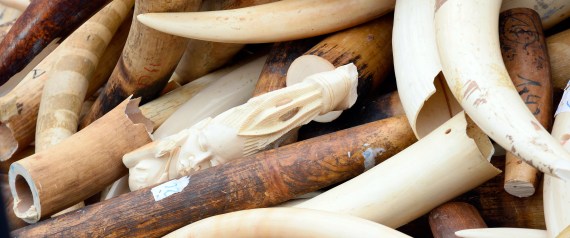
The revision of the conservation act, formally the Natural Resources Conservation Law of 1990, was widely anticipated to help authorities crack down harder on the illegal wildlife trade. And the latest draft submitted by parliament to the government for review does make some moves toward that goal: it would ban the trade in species not mentioned on Indonesia’s list of protected species but that are regulated by CITES, the main international treaty on endangered animals and plants. For instance, it could help close a loophole that allows traffickers to move items such as African elephant ivory through the Southeast Asian country with impunity.

Read on  


Sunday, 26 June 2016

EU plans to help fight wildlife crime

BY BEN WRIGHT · 20TH JUNE 2016


“The love for all living creatures is the most noble attribute of man” – Charles Darwin

The Illegal wildlife trade is one of the world’s most lucrative criminal activities, raking in up to £15 billion annually. The only crimes more lucrative are drug trafficking, people trafficking and counterfeiting.

Wildlife trafficking has unmeasured blood on its hands, not just by destroying wildlife but in helping to fund many extremist and militia groups. It is vital for people, as well as the threatened wildlife that this trade comes to an end, soon. Ivory, tiger products, tropical timber, rhino horn and exotic birds are some of the most valuable products on the black market. Live reptiles well as live plants, such as like cacti and orchids are also frequently seized at EU borders.

Wednesday, 25 May 2016

UN calls for overhaul of national laws to tackle wildlife crime


Countries urged to outlaw possession of wildlife and timber illegally harvested or traded elsewhere

Tuesday 24 May 201613.00 BST
Last modified on Tuesday 24 May 201613.01 BST

Governments around the world need to pass national laws outlawing the possession of wildlife and timber that has been illegally harvested or traded elsewhere, a new report by the UN’s Office on Drugs and Crime (UNODC) urges.

At present, unlisted but endangered flora and fauna can be legally sold in other nations, even if it was illicitly taken from the countries of origin, due to a lack of coverage in the Convention of International Trade in Endangered Species (Cites).

As the Guardian revealed last year, conservation authorities believe that the survival of many endangered species is being threatened as a result.

The level of concern is such that the UN is now calling for “each country to prohibit, under national law, the possession of wildlife that was illegally harvested in, or illegally traded from, anywhere else in the world.”

“Domestic environmental laws should be expanded to provide protection to wildlife from other parts of the world,” the report adds.

Draft laws could be prepared nationally, regionally or internationally, to give a legal basis for contraband seizures by customs officers, without having to refer to international protected species lists, according to the UN paper.

Theodore Leggett, the study’s author, told the Guardian there was a good chance for the idea gaining traction in the international community.

“There is tremendous international goodwill on this right now. No one is going to stand up and say that wildlife trade should be less regulated,” he said.


Wednesday, 5 November 2014

New app helps people across India report wildlife crimes

An app that allows users to report wildlife crimes across India has been developed by the Wildlife Trust of India (WTI) and India's Wildlife Crime Control Bureau (WCCB).

“The application provides a secure platform for real time exchange of wildlife crime related information between WCCB and relevant stakeholders,” said Shri S S Garbyal, the director of WCCB. “It is also a handy reference tool on the provisions of the Wild Life Protection Act for field level officers. WTI effort will therefore contribute greatly in improving wildlife crime enforcement in the country.”

The app allows an individual to report a wildlife crime quickly and efficiently as the lead will be automatically delivered to a designated email id of WCCB. The user can also crucially remain anonymous and the WCCB will be the sole custodian of the collected information. Importantly no details of the person reporting the crime will be shared without the prior consent of the individual.


Sunday, 12 October 2014

Specialist Nairobi team will help tackle wildlife crime

INTERPOL has announced the formation of specialist team to be based in Nairobi, Kenya, which will tackle criminals such as ivory poachers and rhino horn smugglers.

The team in Nairobi – who will be an extension of the Environmental Crime Unit based in Lyon, France – will collaborate with national law enforcement agencies to increase information exchange and assist with national and regional investigations with a specific focus on wildlife crime.

With the goal of stemming the illegal trade of ivory and rhino horn, the team will work with countries and partner organisations to combat elephant and rhino poaching as part of INTERPOL’s Project Wisdom.

Sunday, 31 August 2014

Asian countries commit to tackling wildlife crime at second annual meeting

Posted by: Shubhobroto Ghosh / posted on August 30th, 2014

The three-day Second Annual Meeting of the South Asia Wildlife Enforcement Network (SAWEN) culminated today in Kathmandu, Nepal, where the eight South Asian countries finalized and endorsed the SAWEN Statute and updated their collaborative roadmap for fighting wildlife crime in South Asia.

“Strengthening transboundary cooperation and collaboration for intra-country law enforcement initiatives through intelligence sharing on poaching and trade trends, along with exchanging knowledge and skill for fighting wildlife crime across South Asia” was the unequivocal concern of the representatives of the South Asian countries at this meeting that was held from 26-29 August 2014.

This push from the SAWEN member countries places the region firmly in the spotlight of a growing international commitment to dealing with increasingly organised illegal wildlife trade networks as part of a broader strategic approach to combat trans-national organised crime.

The meeting was particularly successful in adopting the SAWEN Statute and beginning an intense process for developing an action plan for the next six years. The Statute clearly details the vision, goal, objectives and the crucial role that SAWEN will play in combating wildlife crime in the region. The Statute, endorsed by member country delegates to the meeting, will now await the final endorsement from the Governments of the eight South Asian countries.

Tuesday, 19 August 2014

Animal charity calls for UK to toughen up its laws on wildlife crime

Following investigations into the extent of wildlife crime in the UK The World Animal Protection are calling on the UK government to create a national plan for tackling wildlife crime, following a report that shows the true extent of wildlife crime across the country.

Endorsed by Stephen Fry, Deborah Meaden and Charlotte Uhlenbroek, their investigations looked at the work being done up and down the UK by the range of enforcement bodies working to combat wildlife crime, from police forces to civil society groups.

Poaching is the most commonly reported type of wildlife crime by UK police forces and makes up nearly half (44 per cent) of all intelligence submitted to the National Wildlife Crime Unit. The species targeted include deer and salmon.

Sunday, 15 June 2014

WildLeaks attracts major wildlife crime leads in first three months

WikiLeaks-style website yields 24 tip-offs including elephant poaching, tiger killing, illegal fishery and forest destruction


theguardian.com, Thursday 12 June 2014 13.27 BST

A new WikiLeaks-style website targeting the kingpins of wildlife crime has attracted serious leads on elephant, tiger, fishery and forest destruction across the globe in its first three months.

The WildLeaks website, which uses Tor technology to ensure anonymity, has been set up by Andrea Crosta, a security consultant who first revealed how the al-Shabaab terrorist group in Somalia generated funds via ivory smuggling.

The slaughter of elephants, rhinos, tigers and other species has surged in the last decade, part of an illicit wildlife trade worth $10-20bn a year according to Interpol. Only drugs, people and arms trafficking earn more for criminals and the corruption and violence accompanying wildlife crimetakes a heavy toll on local communities.

“We had our first tip within 24 hours and the response has been beyond our wildest imagination,” said Crosta, now executive director of theElephant Action League. He said the pervasive corruption means that whistleblowers frequently fear that contacting local law enforcement could put their lives in danger. “You can’t, for example, export containers full of ivory from Mombasa without bribing people left, right and centre,” Crosta told the Guardian. “We definitely feel we are filling a gap.”

Wednesday, 2 April 2014

New powers sought for SSPCA

March 2014: New powers could be given to the Scottish Society for the Prevention of Cruelty to Animals (SSPCA) so wildlife crime can be tackled more successfully.

Under the proposals SSPCA inspectors would be able to investigate crimes relating to wild birds, other protected animals, poaching, snaring and non-native species of animals. Those investigations could involve accessing land and premises, searching for evidence and seizing any evidence found. Access to dwellings and locked buildings would be granted by warrant only.

Members of the public and key organisations are now being invited to respond to the consultation by September 1, 2014.

Environment Minister and Chair of PAW Scotland Paul Wheelhouse said: “Preventing wildlife crime is at the top of our agenda but it can be difficult to detect and investigate which can lead to difficulties in mounting prosecutions and convicting those responsible.

“These crimes often occur in remote locations where there are few or no witnesses. When incidents are discovered any delays increase the likelihood of any evidence being destroyed – either deliberately or simply as a result of exposure. The proposals to increase the powers for SSPCA inspectors could provide an additional resource to Police Scotland in an area of crime which can be time consuming and difficult to investigate.

“We need to find out what the public feel about this issue. I have already strengthened our approach in tackling wildlife crime but the outcome of this consultation will help us to understand public opinion on possible new ways forward.”

Saturday, 8 March 2014

The price of repeated wildlife crime in Britain – £200


Posted by: Kevin Heath / 51 mins ago

Britain’s most convicted bird egg collector has appeared in court for the 10th time for keeping protected wild bird eggs. The sentence handed out by magistrates was a £200 fine and £300 in costs. Yet again British magistrates have chosen to ignore the on-going threat to wildlife and the impact of wildlife crime on wild species.

Gregory Peter Wheal (50yrs) of Vinecote Road, Coventry appeared before magistrates on 3rd March 2014 for keeping 4 birds eggs. The eggs were discovered by police who were at Wheal’s home on another unrelated matter in September 2013. The eggs belonged to two guillemot, one razorbill and a mute swan.

Wheal is well-known locally for his egg collecting habit and has a local nickname of ‘Greg the Egg’. In defence Wheal claimed that he thought the eggs were old eggs and taken from the wild before the Wildlife and Countryside Act 1981 came into effect. That would mean the eggs were legal to have.

Thursday, 6 March 2014

Vietnam Prime Minister tackles wildlife crime

March 2014: The enforcement of sanctions against wildlife crime is to be prioritised across all ministries, says Vietnam’s Prime Minister Nguyen Tan Dung, in order to combat poaching and trafficking of African elephant ivory and rhino horn. 

The move highlights that the Vietnamese Government sees wildlife crime not only as an environmental threat, but also as a threat to the country’s economy, national security, public health and international relationships. 

Among the key requests of the Directive are a strong judiciary response to prosecute those convicted of the sale and transport of rhino horn, ivory and other wildlife specimens; the deployment of inter-agency teams at border gates to detect and prevent smuggling of wildlife across Vietnam’s border; central agencies to co-ordinate investigations into trafficking syndicates; and education and mass media reporting on regulations on wildlife trade. 

Tuesday, 25 February 2014

WildLeaks Website Offers A Safe Place To Report Wildlife Crime

The Huffington Post | by Brianna Elliott
Posted: 02/19/2014 3:56 pm EST Updated: 02/19/2014 3:59 pm EST


Several organizations have converged to combat wildlife and forest crime -- the fourth-largest transnational crime that's worth $17 billion annually -- but they need your help.

WildLeaks, is a place where everyday citizens can report poaching, wildlife trafficking and illegal logging. Citizens can submit photos, video or documents to the highly-secure, not-for-profit website, and are able to maintain their safety by submitting content either confidentially or anonymously using Tor software.

Monday, 24 February 2014

Uganda sets up an online database to monitor arrests and identification of repeat poachers

The new database will help Ugandan authorities to give appropriate sentences to repeat offenders

February 2014: The Wildlife Conservation Society (WCS) and Uganda Wildlife Authority (UWA) have announced a collaboration to produce an online tool that will allow law enforcement officials to access a database that tracks offenders of wildlife crime in real-time and across the country. The announcement was made as conservationists gathered from around the world for the United for Wildlife symposium last week in London.

The database, which can be updated online at all Uganda parks and headquarters, will enable better monitoring of arrests and identification of repeat offenders and their associates. It will allow park managers to better track prosecutions while enabling the export of data for further analyses.

In addition, the database allows UWA staff to assess which wildlife crimes are on the increase by providing summary statistics by park and also to profile those involved in wildlife crime in the country. The results will be used to identify where and when people are undertaking illegal activities and who is involved.


Monday, 17 February 2014

Global leaders unite to fight wildlife crime

February 2014:

Governments from all around the world came together at the Illegal Wildlife Trade Conference in London (February 12-13), hosted by the UK Government, to try and end the illegal trade in wildlife.

The two-day conference resulted in heads of state, ministers and high level representatives of 46 countries and 11 UN organisations signing a declaration vowing to take on and beat the orchestrators of wildlife crime.

Measures agreed included eradicating illegal wildlife products going to market, agreeing to strengthen law enforcement efforts and ensure that effective legal frameworks and deterrents are in place, and the need to promote sustainable livelihoods for local communities.

Heather Sohl, Chief Species Advisor at WWF-UK, said:


Continued

Tuesday, 4 February 2014

Online pack to educate children about wildlife crime


January 2014: Children in Scotland will be taught about the impact of wildlife crime and how they can help combat the problem through a new online wildlife crime detectives’ education pack.

The interactive pack will help to raise children’s awareness of wildlife crime issues and increase their knowledge of legitimate countryside practices. Children will be encouraged to explore the moral issues surrounding wildlife crime while learning important safety messages.

The Scottish Minister for Environment and Climate Change and chair of PAW Scotland, Paul Wheelhouse, said:

“This new education pack provides an interactive way to educate and excite young people about our wildlife and help them to understand the damaging effects wildlife crime can have on Scotland’s animals, birds and habitats and why the eradication of wildlife crime is in the public interest.

“It will also encourage pupils and teachers to think more about our role in protecting our natural environment and instil an appreciation and set of values which will resonate with them for years to come.”


Saturday, 30 November 2013

UK Government urged to use foreign aid to fight wildlife crime

MPs and charities are calling on the UK government to divert Foreign Aid money into helping fight wildlife crime like elephant poaching. An innovative Early Day Motion (EDM) has been tabled by Zac Goldsmith MP, asking the government to make a ‘substantial and strategically important contribution’ towards the protection of elephants across Africa.

Wildlife charity Care for the Wild International, helped draft the EDM, and is urging MPs and the government to debate the issue in Parliament.

Sunday, 10 November 2013

Reporting wildlife crime is made easier with the launch of a new app


November 2013: Getting the public to help report wildlife crime in Scotland has just been made easier with the launch of a new app. The app will enable people to record and report suspected cases of wildlife crime directly to Police Scotland via their iphone and is compatible with iPhone, iPad, and iPod touch. 

The app is the brainchild of former Wildlife Crime Education Officer, Andy Turner who was looking for a way to improve awareness, detection and reporting of wildlife crime throughout Scotland. Wildlife crime threatens a far greater range of creatures and plants than you might imagine, even damaging the environment on which they depend. In short, it's the illegal destruction and theft of animals, plants and habitats, both in the countryside and urban areas. It can involve anything from poisoning a golden eagle to cracking open freshwater pearl mussels.


Monday, 30 September 2013

World wakes up to threat of wildlife crime at last?

Heads of state come together in call for UN action to combat wildlife crime

September 2013. Efforts to combat illicit wildlife crime have received a massive boost as heads of state and a number of ministers outlined the serious impacts of poaching and illicit wildlife trafficking.

During the most important the year in international politics, governments chose to highlight illicit wildlife trafficking as a major threat to peace and security, the rule of law and global development.

President Ali Bongo of Gabon called for the appointment of a special UN envoy on wildlife crime as well as a UNGA resolution, a move that was supported by the UK Secretary of State for Foreign and Commonwealth Affairs, William Hague and the German Foreign Minister Guido Westerwelle, as well as other representatives present such as the Norwegian Minister of Environment.

President Ali Bongo said, "Illicit wildlife crime is no longer a simple environmental problem, it is a transnational crime and a threat to peace and security on our continent".

The President of Tanzania, Jakaya Kikwete highlighted the problem of demand and called for help from the international community to close markets.

Monday, 26 August 2013

Mozambique commits to tackling wildlife crime

International attempt to reduce wildlife poaching in and from Mozambique
July 2013-Under increasing pressure from CITES, neighbouring South Africa and the international conservation community, Mozambican government officials have vowed to escalate their responses towards tackling wildlife crime, particularly elephant and rhino poaching. 

"Mozambique recognises the economic and security threats from trans-boundary criminal networks undertaking these activities, and the country is committed to finding solutions to these problems", said Marcelino Foloma, Head of Mozambique's Wildlife Department at the Ministry of Agriculture. 

Hosted by TRAFFIC and the Mozambican National Directorate of Land and Forestry, the three-day workshop was attended by representatives from several ministries, including Agriculture, Tourism, Customs, Finance, Home Affairs and Environmental Co-ordination. The event afforded a key opportunity to improve communication and collaboration between governmental institutions and civil society, to address serious defects in current wildlife legislation and to establish formal mechanisms for sharing information about illegal wildlife trade and taking law enforcement actions.

TRAFFIC also rolled out a series of species identification materials in the Portuguese language to assist Mozambique's law enforcement community to identify contraband wildlife products, including elephant ivory, rhino horn, lion bone, pangolins and several protected timber species.

"This is the first time Mozambique's law enforcement community is equipped with species identification materials in their own language", said Tom Milliken, TRAFFIC elephant and rhino coordinator who attended the workshop. "It's critical that these valuable tools are available to fight increasing wildlife crime."

Wednesday, 3 July 2013

President Obama pledges to fight wildlife crime

Obama's wildlife crime ‘taskforce' is vital first step in battle against poachers

President Barack Obama's pledge to tackle wildlife crime and join the fight against elephant and rhino poachers is a vital first step that must be followed by the other G8 nations, say Care for the Wild.

Task force
President Obama has announced the formation of a task-force to combat the illegal trafficking of wildlife, an industry which is worth $10 billion a year and leads to crime, terrorism and national security issues.

Up to $10 million has also been earmarked specifically to help tackle poaching for ivory and rhino horn. Philip Mansbridge, CEO of Care for the Wild International, which has been running a G8 or Too Late campaign, welcomed the move:

"Elephants and rhinos are dying in huge numbers, and the scale of the poaching now means that this is a world problem, not something individual countries should have to deal with alone. President Obama's pledge and cash is a vital first step in turning international awareness of this problem into international action.

Related Posts with Thumbnails

ShareThis