Showing posts with label Siberia. Show all posts

Sunday, 1 March 2020

The last woolly mammoths on Earth had disastrous DNA


They were the last mammoths alive, but they weren't that healthy.

Dwarf woolly mammoths that lived on Siberia's Wrangel Island until about 4,000 years ago were plagued by genetic problems, carrying DNA that increased their risk of diabetes, developmental defects and low sperm count, a new study finds.

These mammoths couldn't even smell flowers, the researchers reported. 

"I have never been to Wrangel Island, but I am told by people who have that in the springtime, it's just basically covered in flowers," study lead researcher Vincent Lynch, an assistant professor of biological sciences at the University at Buffalo in New York, told Live Science. "[The mammoths] probably couldn't smell any of that."

Wrangel Island is a peculiarity. The vast majority of woolly mammoths died out at the end of the last ice age, about 10,500 years ago. But because of rising sea levels, a population of woolly mammoths became trapped on Wrangel Island and continued living there until their demise about 3,700 years ago. This population was so isolated and so small that it didn't have much genetic diversity, the researchers wrote in the new study.

Wednesday, 12 December 2018

Ice Age 'Unicorn' May Have Lived Alongside Modern Humans


By Mindy Weisberger, Senior Writer | December 1, 2018 08:48am ET
A burly "unicorn" that once plodded over grasslands in Siberia was around for much longer than once thought — long enough to have roamed the land at the same time as modern humans.
This one-horned native of the steppes, Elasmotherium sibiricum, was a hefty, furry beast in the rhino family that weighed nearly 4 tons — more than twice the weight of a white rhinoceros, the largest species of modern rhino.
Previous interpretations of E. sibiricum bones suggested that they died out 200,000 years ago, but recent analysis hints that E. sibricum fossils are much younger than that, dating to at least 39,000 years ago and possibly as recently as 35,000 years ago, according to a new study. This would mean that the "unicorn" was still around when people populated the region, the scientists reported. [10 Extinct Giants That Once Roamed North America] 

Friday, 24 August 2018

Scientists find perfectly preserved ancient foal in Siberia


August 23, 2018

In this image made from video, scientists examine the fossil of a horse in Yakutia, Russia, Thursday, Aug. 23, 2018. Russian scientists have found the carcass of an ancient foal perfectly preserved in Siberian permafrost. The fossil …more

Russian scientists have found the carcass of an ancient foal perfectly preserved in the Siberian permafrost.

The fossil discovered in the region of Yakutia has its skin, hair, hooves and tail preserved. Yakutia is also famous having wooly mammoth fossils found in the permafrost.

Scientists from Russia's Northeast Federal University who presented the discovery Thursday said the foal is estimated to be 30,000 to 40,000 years old. They believe it was about two months old when it died.

Semyon Grigoryev, head of the Mammoth Museum in the regional capital of Yakutsk, was surprised to see the perfect state of the find. He noted it's the best-preserved ancient foal found to date.

The foal was discovered in the Batagaika crater, a huge 100-meter (328-foot) deep depression in the East Siberian taiga.


Monday, 23 July 2018

First dogs in the Americas arrived from Siberia, disappeared after European contact


Date:  July 5, 2018
Source:  University of Illinois at Urbana-Champaign

A study reported in the journal Science offers an enhanced view of the origins and ultimate fate of the first dogs in the Americas. The dogs were not domesticated North American wolves, as some have speculated, but likely followed their human counterparts over a land bridge that once connected North Asia and the Americas, the study found.

This is the first comprehensive genomic study of ancient dogs in the Americas to analyze nuclear DNA, which is inherited from both parents, along with mitochondrial DNA, which is passed down only from mothers to their offspring. By comparing genomic signatures from 71 mitochondrial and seven nuclear genomes of ancient North American and Siberian dogs spanning a period of 9,000 years, the research team was able to gain a clearer picture of the history of the first canine inhabitants of the Americas.


Friday, 26 May 2017

Earliest evidence for dog breeding found on remote Siberian island

By David GrimmMay. 26, 2017 , 3:00 AM

The hunter-gatherers of Zhokhov Island were a hardy folk. Nine thousand years ago, they survived frigid year-round temperatures in animal-skin tents some 500 kilometers north of what is now the Russian mainland, and they were the only people ever known to hunt large numbers of polar bears without firearms. Now it appears these ancient Arctic dwellers did something even more remarkable: They may have been among the first humans to breed dogs for a particular purpose. An analysis of canine bones from Zhokhov suggests the dogs there were bred to pull sleds, making this the first evidence—by thousands of years—for dog breeding in the archaeological record.

“It’s pretty convincing and very exciting,” says Melinda Zeder, an archaezoologist at the Smithsonian Institution National Museum of Natural History in Washington, D.C. The finding may help explain why people domesticated dogs in the first place: to put them to work. “It fills in a missing piece of the puzzle of early human-dog relationships, and even domestication itself,” adds Angela Perri, a zooarchaeologist at the Max Planck Institute for Evolutionary Anthropology in Leipzig, Germany.

Zhokhov wasn’t always an island. When Stone Age people lived there, and before seas rose, it was connected to Siberia. In addition to polar bears, which were mostly hunted in winter, the Zhokhovians pursued reindeer hundreds of kilometers across vast plains. “They needed a means of transportation,” says Vladimir Pitulko, an archaeologist at the Russian Academy of Sciences in St. Petersburg who has been excavating Zhokhov since 1989. He previously found dog bones and the remains of wooden sleds on the island, but it was never clear whether the animals were actually bred for sledding.


Continued

Thursday, 30 March 2017

Giant salamanders, geckos and olms: Vanishing species diversity in Siberia-Study of the development of amphibians and reptiles through twelve million years of geological history - via Herp Digest


Date: March 23, 2017
Source: Senckenberg Research Institute and Natural History Museum


Together with an international team, Senckenberg scientist Professor Dr. Madelaine Böhme studied the development of the amphibian and reptile fauna in Western Siberia during the past twelve million years. In their study, published in the scientific journal Peer J, the scientists demonstrate that the species diversity of both groups of animals was noticeably higher in the past than it is today. Among others, for the first time the researchers discovered an Asiatic representative of the extinct frog family Palaeobatrachidae as well as evidence of a giant salamander with a length of up to 1.80 meters.

The Siberian Salamander, four species of brown frogs (genus Rana), four species of toads, one green frog (genus Pelophylax), two lizards and five species of snakes -- these 17 species represent the entire recent amphibian and reptile fauna of Western Siberia, which therefore counts among the regions with the lowest species diversity regarding these animal classes in all of Eurasia and Northern Africa. "But this was not always the case," explains Professor Dr. Madelaine Böhme, director of the Senckenberg Centre for Human Evolution and Palaeoenvironment (HEP) at the University of Tübingen, who continues, "Our most recent study shows that the number of amphibian and reptile species used to be much higher in the course of geological history.”

The international team of scientists around the paleontologist from Tübingen and Dr. Davit Vasilyan of the JURASSICA Museum in Porrentruy examined fossils from more than 40 excavation sites in Western Siberia, spanning the past twelve million years. These fossils were collected during 40 years of research activity by their Russian colleague, Dr. Vladimir Zazhigin.

"We were able to identify more than 50 different species -- from salamanders and frogs to scaled reptiles and turtles. This exceeded even our boldest expectations," says an elated Böhme. Among the team's findings was evidence of a giant salamander, a group of tailed amphibians with a length of up to 1.80 meters that today are only found in rainy regions of Japan and China. Equally unexpected were voucher specimens of several crocodile newts, whose surviving relatives live in modern-day China and Vietnam.

"In addition, for the first time we were able to discover an Asiatic representative of the extinct frog family Paleobatrachidae," adds Böhme, and she continues, "And we also rediscovered an 'old acquaintance' among the fossils: The Siberian Salamander already inhabited the region beyond the Ural Mountains as early as twelve million years ago." Modern representatives of this amphibian genus have adapted to the hostile climatic conditions and survive temperatures as low as minus 40 degrees Celsius frozen in the soil.

The fossil discoveries not only offer insights into the fauna of the past but also allow conclusions regarding climate, precipitation and vegetation. For example, the discovery of a six-million-year-old gecko of the genus Alsophylax indicates that the habitat at that time resembled the modern-day steppes in Kazakhstan. For this time period, during which the Western Siberian plains were also home to jumping mice, camels and ostriches, the team of scientists calculated an annual precipitation of only 250 millimeters. Moreover, the discovery of terrestrial and aquatic turtles, whose last representatives disappeared from Western Siberia around 5 million years ago, suggests a noticeably warmer climate.

"The total of our findings documents Siberia's varied biodiversity and the dynamic climate history of this region: Within a few hundred thousand years, extremely wet regions with four times the current precipitation transformed into areas with an arid steppe climate. The increasingly cooler temperatures likely led to the subsequent loss of numerous species of amphibians and reptiles," adds Böhme in conclusion.

Story Source:
Materials provided by Senckenberg Research Institute and Natural History Museum. Note: Content may be edited for style and length.
/story_source

Journal Reference:
1 Davit Vasilyan, Vladimir S. Zazhigin, Madelaine Böhme. Neogene amphibians and reptiles (Caudata, Anura, Gekkota, Lacertilia, and Testudines) from the south of Western Siberia, Russia, and Northeastern Kazakhstan. PeerJ, 2017; 5: e3025 DOI: 10.7717/peerj.3025

Thursday, 26 November 2015

Adapting to -70 degrees in Siberia: A tale of Yakutian horses

Date: November 23, 2015
Source: Faculty of Science - University of Copenhagen

From an evolutionary perspective it happened almost overnight. In less than 800 years Yakutian horses adapted to the extremely cold temperatures found in the environments of eastern Siberia. The adaptive process involved changes in the expression of a plethora of genes, including some also selected in human Siberian groups and the extinct woolly mammoth.

In a new scientific study, the comparison of the complete genomes of nine living and two ancient Yakutian horses from Far-East Siberia with a large genome panel of 27 domesticated horses reveals that the current population of Yakutian horses was founded following the migration of the Yakut people into the region in the 13-15th century AD. Yakutian horses, thus, developed their striking adaptations to the extreme cold climate present in the region in less than 800 years. This is one of the fastest examples of adaptation within mammals. The findings are reported in the PNAS early edition from November 23rd by an international team of researchers led by Dr. Ludovic Orlando from the Centre for GeoGenetics at the Natural History Museum of Denmark, University of Copenhagen.

Sunday, 31 May 2015

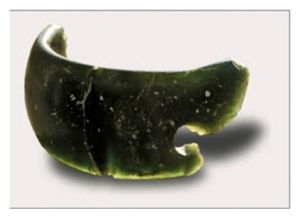
40,000-year-old bracelet made by extinct human species found

By Stephen Morgan May 8, 2015 in Science

© Anatoly Derevyanko and Mikhail Shunkov, Vera Salnitskaya
In what is quite an amazing discovery, scientists have confirmed that a bracelet found in Siberia is 40,000 years old. This makes it the oldest piece of jewelry ever discovered, and archeologists have been taken aback by the level of its sophistication.

The bracelet was discovered in a site called the Denisova Cave in Siberia, close to Russia's border with China and Mongolia. It was found next to the bones of extinct animals, such as the wooly mammoth, and other artifacts dating back 125,000 years.

The cave is named after the Denisovan people — a mysterious species of hominins from the Homo genus, who are genetically different from both Homo sapiens and Neanderthals.


Monday, 20 April 2015

Photo proof of snow leopards in newly created refuge in Siberia

Camera trap images have been taken of snow leopards in the newly created National Park of Sylyugem National Park in the Altai mountains of Siberia.

Aleksei Kuzhlekov, a national park researcher, reports that, "four pictures of snow leopard were taken at different times, probably of three or four individuals".

The Saylyugem National Park was created five years ago to protect wildlife in that region of Siberia, especially the snow leopard and argali mountain sheep, in an area totaling 118,380 hectares.

One of the camera-trapped images of 
Siberian snow leopard

The creation of the reserve was much needed, because poachers had killed more than 10 snow leopards in the area in the 1990s alone, to sell their pelts and body parts on the black market for Chinese medicine.

The snow leopard is in the endangered category on the IUCN Red List of Threatened Species with as few as 4,000 left in the world, of which only 2,500 are likely to be breeding. 

The head of the local conservation department, Igor Ivanitsky, adds: "We were able to place the cameras in the right place by painstakingly working out the movements routes of the cats.

Saturday, 28 February 2015

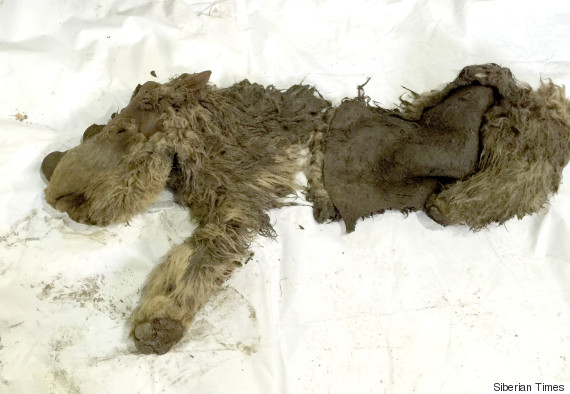
Baby Woolly Rhino Discovered In Siberia Is The First Ever Found

The Huffington Post | By Jacqueline Howard

Posted: 02/25/2015 1:09 pm EST Updated: 02/27/2015 9:59 am EST

Scientists are going gaga over the recent discovery of a baby woolly rhino.

rhino sasha
(Academy of Sciences Republic of Sakha/Siberian Times)
The pristine specimen of the tiny extinct rhino--the only one of its type ever found--was discovered in permafrost along the bank of a stream in Siberia's Sakha Republic, The Siberian Times reported.

"At first we thought it was a reindeer's carcass, but after it thawed and fell down we saw a horn on its upper jaw and realized it must be a rhino," Alexander 'Sasha' Banderov, the hunter who made the discovery, told the Times. "The part of the carcass that stuck out of the ice was eaten by wild animals, but the rest of it was inside the permafrost and preserved well."

Monday, 23 February 2015

Deep in the Siberian taiga, on the trail of Russia's elusive tigers

More than 2,000 people are combing Russia’s far east for signs of the elusive wild cats to find out whether efforts to reverse their decline have been a success

Shaun Walker near Vladivostok

Wednesday 18 February 2015 15.36 GMTLast modified on Wednesday 18 February 201518.52 GMT

With a yelp of excitement, Pavel Fomenko slammed on the brakes and jumped out of his four-wheel drive. To most eyes, little would appear extraordinary about the vista ahead – just another stretch of bumpy, snow-covered track deep inside the endless Siberian taiga.

Fomenko, however, had spotted exactly what he was looking for from the corner of his eye. He lay flat on the ground to get a close-up look at the faint imprint in the snow.

“A cub, about two years old, judging from the paw size. It was here yesterday,” he said, whipping out a metal ruler to log the exact size of the print.

Wednesday, 7 January 2015

Rare ‘clumsy’ cat captured on camera for first time at national park

By Anna Liesowska
23 December 2014


With dumpy little legs, a dense body and a penchant for hiding from trouble, the Manul has proved elusive to nature lovers worldwide.


Caught on camera a handful of times anywhere in the world, including in Pakistan, Iran and Nepal. PIcture: Saylyugem National Park

Stunning images of an extremely rare and secretive cat have been taken for the first time in Siberia by staff at a new national park. The Manul, which looks similar to an overgrown tabby cat but is threatened with extinction, was spotted lurking beneath a rock in the snowy Altai Mountains.

With dumpy little legs and a big dense body it is considered the clumsiest member of the feline family because it often prefers not to run away from danger but simply hide. Also referred to as a Pallas Cat, because of this elusive nature the photographers were extremely fortunate to snap pictures within the Saylyugem National park.

Indeed, they have only ever been caught on camera a handful of times anywhere in the world, including in Pakistan, Iran and Nepal. Now park directors are hoping the new images will inspire animal lovers to travel to the Siberian region and see them living in the wild.

Sunday, 16 November 2014

Can the Long-Extinct Woolly Mammoth Be Cloned?

by Tia Ghose, Staff Writer | November 16, 2014 09:20am ET

A woolly mammoth carcass recently unearthed in Siberia could be the best hope yet for scientists aiming to clone the massive, long-extinct beast.

The mammoth specimen, which was discovered in 2013 in a remote part of Siberia, oozed a deep red liquid when it was first discovered. Scientists have now analyzed the mammoth to understand how it lived and died — and whether it will yield enough undamaged DNA to makecloning the extinct creature a reality.

Details from the mammoth autopsy will air in the Smithsonian Channel special called "How to Clone a Woolly Mammoth," on Nov. 29 at 8 p.m. ET/PT. (Warning: This story contains some spoilers about the Smithsonian Channel special.)

Monday, 10 November 2014

Mummified Bison Unearthed In Siberia

November 9, 2014

Chuck Bednar for redOrbit.com – Your Universe Online

Researchers have uncovered the several thousand year old, mummified remains of an extinct species of bison in a region of eastern Siberia known as the Yana-Indigirka Lowland, according to research presented at the annual meeting of the Society of Vertebrate Paleontology (SVP) in Berlin, Germany.

The mummy was a near-complete specimen of Steppe bison and was discovered by a team of experts led by Dr. Natalia Serduk of the Russian Academy of Sciences. The creature is reportedly 9,300 years old and has a complete brain, heart, blood vessels, digestive system and even intact fur, though the researchers explained that some of the organs have shrunk significantly over time. A necropsy of the animal found no obvious cause of death.

“Normally, what you find with the mummies of megafauna in North America or Siberia is partial carcasses. They’re partly eaten or destroyed because they’re lying in the permafrost for tens of thousands of years,” Olga Potapova of the Mammoth Site of Hot Springs in South Dakota told Live Science reporter Elizabeth Palermo. “But the mummy was preserved so well that it [earned] a record for the level of its preservation.”

According to Discovery News reporter Jennifer Viegas, the creature has been dubbed the ‘Yukagir bison mummy’ based on the region where it was discovered, and while the exact cause of its demise cannot be established, Dr. Serduk’s team believes that the lack of fat around its abdomen indicates the creature could have died from starvation.

“The exclusively good preservation of the Yukagir bison mummy allows direct anatomical comparisons with modern species of bison and cattle, as well as with extinct species of bison that were gone at the Pleistocene-Holocene boundary,” Dr. Evgeny Maschenko of the Paleontological Institute in Moscow, one of the researchers involved in the project, said in a statement Thursday.


Tuesday, 28 October 2014

A 45,000-Year-Old Leg Bone Reveals The Oldest Human Genome Yet - via D R Shoop

Researchers have successfully decoded the genes of a 45,000-year-old man from Siberia. The results offer clues about early human life outside of Africa as well as how humans interacted with Neanderthals and other groups around at the time.

The complete set of genes is the oldest genome of its kind, according to Svante Pääbo, a director at the Max Planck Institute for Evolutionary Anthropology in Leipzig. "It's almost twice as old as the next oldest genome that has been sequenced."

The work of Pääbo and his colleagues was published Wednesday in the journal Nature.

The bone was found along the Irtysh River in Siberia, which was pretty far north to live 45,000 years ago.Bence Viola/Max Planck Institute for Evolutionary Anthropology

The DNA came from a human femur found in 2008 by a collector scouring the Irtysh River in western Siberia. The femur was handed over to a local paleontologist who in turn gave it to Pääbo's team in Leipzig.

Monday, 4 August 2014

Bear attacks leave at least three people dead in Siberia and far-east Russia

Experts suggest extreme weather could be disrupting biorhythms and food supply, and fishing nets cutting off access to salmon
Alec Luhn in Moscow

theguardian.com, Friday 1 August 2014 13.47 BST
A rash of bear attacks in Russia have left at least three people dead and many more injured in recent weeks as record high temperatures, freak snow, hailstorms and flooding hit Siberia and the country's far east.

Human activity may be behind some of the attacks. Experts cited by the news agency Interfax said nets and obstacles have prevented salmon from swimming up rivers to spawn, leaving bears without a regular food supply.

Extreme weather can also disrupt the predators' biorhythms and food supply, said Vladimir Krever, director of the biodiversity programme at WWF Russia.

Recent attacks include one at 2am on Wednesday at a meteorological station in the forests of Sakha Republic. A bear broke down the door of a residential trailer and bit the arm of the woman inside, only to be scared away by her loud screaming.

Three days earlier another bear ambushed a boy on Iturup island as he was walking home from his grandmother's house. The bear had dragged the 14-year-old to the shore by the time police arrived and shot it dead. The boy had 170 stitches and remains in critical condition.

Read on

Saturday, 26 July 2014

'Fluffy and feathery' dinosaurs were widespread


25 July 2014 Last updated at 02:19


By Pallab Ghosh
Science correspondent, BBC News

All dinosaurs were covered with feathers or had the potential to grow feathers, a study suggests.

The discovery of 150-million-year-old fossils in Siberia indicates that feathers were much more widespread among dinosaurs than previously thought.

The find "has completely changed our vision of dinosaurs", the lead researcher told BBC News.

The details have been published in the journal Science.

The creature, called Kulindadromeus zabaikalicus, was about 1m long, with a short snout, long hind legs, short arms, and five strong fingers.

Its teeth show clear adaptations for chewing plants.

Until now, fossilised evidence of feathery dinosaurs has come from China and from a meat eating group called theropods.

The latest discovery, in Russia, is from a completely separate group of plant-eating dinosaurs called ornithischians - which account for half of all dinosaurs.

Tuesday, 18 March 2014

Russian scientists: We have a "high chance" of cloning a wooly mammoth

An exquisitely preserved wooly mammoth is currently undergoing an autopsy in Siberia. Some experts believe they'll be able to extract high quality DNA and cells from the remains which could conceivably be used to clone the extinct mammal. The question now is, should we?

Back in May of last year, Russian scientists discovered the remains of the mammoth partially embedded in a chunk of ice at an excavation site on Lyakhovsky Island, the southernmost group of the New Siberian Islands in the Arctic seas of northeastern Russia.

Tuesday, 11 February 2014

DNA clues in ‘mammoth graveyard’ could unlock mystery of why creatures died out


An expedition into the furthest reaches of the Siberian tundra has found DNA clues to the mystery of why the gigantic beasts died out 10,000 years ago - in the stomachs of the preserved carcasses of the last few mammoths to survive on Earth. 

The expedition, from Lund University in Sweden, had to travel via helicopter to an area that the researchers describe as “totally nowhere”, with no roads and no trains connecting it to the rest of the world. 

Their discovery, made using DNA technology unavailable to previous teams, could solve a mystery that has divided scientists for decades - why the ‘megafauna’, large mammals such as mammoths, sabre-toothed cata and huge ground sloths died out around 10,000 years ago.


Sunday, 6 October 2013

Couple rescued in Russia from borsch-eating bear

Police in the Siberian region of Irkutsk have rescued a couple after a bear broke into their holiday home, attracted by the smell of fresh soup.

A patrol turned up at their dacha near Ust-Ilimsk in the early hours after a neighbour raised the alarm.

They found the couple hiding in their bath-house as the bear digested the hot beetroot soup in their garden.

A warning shot was sufficient to scare off the intruder. No-one was hurt, although there was damage to the house.

According to a police statement, the couple said they had left the soup to cool when they went to bed.

Because of decorating work inside the dacha, they were sleeping out in the bath-house, when they woke to "loud banging".

Related Posts with Thumbnails

ShareThis