Showing posts with label woolly rhino. Show all posts

Thursday, 31 August 2017

Woolly rhino neck ribs provide clues about their decline and eventual extinction

Fossils point to rare condition in the extinct species, possibly caused by inbreeding and harsh conditions during pregnancy. Monitoring vertebrae in modern rhinos could indicate the level of extinction risk

Date: August 29, 2017
Source: PeerJ

Summary:
A study reports on the incidence of abnormal cervical (neck) vertebrae in woolly rhinos, which strongly suggests a vulnerable condition in the species. Given the considerable birth defects that are associated with this condition, the researchers argue it is very possible that developmental abnormalities contributed towards the eventual extinction of these late Pleistocene rhinos.


Saturday, 28 February 2015

Baby Woolly Rhino Discovered In Siberia Is The First Ever Found

The Huffington Post | By Jacqueline Howard

Posted: 02/25/2015 1:09 pm EST Updated: 02/27/2015 9:59 am EST

Scientists are going gaga over the recent discovery of a baby woolly rhino.

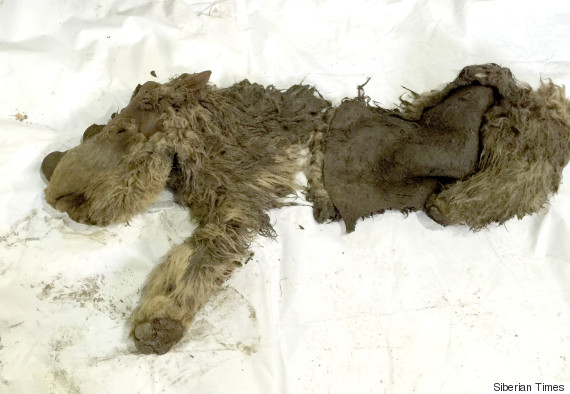
rhino sasha
(Academy of Sciences Republic of Sakha/Siberian Times)
The pristine specimen of the tiny extinct rhino--the only one of its type ever found--was discovered in permafrost along the bank of a stream in Siberia's Sakha Republic, The Siberian Times reported.

"At first we thought it was a reindeer's carcass, but after it thawed and fell down we saw a horn on its upper jaw and realized it must be a rhino," Alexander 'Sasha' Banderov, the hunter who made the discovery, told the Times. "The part of the carcass that stuck out of the ice was eaten by wild animals, but the rest of it was inside the permafrost and preserved well."

Friday, 8 March 2013

Woolly rhino site reveals ancient British temperature


By Michelle Warwicker, BBC Nature

Scientists studying an exceptionally well-preserved woolly rhinoceros have revealed details of what Britain's environment was like 42,000 years ago.

The beast's remains were discovered in Staffordshire in 2002, buried alongside other preserved organisms such as beetles and non-biting midges.

The research team used these climate-sensitive insects to calculate that summer temperatures in Britain would have averaged just 10C, and dropped to -22C in winter.

The results are published in the Journal of Quaternary Science.

The discovery of the preserved woolly rhinoceros (Coelodonta antiquitatis) skeleton in a quarry at Whitemoor Haye was "the most significant fossil find of a large mammal in Britain for over 100 years," said team leader Professor Danielle Schreve from Royal Holloway, University of London.

Related Posts with Thumbnails

ShareThis