Showing posts with label Asia. Show all posts

Sunday, 14 July 2019

Armyworms are devastating Asia's crops, but researchers have a plan to save them


JULY 8, 2019

by Toby Bruce, The Conversation
A very hungry caterpillar is rampaging through crops across the world, leaving a trail of destruction in its wake. The fall armyworm, also known as Spodoptera frugiperda (fruit destroyer), loves to eat maize (corn) but also plagues many other crops vital to human food security, such as rice and sorghum.
This invasive eating machine originated in the Americas, where it was first described in 1797, but in the last few years it has gone global. It was reported in Africa in 2016 and has now reached China, spreading across two continents, west to east, in just three years. Entry of the pest into this part of Asia matters because so many people live there and in nearby regions, and there is already huge pressure on the area's food production systems.
But there is hope. My colleagues and I are researching ways to stop the pest that don't rely on damaging pesticides and could be adopted around the world.
How the fall armyworm crossed the Atlantic from its native range in tropical and subtropical regions of the Americas is unknown. Perhaps it was through long-distance migration of moths, possibly blown by winds, that then laid eggs in Africa. Or perhaps it was through trade of contaminated produce already containing eggs and hungry caterpillars.

Wednesday, 10 October 2018

Men Fined $1 Million for Trafficking $17 Million Worth of Squishy Sea Cucumbers


By Kimberly Hickok, Reference Editor | October 4, 2018 11:24am ET
Prosecutors in San Diego have charged two men who smuggled $17 million worth of sea cucumbers from Mexico to Asia with two years' probation and fines totaling over $1 million, The San Diego Union-Tribune reported.
The two men, David Mayorquin and his father, Ramon Torres Mayorquin, were named in a 26-count federal indictment filed last year for the illegal trafficking of wildlife from 2010 to 2012, the Tribune reported.
The father-and-son team reportedly own and operate the seafood company Blessings, Inc. based out of Tucson, Arizona. According to the company's single-page website, Blessings Seafood is a multinational distributor of Gulf Coast shrimp. [In Photos: Spooky Deep-Sea Creatures]
What's not mentioned on the website is that the men who run the company bribed Mexican officials, used fake bank accounts and falsified federal documents to illegally remove over 110 tons of sea cucumbers from Mexican waters, according to the indictment, the Tribune reported.
Sea cucumbers aren't related to the green gourd they're named after, but rather, they are marine invertebrates that look kind of like giant, fat garden slugs and come in a wide variety of colors and patterns. They're related to sea stars and sea urchins and belong to the taxonomic class called Holothuroidea. 
There are more than 1,000 different species of sea cucumbers, and they live almost everywhere in the ocean, but in many areas they've been overfished, and as a result, the entire ecology of the area has suffered. Baja California, on the west coast of Mexico, is one of these regions. In 1994, the National Institute of Ecology in Mexico declared that the sea cucumbers of Baja were in danger of extinction, according to the University of Michigan's Museum of Zoology, and that status hasn't changed.

Wednesday, 7 February 2018

Swaths of Asia inhabited by surprisingly related 'Lizards of the Lost Arcs'


Date:  January 25, 2018
Source:  University of Kansas

Summary:
A varied collection of lizards throughout Asia are unexpectedly close cousins of beach-dwelling mourning geckos, all descended from a common ancestor species that thrived along an ancient archipelago in the West Pacific that served as a 'superhighway' of biodiversity.


Sunday, 12 November 2017

Aussie snakes and lizards trace back to Asia 30 million years ago


Date:  November 2, 2017
Source:  Australian National University

Summary:
Deadly snakes are among Australia's most iconic animals. Now a new study led by The Australian National University (ANU) has helped explain how they descended from creatures that have come from Asia over the past 30 million years.


Wednesday, 19 July 2017

Exports to Asia threatening turtle population The Missouri Department of Conservation is considering restricting the commercial harvest of three wild turtle species in the state due to concerns the practice is lowering population numbers. – via Herp Digest


By Margaret Slayton News-Press Now 7/1/17

The Missouri Department of Conservation is considering restricting the commercial harvest of three wild turtle species in the state due to concerns the practice is lowering population numbers.

Jeff Briggler, resource scientist, said the changes will reflect concerns that more turtles are being removed from the landscape than is sustainable for the species. Most turtles in the United States are shipped overseas as part of international trade. The turtles are often sold to Asia for consumption and they are used in traditional Chinese medicine.
Due to a decline in turtles in Asia, there has been increased exports into China from the United States. Between 2002 and 2012 there were around 126 million turtles exported out of the country. The turtles came from both commercial breeding turtle farms and the wild. Adult turtles are also taken from the wild to breed hatchlings for the international pet trade.

Briggler said biological restraints prevent turtle populations from being able to rebound after more than a 7 percent annual harvest rate. He said turtles have long life spans and most can reach over 30 years of age. However, adults don’t breed until they are 10 years old and most species produce less than 30 eggs at one time. A small percentage of those eggs survive to hatch due to predators such as raccoons. If a turtle survives to reach adulthood, they are often protected by their shell and death from predators drops.

“Adult turtles are the most important individuals for population stability,” Briggler said. “They don’t have the means to compensate for harvest.”

Briggler said flooding of rivers and waterways also decreases the number of turtles that hatch in a given year.

He said literature from studies suggests removing 10 percent of the snapping turtle population will result in 50 percent reduction in the species within 15 years. A second study indicates that removing more than 7 percent of the population would require a 234 percent increase in egg production by all females for there to be a stable population.

“You’re not going to see that increase because they don’t have the capacity to double it,” Briggler said.

He said turtle populations are slower at reproducing than big game animals that are hunted. In the time period that a snapping turtle lays their first set of eggs, a whitetail deer has produced an average of 912 offspring.

Missouri regulations allow commercial and sport harvest of common snapping turtles, smooth softshell turtles and spiny softshell turtles.

For sport harvest, a fishing license is required. Common snapping turtles can be taken throughout the year and both softshell turtles can be taken from July 1 to Dec. 31. There is a daily limit of five common snapping turtles and five softshell turtles in total.

Commercial harvest requires a commercial fishing license and the department has around 235 individuals each year that purchase the permits. They are restricted to certain waterways but there is no daily limit and no season limits.

The conservation department and the University of Missouri conducted a two-year pilot research project to estimate how much of the turtle population might be removed each year under their current regulations for commercial harvest.

The study estimated there was a removal of 21 percent of snapping turtles within their sample size, there were 16 percent of smooth softshell removed and 33 percent of the spiny softshell turtle were removed. There was an overall average of 23 percent of the population removed within their sample size.

He said surrounding states have ended commercial turtle harvest including Illinois, Kentucky, Nebraska and Kansas. Since 2009, six states have ended the practice and six have become more restrictive than Missouri.

In August 2016, the conservation department was petitioned by the Center for Biological Diversity and the Great River Law Center to end unlimited commercial harvest. In November, over 100 turtle biologists wrote support for ending the trade. The department has also received two other global petitions with thousands of signatures.

In response, the conservation department mailed opinion surveys to 300 Missouri stakeholders including around 281 commercial fish permit holders and 25 conservation groups. They also sent surveys to anyone that reported turtle harvest in the last five years for feedback.


New rules on commercial harvest proposed by the department will be published on the Missouri Register on Oct. 2. and there will be a 30 day public comment period.

Monday, 19 June 2017

Turtles Bred for Food in Asia Can Transport Cholera (Turtles infected with the bacteria causing cholera — Vibrio cholerae — have been found in shipments throughout Asia, from Bangladesh to Japan) - via Herp Digest

Global Health, New York Times, 6/14/17 by Donald G. McNeil Jr. 

Soft-shell turtles raised for food in Asia can infect people with cholera and spread the lethal bacteria from place to place, according to a new study.

Cholera infects up to five million people around the world each year, causing rapid, overwhelming diarrhea that leads to an estimated 100,000 deaths annually.

A major outbreak is underway in Yemen and in the Horn of Africa. (That outbreak is not food-related. Cholera is endemic there and is being spread to previously clean sources of drinking water by people forced to flee drought and civil war.)

The new study, by researchers at the Chinese Center for Disease Control and Prevention, was published last week in Applied and Environmental Microbiology, the journal of the American Society for Microbiology.

Large-scale turtle breeding has expanded rapidly in China, the authors noted. At the same time, turtles infected with the bacteria causing cholera — Vibrio cholerae — have been found in shipments throughout Asia, from Bangladesh to Japan.

The scientists made Vibrio bacteria easily detectable by inserting into them genes for bioluminescent proteins, then dipped some turtles into a Vibrio solution for two hours before rinsing them off. The researchers also pumped the solution into the stomachs of some turtles.

Within days, the scientists found the bacteria growing all over the turtles’ shells, limbs and necks, and in the calipash, the gelatinous green layer beneath the shell that is considered a delicacy in Asia. The researchers also discovered the bacteria in the intestines of some turtles.

Vibrio bacteria flourish in the brackish estuaries where shellfish grow. They concentrate in filter feeders, like mussels and oysters, and attach themselves to crabs and shrimp, thriving on the chitin in their shells, according to a 2009 article in the American Journal of Infectious Diseases.

They are not easily removed by rinsing or depuration, a process in which shellfish are stored in sterilized seawater.

One of the last cholera outbreaks in the United States took place in Louisiana in 1986, sickening 18 people. Cases were blamed on both crabs and shrimp; raw oysters were also suspected.

Careless handling — including holding cooked shrimp in boxes that had held raw shrimp — contributed to the outbreak.

Friday, 12 August 2016

This Mysterious Gliding Mammal Is a 'Sister' to Primates


By Mindy Weisberger, Senior Writer | August 10, 2016 03:06pm ET

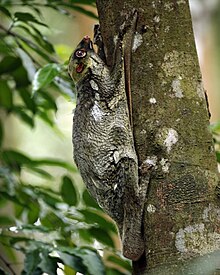
Gliding mammals called colugos sail through the air using membranes that stretch between their limbs and resemble the wings of bats. But these furry gliders are actually a sister group to primates, a new study finds.

Colugo (Galeopterus variegatus, adult female), Central Catchment Area, Singapore - 20060618.jpgColugos are tree dwellers, with limbs connected by flaps of skin known as a patagium, or gliding membrane. These critters live in southeast Asia, and adults measure about 14 to 16 inches (35 to 40 centimeters) long and weigh around 2 to 4 lbs. (1 to 2 kilograms).

Scientists have debated colugos' lineage for the past century. Some experts had linked them to tree shrews, with which colugos share certain physical traits. But recent genetic sequencing revealed that colugos are more closely related to primates — the group that includes great apes and humans. This finding could help scientists develop a clearer picture of evolution in the earliest primates, the researchers suggested.

There are only two known colugo species — sometimes referred to as "flying lemurs," though they are not lemurs and do not fly — and they are poorly understood for a number of reasons, according to study co-author William Murphy, a professor in the Department of Veterinary Integrative Biosciences at Texas A&M University.

Colugos' unusual gliding adaptations have hampered efforts to keep them in captivity, Murphy told Live Science in an email. And their nocturnal lifestyle high in the tree canopies makes it difficult for scientists to observe and track them in the wild.

"Only a few publications have documented their [colugos'] ecology and habits," Murphy said.


Monday, 14 March 2016

Bats in Asia found to have resistance to white-nose syndrome fungus

New findings suggest at least some declining North American bat species could eventually evolve resistance to the devastating disease

Date: March 9, 2016
Source: University of California - Santa Cruz

As the deadly bat disease called white-nose syndrome continues to spread across North America, scientists are studying bats in China to understand how they are able to survive infections with the same fungus that has wiped out millions of North American bats.

By comparing disease dynamics in North American and Asian bat populations, researchers have found evidence that Asian bat species have much lower levels of infection than North American species and therefore are resistant to the fungus. The study, published March 9, 2016 in Proceedings of the Royal Society B, also suggests that some declining North American bat species may be able to evolve enough resistance to the disease to persist, while other species appear less likely to do so.

Led by researchers at the University of California, Santa Cruz, an international team sampled hibernating bats at five sites in China and five sites in the United States, using a standardized swabbing technique to detect and quantify the amount of fungus on each bat.
"Uniformly, across all the species we sampled in China, we found much lower levels of infection--both the fraction of bats infected and the amount of fungus on infected bats were lower than in North America," said first author Joseph Hoyt, a graduate student at UC Santa Cruz.


Tuesday, 10 November 2015

Monkeys in Asia harbor virus from humans, other species

Diverse astroviruses found in macaques, which commonly dwell with people in Bangladesh, Cambodia

Date: November 5, 2015
Source: University of Washington Health Sciences/UW Medicine

When it comes to spreading viruses, bats are thought to be among the worst. Now a new study of nearly 900 nonhuman primates in Bangladesh and Cambodia shows that macaques harbor more diverse astroviruses, which can cause infectious gastroenteritis or diarrhea in humans.

"If you are a bat, you have bat astrovirus, but if you are a monkey, you could have everything," said Lisa Jones-Engel, a research scientist at the University of Washington National Primate Research Primate Center and a co-author of the study, published in PLOS Pathogens.

This research, the scientists said, is the first to show evidence of human astroviruses in animals, and among the earliest to demonstrate that astroviruses can move between mammalian species.

Astroviruses from a number of species, including human, bovine, bird, cow and dog, were detected in monkeys, This "challenges the paradigm that AstV (astrovirus) infection is species-specific," the authors wrote.

It is still unknown whether these viruses are two-way and can be transmitted to humans. They did find evidence that, in monkeys, two species of astrovirus recombined.

Knowing that nonhuman primates can harbor diverse astroviruses -- including novel, recombinant viruses that may be pathogenic and/or more efficiently transmitted -- highlights the importance of continued monitoring, the authors said.


Sunday, 15 March 2015

Asian Monsoon rains drove mammal evolution

Date:
March 11, 2015

Source:
Manchester University

Summary:
New research has shown that the Asian monsoon rains played a key role in the evolution of mammals.


Saturday, 8 November 2014

Major initiative endorsed to protect Asia’s migratory mammals

Date:
November 7, 2014

Source:
Wildlife Conservation Society

Summary:
The Parties to the Convention on Migratory Species, at their 11th meeting of the Conference of the Parties in Quito, Ecuador, agreed today to adopt a Central Asia Migratory Mammal Initiative to protect wildlife in the region from increasing development threats.


Friday, 29 August 2014

Investigation reveals a highly organised ivory trade across Asia and Africa

A new report uncovers the fact that Chinese ivory traffickers are present in virtually every African state, and operate at nearly every point along the supply chain. 

A car covered in carved ivory and yak 
bone was auctioned in 2010 in China
The report, called Out of Africa; Criminalisation of the African Ivory Trade, was commissioned by Born Free USA and C4ADS (a nonprofit organisation that is dedicated to data-driven analysis and evidence-based reporting of conflict and security issues worldwide), and focuses on the entire supply chain from source to end user.

It found that despite its global scale, the majority of the illegal ivory trade is dominated by a small number of networks, and that the majority of the ivory is shipped via just 100 large annual consignments that make up 70-80 per cent of the trade.

Seizures across multiple countries and commodities often appear to trace back to the same individuals and networks, and traffickers, particularly Chinese, straddle Africa and Asia and are linked to seizures in nearly every African range state and at nearly every stage along the supply chain.

Sunday, 22 June 2014

Alarming rise in Black Spotted Turtle trade across Asia - via Herp Digest

Kuala Lumpur, Malaysia, 23rd May 2014—Traffic Newsletter, 
Illegal international trade of the Black Spotted Turtle in Asia has escalated over recent years and immediate action is required to stem the flow, a new TRAFFIC report has found.

The attractive spotted visage of the Black Spotted Turtle Geoclemys hamiltonii may well be its downfall. The species is known to be traded for meat, medicine and pets, although TRAFFIC’s research attributes the sudden rise in demand to the exotic pet trade.

Over 1,960 animals were seized between January 2008 and March 2014. Of these, 95 per cent were confiscated in the final 15 months of that period.

A seizure of another 230 turtles on May 14th underscored the seriousness of the threat. Royal Thai Customs officers in Suvarnabhumi International Airport found the turtles packed in unclaimed bags which had come in on a flight from Kolkata, India.

Seizure information indicates that shipments of the turtles from Bangladesh, India and Pakistan transit through South-east Asian hubs such as Bangkok and are destined for East Asia, in particular Hong Kong. Most of the seizures are from passengers using commercial airlines concealing animals in their baggage. The majority of couriers caught were arrested but only two of the 22 cases recorded resulted in successful prosecutions.

“Enforcement authorities’ efforts to detect and apprehend smugglers are commendable, but a lack of follow-on investigations and prosecution is undoing their good work,” said Dr Chris R Shepherd, Regional Director for TRAFFIC in Southeast Asia.

The Black Spotted Turtle is protected under national laws in its range countries and is listed in Appendix I of the Convention on International Trade in Endangered Species of Wild Flora and Fauna (CITES). All commercial international trade in this species is illegal. 

The report (PDF, 1.1 MB) recommends improving enforcement and prosecution through multilateral and multi-agency coordination. Timely and detailed reporting of seizures to the CITES Secretariat and in the media, together with the outcomes of successful prosecutions, are also urged.

“Wildlife enforcement networks already exist in South and South-east Asia, but given the transnational operations of the criminal networks they are up against, the challenge is to ensure a fully co-ordinated global enforcement response to their activities is delivered,” said Dr Yannick Kuehl, Regional Director for TRAFFIC in East and South Asia

Next week, Viet Nam hosts the 9th Meeting of the ASEAN Wildlife Enforcement Network in Hanoi, at which Strategic Action Plan Development will be discussed, alongside the Special Investigations Group approach on key wildlife trafficking issues linking South-east Asia and other trading partners.

“TRAFFIC hopes our targeted analysis of trafficking routes will assist the region’s Wildlife Enforcement Networks in planning enforcement actions aimed at breaking the lines of supply and demand,” said Shepherd.

TRAFFIC’s findings were released today, World Turtle Day, to highlight the plight of the Black Spotted Turtle and many other species of turtles worldwide, particularly those in Asia which are under threat mainly from habitat loss and over-exploitation for food, medicine and the exotic pet trade.

“Turtle species are seriously threatened - nowhere more so than in Asia with 17 of the 25 most critically endangered tortoises and freshwater turtles on the IUCN Red List found in the region,” said James Tallant, Senior Programme Officer - Species, IUCN Natural Resources Group, Asia.

“IUCN is working with partners across Asia, including TRAFFIC to stem the tide of biodiversity loss. It is very good to see the plight of turtle species being brought to international attention on World Turtle Day. We hope this leads to greater understanding and effective conservation action worldwide."

Escalating Black Spotted Turtle Geoclemys hamiltonii trade in Asia: a study of seizures (PDF, 1.1 MB).

For further information, contact: Elizabeth John, Senior Communications Officer, Tel: +60 (0)12-2079790 /(0)3-7880 3940 Email: elizabeth.john@traffic.org

Saturday, 29 March 2014

US Government helps Asia in the fight against wildlife trafficking

March 2014: Law enforcement officers from Lao PDR and Thailand recently participated in a training course in order to improve their ability to fight against wildlife crime. There were twenty-six participants in total, including customs, police, and wildlife officers, as well as prosecutors.

Wildlife trafficking between Thailand and Lao PDR is renowned as a major route for the smuggling of wild animals and wildlife products. Via these countries, illegal animals and products are transported to China and Vietnam, and as far as Africa. Here, criminals take advantage of weak laws and understaffed law enforcement. The training course was designed to improve enforcement collaboration between Thailand and Lao PDR in an attempt to reduce global wildlife crime. The US State Department’s Bureau of International Narcotics and Law Enforcement Affairs co-funded the course along with the Blue Moon Fund. 

Bangkok-based counter-trafficking organisation Freeland implemented the training as part of Asia’s Regional Response to Endangered Trafficking (ARREST) program, which is run by the US Agency for International Development (USAID). ARREST is the US Government’s largest counter wildlife trafficking program that fights trafficking in Asia by reducing consumer demand, strengthening law enforcement, and enhancing regional cooperation. 


Sunday, 17 November 2013

USA offers reward for help smashing wildlife crime syndicate

November 2013: In an unprecedented move the US Government are offering a reward of up to $1 million for information that will help lead to the dismantling of one of Asia’s largest wildlife-trafficking syndicates. The State Department said it was targeting a Laos-based syndicate called the Xaysavang Network, which spans South Africa, Mozambique, Thailand, Malaysia, Vietnam and China, said the Secretary of State John Kerry in a statement. 

“The Xaysavang Network facilitates the killing of endangered elephants, rhinos, and other species for products such as ivory. 

Thursday, 11 July 2013

American Dogs Come From Asia

European colonization of the Americas brought smallpox, starvation and warfare that decimated indigenous populations.

But the canine companions that crossed the Bering Strait with the ancient people who first settled the Americas have fared better, according to new research, published today (July 9) in the journal Proceedings of the Royal Society B.

A new genetic analysis of hundreds of American dog breeds reveals that the canines' ancient roots trace back to Asia. On average, less than 30 percent of their DNA comes from Europe, suggesting dogs came to the Americas with the ancient humans who established pre-Columbian civilizations.

Monday, 17 June 2013

The lost cousins of Homo sapiens in Asia and the South Pacific


By Paige Minteer

The evolution of humans is the result of a number of speciation events that have built upon one another to create the modern-day human species: Homo sapiens. Humans are believed to have evolved from a line of ancestors dating millions of years ago and originating in Africa. The subsequent Homo sapien ancestors dispersed across Europe and Asia. Of particular note are the “Homo denisova“, of which fragments were found in Siberia, and Homo floresiensis, of which fragments have been found in Flores, Indonesia. Both of these species are of particular relevance to the Southeast Asian and Pacific Island areas because of their continued presence in the DNA of modern humans living there.

“Homo denisova” is considered to be a bridge species between the Neanderthal ancestors and the Homo sapiens species. They are said to have bred with modern humans, and potentially Neanderthals, producing hybrid people. “Homo denisova” are assumed to have had dark skin, brown eyes and brown hair. The teeth are larger than that of which Neanderthals and modern humans have, but more evidence is needed to further extrapolate the size and looks of this species (Hawks 2013). The only remnants of the “Homo denisova” species that have been found are a small toe bone fragment and two molars. This has been enough, however, to create a basic genomic sequence of the species. From this, genome researchers have traced gene markers to help determine the migration patterns of the species. By analyzing the gene flow of various generations of people in various areas in Eastern Europe, Asia and the South Pacific, researchers have been able to decipher the movement of the “Homo denisova”. The origin of this species, however, is debated. While original estimates of the age of the bones make the species too old to be a shoot-off of the H. heidelbergensis species, some argue that it could be a very early speciation from this original species. Others believe “H. denisova” could bring to light a non-erectus evolutionary line. This differentiated evolutionary line would be a large branch-off compared to the branching depicted in current theories of human evolution.


Wednesday, 13 March 2013

Parts of 1400 tigers seized in Asia in 13 years including 123 live tigers


New study reveals scale of persistent illegal Tiger trade
March 2013. Parts of more than 1400 Tigers have been seized across Asia in the past 13 years, according to TRAFFIC's latest analysis of confiscations, which includes new data for 2010-2012.  Reduced to Skin and Bones Revisited finds that parts of at least 1425 Tigers had been seized across all but one of the 13 Tiger range countries between 2000 and 2012. For Cambodia alone, no seizures were recorded at all during the period. Although it is not yet possible to show a definite trend, the analysis provides clear evidence that illegal trade in Tigers, their parts and products, persists as a major conservation concern, says TRAFFIC.

654 seizures
A total of 654 seizures of Tiger parts ranging from skin to bones, to teeth, claws and skulls took place during this period, an average of 110 Tigers killed for trade per year or just over two per week. 89% of seizures occur outside protected areas, emphasizing the importance of anti-trafficking actions to disrupt trade chains and prevent incursions into Tiger habitat. The benefits of such analysis to enhance law enforcement efforts to protect Tigers are obvious.

"If more robust information was routinely collected, analysed and shared between countries, real inroads could be made into targeting the smuggling syndicates behind Tiger trafficking," said Natalia Pervushina, Tiger Trade Programme Leader for TRAFFIC and WWF.

The report, a joint effort by TRAFFIC and the WWF Tigers Alive Initiative, was launched at the Convention on International Trade in Endangered Species of Wild Fauna and Flora (CITES) meeting currently underway in Bangkok, Thailand. Later this week governments will debate efforts underway to protect Tigers and other Asian big cats.
Photo courtesy of WWF.

Live tiger seizures
Perhaps the most significant findings in the updated analysis was increased recording of seizures involving live Tigers - 61 individuals were seized in the three-year period since the last full CITES meeting took place in 2010, representing 50% of overall numbers (123) recorded since 2000. Thailand was the most significant location for interdiction of live Tiger trade (30 Tigers), followed by Lao PDR (11) and Indonesia (9) and Viet Nam (4).

"Given the low population estimates for wild tigers in Thailand, Lao PDR and Viet Nam, combined with the presence of captive Tiger facilities within these three countries, questions have to be raised with respect to the source of these live Tigers in trade," said Nick Cox, Species Programme Manager for WWF-Greater Mekong.


Tuesday, 29 January 2013

Eleven live otters found in airport luggage in Bangkok


Otters in trouble in Asia
January 2013. Bangkok's Suvarnabhumi International Airport has seen countless traffickers attempt to smuggle a myriad wild animals out in luggage, but never otters-until now. Officers at the airport's Wildlife Checkpoint and the Royal Thai Customs discovered 11 live otters when they scanned a bag that had been left at the oversized luggage area of the airport.
As the bag bore no tags and no one claimed it, the officers opened the luggage to find six Smooth Coated Otters and five Oriental Small Clawed Otters inside. The otters, which look to be juveniles, will undergo health checks before being handed over to the Bang-Pra Breeding Center in Chonburi for care.

Otters disappearing from their range
Otters and some species of wild cats are at serious risk in South-East Asia, experts said in 2009 after analysing thousands of camera-trap records that helped map the regional distribution of many small carnivore species. Some, like otters, have apparently disappeared from parts of their former range.

The experts, including members of the IUCN-SSC Cat Specialist, Otter Specialist and Small Carnivore Specialist Groups had pushed for more research on small carnivores like otters that play an important ecological role in tropical forests but receive relatively little conservation attention. They also called on Thailand to develop a national action plan to ensure greater protection for small carnivores.

"This find is a surprise and a worrying one. Otter skins have been interdicted in trade elsewhere in Asia, but live otters are a new development as far as we know. Yet another species we know little about is in danger from wildlife traffickers," said TRAFFIC's Regional Director in South-East Asia, Dr William Schaedla.

"It is great to see that frontline officers in Thailand are maintaining vigilance. However there must be more intelligence led investigations that will arrest the problem at source," he added.

Thursday, 13 December 2012

Rhino Crisis Round Up: Google Awards $5M to Help Protect Rhinos & More


A new grant from Google’s Global Impact Awards will help WWF deploy innovative technologies — such as “conservation drones” — in the battle to protect rhinos and other endangered species in Africa and Asia. The $5 million will enable WWF to develop an integrated state-of-the-art system to detect and curb wildlife trafficking.

Remote aerial survey systems, wildlife tagging technology and ranger patrolling guided by analytical software like the Spatial Monitoring and Reporting Tool (SMART) will be integrated to increase the detection and deterrence of poaching in vulnerable sites in Asia and Africa.
Related Posts with Thumbnails

ShareThis