Showing posts with label bait. Show all posts

Friday, 15 June 2018

Dolphins deliberately killed for use as bait in global fisheries


The harvest of aquatic mammals for bait is widespread globally, but most common in Latin America and Asia

Date:  June 7, 2018
Source:  Frontiers

Important new research released ahead of World Oceans Day exposes the widespread practice of killing aquatic mammals such as dolphins, sea lions, seals and otters for use as bait in global fisheries. Published in open-access journal Frontiers in Marine Science, the study shines a new light into what researchers say is an issue that has so far received little attention within the scientific and conservation communities.


Friday, 5 May 2017

Menopause-causing bait is curbing rat populations in New York

5 May 2017

Population halved in three months

By Alice Klein

It is pest control without poison. A new type of bait that stops rats from having babies is helping to tackle infestations in several US cities.

The bait – known as ContraPest – was approved by the US Environmental Protection Agency last August. It makes rats infertile by triggering early menopause in females and impairing sperm production in males. There are no side effects and the rats eventually die of natural causes.

The technique is considered more benign than other control strategies being investigated, such as gene drive, which can be used to spread infertility genes through pest populations. A recent report by the US National Academies of Sciences warned that gene drive could have unforeseen consequences.

The first field trial of ContraPest, conducted in the New York City Subway in 2013, halved the resident rat population in three months. Two more trials have now been completed in the US – one at a large-scale farm and one in an urban area – both in East Coast cities.

Rat numbers at the farm fell by one-third over three months. In the urban area, population growth was suppressed during the peak breeding season so that the population expanded at only one-third the expected rate.

“You’ll never wipe out rats completely – they’re too smart,” says Brandy Pyzyna from SenesTech, the biotechnology company in Arizona that developed the bait.
Fast breeders

“But if you think about it, one breeding pair of rats can produce 15,000 pups in a year,” she says. “Even if you can reduce that by a third in a few months, you’re already talking 5000 fewer rats, and the population will continue to go down.”

Continued

Monday, 12 May 2014

Reports of using live animals as bait in trapping prompt calls for new law


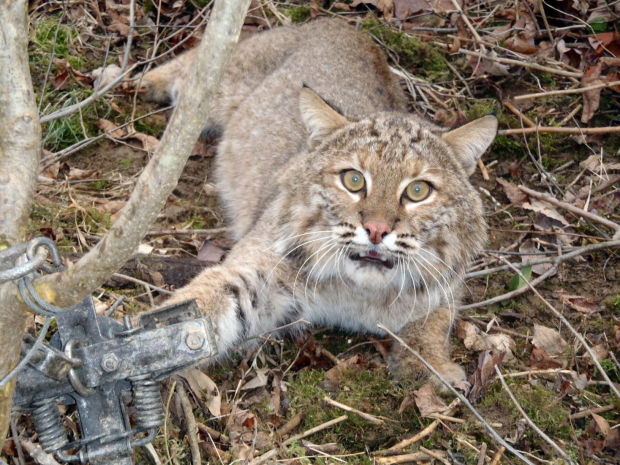
Bobcats are a popular prey for trappers and hunters including untrained and unscrupulous trappers who may have used live bait to entice the cats into traps. State officials hope to outlaw the use of live bait for trapping and state trapping associations are firmly in favor of the proposal.
3 hours ago • Jim Holland Journal staff


Bobcat trapping basics

Bobcats are a wily prey for hunters and trappers.

Also known as lynx, bobcats are found in most areas of the continental United States from southern Canada to southern Mexico.

In South Dakota, the meat-eating cats are most prevalent in the western half of the state, and rarely seen in the northeast part of the state.

Their keen eyesight and hearing make them always wary of danger.

According to the National Trapper's Association Trapping Handbook, larger foothold (spring) traps, cage traps and medium- to large-size body-grip traps can be used to catch bobcats.

Foothold and body-grip traps are sometime hidden in holes or a cubby, a concealment made up with rocks, sticks or logs. 

Bobcats trapped alive are usually killed by choking with a catch pole, or by a gunshot or sharp blow to the head. Body-grip traps kill by asphyxiation.

Trappers use fresh meat and catnip to lure bobcats. Rabbits, squirrels and birds are regular parts of its diet.

Strips of colored cloth or a shiny metal object hung from a string blowing in the breeze near a trap set can be used to lure bobcats.

In South Dakota, bobcat trapping season runs from late December to mid-February. 

State game officials say it's time to outlaw the use of live mammals as bait in trapping fur-bearing animals.

And representatives from trapping and fur-harvesting organizations in the state agree.

"We were appalled that there isn't a law on the books and that it was even allowed," said Anna Hermanson of Newell, president of the South Dakota Trapping Association. "Everybody pretty much agreed that live animals should not be used for bait."

Reports of live animals — including domestic cats, rabbits and birds — used to bait coyote and bobcat traps prompted the South Dakota Game, Fish & Parks Commission to propose a ban at its May meeting.

Related Posts with Thumbnails

ShareThis