Showing posts with label logging. Show all posts

Friday, 20 March 2020

State MPs dismayed at NSW Forestry logging unburnt habitat after bushfires

Endangered species have lost up to 82% of their habitat but Environment Protection Authority says logging of unburnt forest is legal


Sat 14 Mar 2020 19.00 GMTLast modified on Sat 14 Mar 2020 23.55 GMT
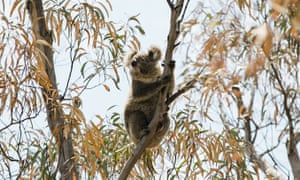

 
Logging is continuing in NSW forest north-west of Coffs Harbour in bushland that is proposed for the Great Koala national park. Photograph: International Fund For Animal Welfare

The New South Wales Forestry Corporation has continued to log unburnt forest that is habitat for some of the most imperilled species in the aftermath of the state’s bushfire crisis.

Logging operations have continued in the Styx River state forest on the north coast that is now remnant habitat for endangered species including the greater glider and the Hastings River mouse.

Both the federal and state governments have identified the mouse, which had 82% of its habitat burnt, as one of the species most at risk of extinction as a result of the bushfire disaster.

Trucks have also moved into an area of the Lower Bucca state forest north-west of Coffs Harbour in bushland that is part of the proposed Great Koala national park.

Twenty-four per cent of koala habitat in eastern NSW was burnt in the fire crisis and the environment minister, Sussan Ley, has said up to 30% of the koala population on the mid north coast may have been killed.

Environment groups and the independent state MLC Justin Field have expressed dismay that NSW Forestry Corporation has been able to continue with harvest plans in unburnt forest that is now important remnant habitat for wildlife.

The Nature Conservation Council of NSW asked the NSW Environment Protection Authority (EPA) to investigate the logging. But the council’s chief executive said it was told that operations could not be halted when Forestry Corporation was not in breach of its approvals.

The council is now calling on the state government to suspend the coastal integrated forestry operations approval (IFOA) until assessments of the impact of the fires are complete.

Sunday, 2 February 2020

Koalas found dead on Australia logging plantation

Dozens of koalas have been found dead or injured at a timber plantation in the Australian state of Victoria, sparking an investigation by officials.

Blue gum trees - an important koala habitat - were harvested from the plantation in December, leaving only a few isolated stands of trees.

Some koalas had starved to death in the remaining trees. Others were apparently killed by bulldozers.

About 80 surviving koalas have been removed and are being cared for.

The deaths come after tens of thousands of koalas were killed in the bushfires that have ravaged Australia. The marsupial is listed as "vulnerable" by Australia's Environment Ministry.
'Australia should be ashamed'

After the plantation was logged in December, reports of hundreds of starving koalas came in, environmental group Friends of the Earth Australia said.


The Department of Environment, Land, Water and Planning said it was prepared to prosecute over the incident.

Thursday, 27 April 2017

Conservationists call for moratorium on logging to save endangered Leadbeater’s possum

Victorian government asked to ‘completely prohibit logging’ on more than 100,000 hectares of the state’s mountain ash forest

Calla Wahlquist
 

Monday 24 April 2017 23.16 BST Last modified on Tuesday 25 April 2017 00.40 BST

Conservationists have called for a moratorium on logging more than 100,000 hectares of Victoria’s remaining native forest estate to protect the critically endangered Leadbeater’s possum.

Environmental Justice Australia, acting on behalf of volunteer organisation Friends of the Leadbeater’s Possum, wrote to the Victorian environment minister, Lily D’Ambrosio, on Monday requesting she implement an interim conservation order to “completely prohibit logging within the critical habitat of the Leadbeater’s possum” in order to ensure the survival of the species, which is at risk of dying out within the next 40 years.

The critical habitat area is made up of 171,345 hectares of mountain ash forest in central Victoria, according to recent research.

According to lawyer Danya Jacobs, about 101,400 hectares of that habitat is currently available for logging.

The proposal would see state-owned logging corporation VicForests lose access to almost a quarter of its remaining 490,000-hectare native production forests, leaving it unable to meet already reduced logging quotas.

The majority of Victoria’s native forest logging reserves are in the mountain ash forests of central Victoria and Gippsland, an area that overlaps with Leadbeater’s possum habitat.

In a letter provided to Guardian Australia, Jacobs argues that existing protections in place for the species are “inadequate and not working” and that the possum was at “very high risk of extinction if additional areas of its habitat are not protected”.


continued

Saturday, 24 November 2012

Borneo will probably lose 50% of its orang-utans


According to new research led by a Liverpool John Moores University conservation scientist, one of our closest cousins, the Bornean orang-utan, is facing extinction.

November 2012. Sharing 97% of human DNA, orang-utans are close to humans in evolutionary terms but scientist Professor Serge Wich and others have found that only 22% of the already endangered species are actually living in protected areas.

Logging, oil palm plantation and tree plantation land
The research also shows that the rest of the orang-utans are inhabiting areas used for logging (29%), oil palm plantations (19%), industrial tree plantations (6%) or are in land that is not allocated for any specific use (24%).

Recent studies show that orang-utans could possibly survive in well-managed logging areas so a very optimistic outcome would be that half of the current population could continue to exist. Unfortunately, it is more likely that far less than half of the population will survive as not all protected areas and logging areas will continue to be well-managed. Improving such management is therefore a high priority.

Commenting about the research, Professor Wich said: "This research paints a bleak future for the Bornean orang-utan. To avoid this potential decline, plantation development in orang-utan habitats must be halted because it infringes national laws on orang-utan protection.

Further growth of the oil palm plantation sector should be achieved through increasing the productivity of trees in existing plantations and expansion of new plantations into areas that have already been deforested.

Island-wide land-use masterplan
"To reach this goal a large scale, island-wide land-use masterplan is needed that clarifies which possible land uses and management systems are compatible with orang-utan conservation. Such a plan should make much better use of values of ecosystem services of forests such as water provision, flood control, carbon sequestration, and sources of livelihood for rural communities.

"Presently land use planning is more driven by vested interests and direct and immediate economic gains, rather than by approaches that take into consideration social equity and environmental sustainability."

The research appears in the scientific journal 'PLOS ONE'.

Wednesday, 7 November 2012

Diversity and Abundance of Some Insect Fauna in Krau Wildlife Reserve Forest, Malaysia


ScienceDaily (Oct. 30, 2012) — Concerned about habitat changes due to logging and rapid development, Universiti Teknologi MARA researchers recently conducted a study on the diversity of the important Hymenoptera group, which includes bees, wasps and ants. Their results will be useful in forest conservation programmes.
This study was initiated due to the changes taking place to the natural habitat of insects due to logging and development. These activities pose a great threat to insect communities in the forest.
The study focused on Hymenoptera known as the most important group of insects in any terrestrial ecosystem. Bees, wasps and ants are some of the insects in this group. They are important pollinators of flowering plants as well as predators of many arthropods. As such, many of them can be classified as the key stone species in a particular ecosystem.
Preliminary observation showed that the Hymenopteran were quite diverse at the Krau Wildlife and Forest Reserve (KWFR), Pahang, geographically considered as a lowland dipterocarp forest, which is connected to the Malaysian National Park. The objective of this study was to determine the level of biodiversity, abundance and richness of Hymenoptera in Kuala Lompat, Krau Wildlife Forest Reserve and to study its relationship, if any, between changes in environmental gradient from forest fringes and deeper into the forest.


Friday, 21 September 2012

Bolivia enacts law to protect Amazon pink dolphins


Bolivian President Evo Morales has enacted a law aimed at protecting a unique species of dolphins that live in the country's Amazon rivers.
The new legislation bans fishing freshwater pink dolphins and declares the species a national treasure.
At a ceremony along the shores of the Ibare river, President Morales called on the armed forces to protect the habitats of the pink dolphins
The species is threatened by erosion, pollution and logging in the Amazon.
The Bolivian pink dolphin, whose scientific name is Inia boliviensis, is similar to mammals found in neighbouring Brazil, Peru, Colombia and Venezuela.

Tuesday, 5 June 2012

US Forest Service moves logging farther from rare bird nests at Lake Tahoe but critics unhappy


RENO, Nev. — Forest Service officials have agreed to move post-fire logging operations at Lake Tahoe farther away from nests with rare, black-backed woodpecker chicks at the request of conservationists who've been fighting the overall project for years.

But leaders of the John Muir Project — who have documented one nest in the path of the logging and suspect there are more — say the no-cut buffers the agency is implementing are far too small to protect one of the rarest birds in the Sierra Nevada.

"No credible black-backed woodpecker scientist would say it is enough — not even close," said Chad Hanson, a wildlife ecologist and executive director of the group who has filed a petition seeking protection of the bird under the U.S. Endangered Species Act.

"It will kill them just as surely as logging right up to the nest tree," he said.
Lawyers for the Forest Service told the group last week its proposed 60-acre buffers around each nest would undermine the 1,400-acre project's goals of restoring the forest and reducing future catastrophic risks where the Angora fire destroyed 250 homes in South Lake Tahoe in 2007.

But Deputy Forest Supervisor Jeff Marsolais said Friday the agency and the private logging contractor agreed to move the fuels reduction operations at least 10 acres away from the nesting area until the chicks leave the nest. One acre is a little less than the size of a football field.

"The relocation shows our ongoing commitment to balance ecosystem values and our intent to maintain efficient operations in completing our Angora restoration efforts," Marsolais said in a statement the agency provided to The Associated Press late Friday.

In addition to no logging within 10 to 12 acres of the identified nest tree, an additional 25 acres of habitat will be preserved within one-quarter mile of the tree, until the chicks "fledge," USFS spokeswoman Cheva Heck said.

The area includes some of the last of the 156 acres of forest that remains uncut in the overall 1,400-acre project first proposed in early 2009 and under way for more than a year.

A federal judge in Sacramento earlier rejected a request for an injunction to block the logging filed by the John Muir Project and its parent Earth Island Institute.

The 9th U.S. Circuit Court of Appeals currently is considering their appeal claiming the Forest Service's environmental assessment ignores the agency's own science suggesting the project will harm the bird without effectively reducing long-term fire threats.

Sunday, 3 June 2012

Two rare bird species in Taita forests face extinction


SOME unique plants and bird species at the Taita Hills forests have become extinct, a conservationist has said. They attributed the extinction to serious environmental degradation at the forests. ''Illegal loggers are to blame for the destruction of the environment, a move that is threatening the survival of the unique plants and birds species at the forests,'' said Taita Taveta Forum official Dawson Mwanyumba.
He expressed concern that a unique plant known as Cycotrica tree, which is said to have abundant medicinal value related to the treatment of cancer, has become extinct. ''The tree species which some decades ago were found at the Taita Hills forests became extinct a decade ago, according to research findings,'' said Mwanyumba. "Despite efforts by researchers to save the plant from extinction, the plant species was confirmed extinct a decade ago.''
Mwanyumba said plants such as Ngangao, Fururu and Vuria forests have become extinct at the forests. "Rearchers from Europe and the far East used to troop the Taita Hills forests to explore the unique plant. However, it very sad now that the plant is no more today," he said. Mwanyumba also noted that two endemic bird species namely Taita Thrush and Taita Apalis might also become extinct soon if proper conservation measures are not put in place to protect them.
Another worm identified as cilian worm only found in Sagalla forest is also under the threat of extinction due to deliberate wild fires started by community members. Research findings have also revealed that only a very small area of less that 10 meters square which favours the survival of the worm has been left undisturbed at the forest since the worm survives in cool and moist hilltop areas of the indigenous forest. "Wanton destruction of forests and deliberate wildfires caused by people are the major threats causing the extinction of these endangered plant and animal species.Proper civic education on environment protection is needed," he said.
The conservationist was concerned that the Taita hills forest has a high concentration of endemic species yet it is still under pressure of severe encroachment. Now, the Taita Taveta Wildlife forum in collaboration with other environmental partners have launched a massive campaign to restore the forest cover through planting trees. "We have launched several tree planting projects to restore the lost habitat," Mwanyumba noted adding that the projects are aimed at connecting Ngangao, Fururu, Chawia and Mbololo forests so that endangered species can migrate freely within the forests," he said.

Lake Tahoe's Black-Backed Woodpecker Population In Danger: Feds Asked To Delay Logging


RENO, Nev. -- Rare woodpecker chicks in burned forest stands at Lake Tahoe won't survive if the U.S. Forest Service proceeds with a contentious post-fire logging project, according to conservationists pressing the agency to postpone cutting around the trees until after the nesting season in August.
The John Muir Project is asking for the delay while awaiting a ruling on an appeal to the 9th U.S. Circuit aimed at blocking what's left of the salvage logging operation where the Angora Fire five years ago burned more than 3,000 acres and 250 homes on the edge of South Lake Tahoe, Calif.
Chad Hanson, the group's executive director, documented black-backed woodpecker chicks this week in at least one nest in the cavity of a standing dead tree at the project site and suspects there are more.
Forest Service officials said Thursday they were reviewing the matter. Lawyers for the agency indicated to the critics earlier this week the plans could not be changed.
Hanson's group and others recently petitioned the Interior Department for Endangered Species Act protection for the black-backed woodpecker in the Sierra Nevada, eastern Cascades of Oregon and Black Hills of South Dakota and Wyoming.
The petition is the first seeking protection of a species tied to post-fire habitat. It says the woodpecker has survived for millions of years by eating beetle larvae in burned trees – 13,000 larvae annually – but is threatened by dramatic reductions in habitat resulting from fire suppression and post-fire logging.
At least 300 acres of partially burned and standing dead trees remain uncut in the Angora project area that calls for logging up to 1,500 acres – a total area of more than 2 square miles on national forest land on the west edge of town.
Hanson said the logging had moved within a few hundred yards of the actual nest tree where he identified a mother black-backed woodpecker feeding chicks on Memorial Day, accompanied by a photographer for The Associated Press.
Agency officials told the group normal procedures dictate any documented nest tree itself be spared but no additional protection currently is planned at the project in the works since early 2009.
Hanson, a wildlife ecologist at the University of California, Davis who has been challenging logging projects in the Sierra for more than a decade with mixed success, said a bare minimum buffer of at least 60 acres is needed.
With less, he said even if the chicks' parents don't abandon the nest they won't have a big enough foraging territory to keep the young fed. He said the chicks won't be able to fly for weeks and logging already is up against the 60-acre core.
"There are some other unlogged areas they could fly to as long as the nest core area was protected, but if that's gone, the chicks would just starve to death," said Rachel Fazio, a lawyer for the group who argued their case last May 14 before a three-judge panel at the federal appellate court in San Francisco.
Fazio said it is ironic that the Forest Service and the Tahoe Institute for Natural Science are co-hosting the third annual Lake Tahoe Bird Festival on Saturday at the Taylor Creek Visitor Center just a few miles from the woodpeckers' nest.
Read on:  
http://www.huffingtonpost.com/2012/06/01/lake-tahoes-black-backed-woodpecker_n_1562763.html

Saturday, 14 January 2012

Loggers 'burned Amazon tribe girl alive'

Loggers in Brazil captured an eight-year-old girl from one of the Amazon's last uncontacted tribes and burned her alive as part of a campaign to force the indigenous population from its land, reports claimed on Tuesday night.

The child was said to have wandered away from her village, where around 60 members of the Awá tribe, who live in complete isolation from the modern world, and fallen into the hands of the loggers.
Luis Carlos Guajajaras, a local leader from a separate tribe, told a Brazilian news website that they tied to her a tree and set her alight as a warning to other natives, who live in a protected reserve in the north-eastern state of Maranhão .
"She was from another tribe, they live deep in the jungle, and have no contact with the outside world. It would have been the first time she had ever seen white men. We heard that they laughed as they burned her to death," he said.
Reports of the killing, which was said to have happened in October or November last year, were seconded by the Indigenous Missionary Council (CIMI), a Catholic group which said it had seen footage of her charred remains.
A spokesman for the Brazil's Indian Affairs Department said the government was urgently investigating the claims.
Huge iron ore deposits and valuable timber have encouraged mining and logging companies to enter the forests of Maranhão despite laws designed to protect the few remaining uncontacted tribes, often leading to violent clashes.
Around 450 tribes people have were murdered in Brazil between 2003 and 2010, according to figures from CIMI.
Survival International, a charity for tribal groups, warned that a third of the Awá's land had already been destroyed and that their nomadic hunter-gatherer lifestyle was being threatened as animals fled in the face of the approaching logging companies.

Wednesday, 16 November 2011

Logging threat fears for rare lobster

Experts fear a planned logging operation in Tasmania's north-west threatens the survival of the Tasmanian giant freshwater lobster.

A river system near Wynyard has been earmarked for logging by Forestry Tasmania, despite the area being known as one of the last strong holds of the vulnerable lobster.

The coupe is not listed for immediate protection under Tasmania's $276 million forest peace deal, but is being assessed for inclusion in future reserves of high conservation value forest.

Lobster expert Todd Walsh says sediment run-off from logging operations could decimate lobster populations and the area should be given immediate protection.

"Sediment covers their homes, which means the juvenile lobsters have nowhere to live, which means they're exposed to predators like platypus and blackfish."

"But also it covers up their food supply so they either starve to death or they get eaten; so sediment basically wipes them out."

Mr Walsh says the area is an important study site.

"This tributary runs into probably the most surveyed lobster spot on the planet, so there's been more lobsters surveyed and tagged downstream from this tributary than anywhere else.

"So it's probably the most important site that we've got," he said.

Meanwhile Forestry Tasmania has denied plans to log a key habitat of the giant freshwater lobster go against the spirit of the forest peace deal.

Ken Jefferys from Forestry Tasmania says it is harvesting the coupe to meet supply agreements, as it is required to do under the forest agreement.

"Only a few weeks ago we had to send a consignment from the south of the state to the north west with sawlogs to keep those mills operating, we are in a very constrained space, whenever you lock up more forests our capacity to reschedule, to adopt flexibility is significantly reduced."

http://www.abc.net.au/news/2011-11-09/20111109-logging-threat-fears-for-rare-lobster/3655276

Tuesday, 4 January 2011

Coffs Harbour koalas lose habitat to red tape

THE state Environment Department has approved logging of almost 2000 hectares of significant koala habitat contrary to its own guidelines, conservationists say.


Since 2007, at least 60 separate logging applications on private land have been approved in areas containing ''core koala habitat'' around Coffs Harbour, according to an analysis by the North Coast Environment Council.

The department does not dispute the council's figures, but said the Coffs Harbour koala plan of management, which identifies the vulnerable species' local habitats, is not officially gazetted.

Advertisement: Story continues below Because of this, the prohibition on logging that normally applies to important koala habitats under state environmental planning policies could not be enforced in that council area, the department's director of landscapes and ecosystems conservation, Tom Grosskopf, said.

''We're helping them to get their plan updated and get it going,'' he said.

But local environmentalists are appalled and have accused the department of playing word games. The environment council's vice-president, Susie Russell, said the department knew full well where the region's key koala areas were. It had been integral in mapping the habitats, but was ignoring the results and approving their destruction.

The NSW Private Native Forestry code of practice prohibits forestry operations in core koala habitats.

Mr Grosskopf said that despite the logging approvals around Coffs Harbour, the department protected koalas.

The department could not say when the koala management plan would be officially gazetted.

Saffron Howden

http://www.smh.com.au/environment/conservation/coffs-harbour-koalas-lose-habitat-to-red-tape-20110103-19dwt.html

Monday, 8 November 2010

Russia’s logging rights auction derailed after public outcry

Logging would have threatened few remaining Amur tigers

November 2010: Public outcry has derailed an auction planned for the end of last month by the forestry administration of Primorsky Province in the Russian Far East that would have opened up critical Amur tiger habitats for logging.

The Forest Management Department said that its director Pyotr Diuk departed Tuesday on holiday, and the commission responsible for conducting the auction, highlighted by Wildlife Extra last month - Amur tiger habitat threatened by Russian auctions - was a no-show.


The Forest Management Agency of Primorsky Province had announced that it would conduct an auction on October 26 for logging rights for 16 harvest sites in the Bikinsky and Pozharsky Korean Pine Nut Harvesting Zones, and the proposed Middle Ussuri wildlife refuge, by making them available for so-called intermediate harvesting.

The failed auction comes after WWF-Russia alerted the press to the auction and demanded the exemption of protected forests in the Bikin River Basin of northern Primorsky Province from a timber auction authorised by the provincial Forest Management Department.

Public reaction was universally negative
WWF experts and representative to the Legislative Assembly Aleksandr Ermolayev spoke out against the proposed auction. Their testimony then was sent to the Forest Management Department and Primorsky Province Ecological Prosecutor's office for review.

Public reaction to the auction, in Russia and abroad, was universally negative, especially because Prime Minister Vladimir Putin has invited all heads of government from tiger range states to participate next month in the Tiger Summit in St. Petersburg.

Meanwhile, a spokesperson for Prime Minister Putin said that a full public statement was pending an investigation of the circumstances surrounding the auction, according to WWF-Russia. Also, the Russian Federal Forest Agency sent a telegram to Primorskii Province's governor with a request to investigate within ten days the legality of the proposed logging of Korean pine stands.

Logging would increase access for poachers
Intermediate harvesting is a widely abused legal loophole which allows loggers to cut valuable Korean pine, oak and ash timber in protected forests. This practice greatly increases poaching access to remote tiger territories (through forest road building), destroys key breeding, feeding and overwintering habitat for tigers and their prey, and significantly reduces the supply of pine nuts and acorns on which tiger prey species survive.

The logging rights up for auction would have allowed loggers to cut down forests that protect salmon breeding grounds and are crucial habitats for Amur tigers.

The endangered Amur tiger, numbering fewer than 500 in the wild, is found primarily in southeastern Russia and northern China.

http://www.wildlifeextra.com/go/news/logging-russia02.html

Thursday, 25 March 2010

Gorillas Could Disappear in 15 Years, UN Agency Warns

24 March 2010

Gorillas could disappear from large parts of the Greater Congo Basin in central Africa by the mid-2020s unless urgent action is taken to safeguard their habitats and counter poaching, a new report by the United Nations Environment Programme (UNEP) and INTERPOL warned today.

Projections in 2002 had suggested that only 10 per cent of the original gorilla ranges would remain by 2030, but the report found that those estimates were too optimistic given the intensification of pressures including illegal logging, mining, charcoal production and increased demand for bush meat, of which an increasing proportion is ape meat.

Outbreaks of the Ebola haemorrhagic fever virus are adding to concerns. These epidemics have killed thousands of great apes, including gorillas, and by some estimates up to 90 per cent of animals infected by the virus will die.

The report, launched at the meeting of the Convention on the International Trade in Endangered Species (CITES) currently taking place in Qatar, said the situation is especially critical in the eastern Democratic Republic of Congo (DRC) where a great deal of the escalating damage is linked with militias operating in the region.

It stated that the militias are behind much of the illegal trade, which may be worth several hundred million dollars a year.

"This is a tragedy for the great apes and one also for countless other species being impacted by this intensifying and all too often illegal trade," said Achim Steiner, UNEP's executive director.

"Ultimately it is also a tragedy for the people living in the communities and countries concerned. These natural assets are their assets: ones underpinning lives and livelihoods for millions of people. In short it is environmental crime and theft by the few and the powerful at the expense of the poor and the vulnerable," he added.

Mr. Steiner welcomed the involvement of INTERPOL and called on the international community to step up support for the agency's environmental crime programme.

Christian Nellemann, a senior officer at UNEP who was lead author of the 2002 report and headed up the new one, said the original assessment had underestimated the scale of the bush meat trade, the rise in logging and the impact of the Ebola virus on great ape populations.

"With the current and accelerated rate of poaching for bush meat and habitat loss, the gorillas of the Greater Congo Basin may now disappear from most of their present range within 10 to 15 years," said Mr. Nellemann.

"We are observing a decline in wildlife across many parts of the region, and also side-effects on poaching outside the region and on poaching for ivory and rhino horn, often involving poachers and smugglers operating from the Congo Basin, Uganda, Burundi and Rwanda, to buyers in Asia and beyond," he added.

http://allafrica.com/stories/201003250006.html
Related Posts with Thumbnails

ShareThis
