Showing posts with label genetic diversity. Show all posts

Friday, 8 November 2019

Time ticks away at wild bison genetic diversity


NOVEMBER 3, 2019

by Morgan Lee


Evidence is mounting that wild North American bison are gradually shedding their genetic diversity across many of the isolated herds overseen by the U.S. government, weakening future resilience against disease and climate events in the shadow of human encroachment.

The extent of the creeping threat to herds overseen by the Department of Interior—the backbone of wild bison conservation efforts for North America—is coming into sharper focus amid advances in genetic studies.

Preliminary results of a genetic population analysis commissioned by the National Park Service show three small federal herds would almost certainly die off—extinguishing their DNA lineage—within 200 years under current management practices that limit transfers for interbreeding among distant herds.

The study is awaiting peer review by other scientists. It does not include Yellowstone National Park's herd of some 5,000 unfenced bison, the largest federal conservation herd that's seen by millions of people who visit the park annually.

"Some of these herds that lost the most genetic diversity do have a high probability of going extinct, due to the accumulation of inbreeding," explained Cynthia Hartway, a conservation scientist at the bison program with Wildlife Conservation Society who led the analysis.

Wednesday, 6 March 2019

Hope for fighting disease known as Ebola of frogs


Date:  February 15, 2019
Source:  University of Central Florida
Despite widespread infection, some frog populations are surviving a deadly disease that is the equivalent of humankind's Ebola virus. The reason -- genetic diversity.
That's the finding of a new study published this week in the journal Immunogenetics. Anna Savage, an assistant professor of biology at the University of Central Florida, is the lead author of the study.
The research is important because frogs are facing what may be a mass extinction as a result of disease, Savage says.
"If you have more genetic variation, you have more potential to respond and adapt to anything," Savage says.
However, protecting frog habitats from destruction and pollution is critical, she says.
"Don't destroy habitats, maintain large population sizes -- these simple things are the best actions to implement, given whatever limited information we have, to give populations the chance to rebound," she says.

Wednesday, 15 November 2017

Tiny bees play big part in secret sex lives of trees


Date:  November 6, 2017
Source:  University of Texas at Austin

Summary:
When it comes to sex between plants, tiny bees the size of ladybugs play a critical role in promoting long-distance pairings. That's what scientists discovered after one of the most detailed paternity tests in wild trees ever conducted. The research gives new insights into how certain bees promote genetic diversity that is essential for plants to adapt to various threats, from disease to climate change.


Sunday, 12 November 2017

Low genetic diversity in domestic ferrets


Date:  November 1, 2017
Source:  University of Wyoming

Summary:
Researchers reported that the domestic ferrets in North America and Australia had extremely low genetic diversity, whereas ferrets in Europe had higher genetic diversity, as periodic hybridization with wild polecats appears to occur. However, all the countries sampled had ferrets with lower genetic diversity than their wild ancestors.


Friday, 27 May 2016

Beavers released into Devon river in bid to boost gene pool

Male and female set free as part of five-year trial to monitor the impact of England’s only wild population of the mammals

Press Association
Thursday 26 May 201606.01 BST

A new pair of beavers has been released into a river in Devon to boost the genetic diversity of England’s only wild population of the mammals.

The male and female were set free on the river Otter as part of a five-year trial monitoring the impact of Eurasian beavers, a species hunted to extinction hundreds of years ago in the UK, on the surrounding landscape, wildlife and economy.

Beavers have been living wild on the river Otter for up to a decade but faced being re-homed in captivity after evidence emerged that they were successfully breeding.

Plans for a monitoring trial were put forward by Devon Wildlife Trust, with the backing of local people, and were given the green light by government agency Natural England, subject to the adults being temporarily captured for disease testing.

Genetic screening of the captured adults - which were re-released last year – revealed they were all closely related, and a decision was taken to introduce a new pair to increase the gene pool and boost the number of breeding animals.

Devon Wildlife Trust’s Peter Burgess said the results had shown it was likely there was one mother potentially breeding with her offspring.

There were also concerns that with just two breeding pairs, if one or more of the females died, there would be a declining population.

For the release the new beavers, both around two years old, were carried in separate crates through a boggy field down to the riverbank, where the team of wildlife experts had constructed two lodges for them in a quiet spot under willow trees.

The crates were pushed up against the entrance to the lodges and the beavers were moved in with a bit of encouragement, before the team sealed up the manmade homes and retreated to watch what was going on inside via infrared cameras.


Tuesday, 28 April 2015

New Zealand stoats provide an ark for genetic diversity

Date:April 27, 2015

Source:University of ExeterSummary:

British stoats suffered a dramatic loss in genetic diversity in the 20th century but extinct British genes were preserved in the stoat population of New Zealand, a new study has found. The research reveals that stoats, which were introduced to New Zealand, have greater genetic diversity there, than in their native Britain. The results are unusual because introducing a species to a new area is usually associated with a loss in its genetic diversity.

Sunday, 26 October 2014

Decrease of genetic diversity in the endangered Saimaa ringed seal continues

Date:
October 24, 2014

Source:
University of Eastern Finland

Summary:
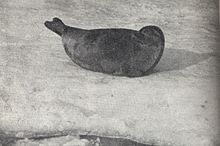
Pusa hispida saimensis ca 1956.jpgThe critically endangered Saimaa ringed seal, which inhabits Lake Saimaa in Finland, has extremely low genetic diversity and this development seems to continue, according to a recent study. Researchers analyzed the temporal and regional variation in the genetic diversity of the endangered Saimaa ringed seal. The population is only around 300 individuals divided into smaller sub-populations and with very little migration among between them.

Friday, 10 October 2014

California's pumas threatened by urbanisation

Mountain lions in southern California are facing an uncertain future as urbanisation forces them to live in isolated groups, and suffer a severe loss of genetic diversity.

Scientists from the University of California’s Davis School of Veterinary Medicine carried out genetic sampling of 354 mountain lions, or pumas, across California, including 97 from the southern part of the state.

They found pumas in the Santa Ana Mountains lived in what is an essentially isolated area and displayed lower genetic diversity than those from nearly every other region in the state.

This is because say the scientists their range is surrounded by urbanisation and a growing population of about 20 million people. The range is linked with the Peninsular Range via a small wildlife corridor, but pumas avoid it as it is bisects a busy 10-lane highway and is associated human development – hardly incentives to venture there.

Monday, 25 August 2014

Evolutionary history of honeybees revealed by genomics


25th August 2014

18 hours ago

In a study published in Nature Genetics, researchers from Uppsala University present the first global analysis of genome variation in honeybees. The findings show a surprisingly high level of genetic diversity in honeybees, and indicate that the species most probably originates from Asia, and not from Africa as previously thought.

The honeybee (Apis mellifera) is of crucial importance for humanity. One third of our food is dependent on the pollination of fruits, nuts and vegetables by bees and other insects. Extensive losses of honeybee colonies in recent years are a major cause for concern. Honeybees face threats from disease, climate change, and management practices. To combat these threats it is important to understand the evolutionary history of honeybees and how they are adapted to different environments across the world.


Saturday, 9 February 2013

Sweden hunts more wolves 'to help genetic diversity'


Wolves in Europe being targeted again
February 2012. The Swedish Environmental Protection Agency has authorized the hunting of 16 wolves in what conservationists have described as a surprising U-turn.

According to WWF Sweden "It is a surprising decision that was not included in the management plan for wolves published as recently as last summer.

"This will constitute a complete U-turn compared from what Sweden's Environmental Protection Agency said a few weeks ago when they announced that the hunt would not be allowed. Since no new scientific information has emerged, this U-turn is a mystery, says Håkan Wirtén, Secretary General of WWF.

The Swedish Environmental Protection Agency has announced permission for "selective and targeted hunt of inbred wolves as a step towards reducing inbreeding and having a sustainable, healthy wolf population. A selective and targeted hunt is the only method that can reduce the level of inbreeding in the short term," it said. Wildlife Extra questions how hunting solves an inbreeding problem. If the problem is bad, the wolves won't thrive due to a lack of genetic diversity. There are currently no plans to bring wolves in from Finland or Russia, another way to boost the genetic diversity.

Wednesday, 19 December 2012

Pygmy Elephants Get Protection Boost from Genetics


To help protect a diminutive elephant researchers are taking an innovative look at the pachyderm's genome.

The goal is to understand the genetic diversity of pygmy elephants on the island of Borneo. Numbering about 2,000, these babyish-looking elephants are the most endangered subspecies of Asian elephant. They live primarily in the Malaysian state of Sabah on Borneo, where they are threatened by the loss and fragmentation of their forest, often by development associated with palm oil, widely used, edible plant oil.

"We are interested in looking at the diversity of elephants around the whole distribution range in Sabah," said study researcher Reeta Sharma, a postdoctoral fellow at the Instituto Gulbenkian de Ciência (IGC) in Portugal.

Wednesday, 20 June 2012

Still Capable of Adapting: Genetic Diversity of 'Living Fossil' Coelacanths

ScienceDaily (June 14, 2012) — The morphology of coelacanths has not fundamentally changed since the Devonian age, that is, for about 400 million years. Nevertheless, these animals known as living fossils are able to genetically adapt to their environment.


This is described by PD Dr. Kathrin Lampert from the RUB's Department of Animal Ecology, Evolution and Biodiversity along with colleagues from Würzburg, Bremen, Kiel and Dar es Salaam (Tanzania) in the journal Current Biology. "Coelacanths are rare and extremely endangered. Understanding the genetic diversity of these animals could help make preservation schemes against their extinction more effective" says the biologist.
Different populations in Africa studied
Previous genetic studies focused mainly on the biological relationships of coelacanths to lungfish and and vertebrates. In order to assess whether the fish are still able to adapt to new environmental conditions, however, you have to know the genetic diversity within the species. For this purpose, the research team examined 71 specimens from various sites on the east coast of Africa. The researchers analysed genetic markers from the nucleus and from the mitochondria, the powerhouses of the cells.

Wednesday, 18 April 2012

Promiscuous Queen Bees Maintain Genetic Diversity

ScienceDaily (Apr. 16, 2012) — By mating with nearly 100 males, queen bees on isolated islands avoid inbreeding and keep colonies healthy. The results, published in the current issue of PLoS ONE, focused on giant honey bee colonies on Hainan Island, off the coast of China. Since these bees have long been separated from their continental cousins, it was thought that the island bees would be prime candidates for inbreeding as well as having very different genes, said Zachary Huang, Michigan State University entomologist.


"We believed that the island bees would show evidence of the founder effect, or random genetic changes in an isolated population, on a unique sex determination gene from the mainland bees," he said. "At first we were surprised when we couldn't document this effect. Looking at it further, I asked myself, 'Why didn't I think of this before?'"
When compared to bees, humans have a rather simplistic sex-determination process. In females, the two sex-determination chromosomes are the same, and in males the two chromosomes are different. With bees, however, the combinations of complementary sex determination genes, or CSDs, determine the sex and the societal role of the bees.
One particular gene can have alleles -- the "flavor" of genes. In humans, they dictate hair and eye color. In bees, though, they are responsible for creating females (worker bees), fertile males (that mate with the queen) or infertile males (diploid males which serve no purpose).

Thursday, 15 March 2012

Increased Honey Bee Diversity Means Fewer Pathogens, More Helpful Bacteria

ScienceDaily (Mar. 12, 2012) — A novel study of honey bee genetic diversity co-authored by an Indiana University biologist has for the first time found that greater diversity in worker bees leads to colonies with fewer pathogens and more abundant helpful bacteria like probiotic species. 


Led by IU Bloomington assistant professor Irene L.G. Newton and Wellesley College assistant professor Heather Mattila, and co-authors from Wellesley College and the Netherlands Organisation for Applied Scientific Research, the new work describes the communities of active bacteria harbored by honey bee colonies. The study, which was conducted at Wellesley College in 2010, is also the first to identify four important microbes in bee colonies that have previously been associated with fermentation in humans and other animals: Succinivibrio (associated with cow rumens), Oenococcus (wine fermentation), Paralactobacillus (food fermentation) and Bifidobacterium (yogurt). Newton, who joined the IU College of Arts and Sciences' Department of Biology last year, said the research suggests honey bees may take advantage of these beneficial symbiotic bacteria to convert indigestible material into nutritious food and to enhance protection from pathogens. 


Read on:  http://www.sciencedaily.com/releases/2012/03/120312192756.htm

Wednesday, 24 August 2011

Ancient Wild Horses Help Unlock Past

ScienceDaily (Aug. 23, 2011) — An international team of researchers has used ancient DNA to produce compelling evidence that the lack of genetic diversity in modern stallions is the result of the domestication process.

The team, which was led by Professor Michi Hofreiter from the University of York, UK, has carried out the first study on Y chromosomal DNA sequences from extinct ancient wild horses and found an abundance of diversity.

The results, which are published in Nature Communications, suggest the almost complete absence of genetic diversity in modern male horses is not based on properties intrinsic to wild horses, but on the domestication process itself.

Professor Hofreiter said: "Unlike modern female domestic horses where there is plenty of diversity, genetic diversity in male horses is practically zero.

"One hypothesis to explain this suggests modern horses have little Y chromosome diversity because the wild horses from which they were domesticated were also not diverse, due in part to the harem mating system in horses, implying skewed reproductive success of males. Our results reject this hypothesis as the Y chromosome diversity in ancient wild horses is high. Instead our results suggest that the lack of genetic diversity in modern horses is a direct consequence of the domestication process itself."

The Y chromosome is a valuable tool in population genetics, providing a means of directly assessing evolutionary processes that only affect the paternal lineage. So far mitochondrial DNA studies have failed to discover the origin of domestic horses. However, these new Y chromosomal markers now open the possibility of solving this issue in detail.

As part of the study, researchers sequenced Y chromosomal DNA from eight ancient wild horses dating back from around 15,000 to more than 47,000 years and a 2,800-year-old domesticated horse. The results were compared to DNA sequences from Przewalski horses -- the only surviving wild horse population -- and 52 domestic horses, representing 15 modern breeds, which had been sequenced previously.

Domestication of horses dates back approximately 5,500 years. DNA from the skeletal remains of a 2,800-year-old domesticated stallion from Siberia showed that in contrast to modern horses, Y chromosomal diversity still existed several thousand years after the initial domestication event for horses.

Professor Hofreiter said: "This suggests some level of Y chromosomal diversity still existed in domestic horses several thousand years after domestication, although the lineage identified was closely related to the modern domestic lineage."

The study was carried out in Germany by Sebastian Lippold, from the Max Planck Institute for Evolutionary Anthropology in Leipzig, Germany. The results were then independently replicated at the Centre for GeoGenetics at Copenhagen University, Denmark.

Sebastian Lippold said: "Working on ancient Y chromosomal DNA was especially challenging but the only opportunity to investigate Y chromosomal diversity in wild horses. For now we have a first idea of ancestral diversity and therefore a better impression of how much diversity has been lost. Basically this was an important first step and points to the potential the Y chromosomal marker could have in order to further investigate domestication history in horses."

Beth Shapiro, an Assistant Professor in the Department of Biology at the Pennsylvania State University, USA, carried out the analysis and interpretation.

She said: "Most ancient DNA research until now has focused on a different part of the genome -- the mitochondrion -- which is much more abundant in cells and therefore much easier to work with when the DNA is degraded. This has been a serious limitation in ancient DNA research, because we generally only have a good idea what happened along the maternal line. Here, we've been able to look at what happened along the paternal lineage, and, probably unsurprisingly, we see something different going on in males than in females.

"This is exciting stuff, and means we can start getting a much better picture of how events like domestication and climate change have shaped the diversity of organisms alive today."
Researchers had found that Przewalski's horse displays DNA haplotypes not present in modern domestic horses, suggesting they are not ancestral to modern domestic horses. However, while the Y chromosome data supported historic isolation, it also suggests a close evolutionary relationship between the domestic horse and the Przewalski's horse, since the Przewalski Y chromosomal haplotype is more similar to the two domestic ones than any of the ancient wild horse haplotypes.

http://www.sciencedaily.com/releases/2011/08/110823115145.htm

Tuesday, 16 August 2011

Bolstering Genetic Diversity Among Cheetahs

ScienceDaily (Aug. 12, 2011) — Researchers at the Smithsonian Conservation Biology Institute have discovered why older females are rarely able to reproduce -- and hope to use this information to introduce vital new genes into the pool. SCBI scientists and collaborating researchers analyzed hormones, eggs and the uteri of 34 cheetahs at eight institutions, and determined that while the hormones and eggs of cheetahs older than 8 years appear normal, the animals' uterine tracks tend to suffer from abnormal cell growth, infections and cysts that prevent pregnancy.

"Those of us who work with cheetahs have anecdotally noted that it's hard to reproduce older cheetahs, but this is the first time anyone has documented how aging affects the physiology of reproduction in this species," said Adrienne Crosier, SCBI cheetah biologist and lead author of the study in which these results were published. "We were relieved to find that, unlike in other older mammals, the eggs in older cheetahs can produce viable-appearing and growing embryos, which means we may be able to transfer them to younger cheetahs and preserve genetic diversity. If we had found that the eggs were abnormal, we were facing losing genes in an already depleted population."
The researchers' findings were published in a paper titled "Increasing Age Influences Uterine Integrity, But Not Ovarian Function or Oocyte Quality, in the Cheetah (Acinonyx jubatus)" in the online version of the Biology of Reproduction in May and in final form this month. According to the study, approximately 80 percent of adult female cheetahs in North American institutions have never reproduced and the death rate for cheetahs has exceeded the birth rate in 13 of the last 16 years. Lack of genetics can lead to cub mortality and lower cheetahs' resistance to disease.

The next step for SCBI researchers is to extract eggs from a cheetah older than 8 years that has not reproduced and to fertilize the eggs and transfer them to a younger female. Crosier estimates that SCBI will try an embryo transfer within the next two years and said that if it works, it is feasible that someday researchers could do this with wild cheetahs to continue to infuse the population in human care with new genes.

Paper co-author, Pierre Comizzoli, a vertebrate cryobiologist at SCBI, has been collecting and freezing immature eggs and ovarian tissues from felids for the SCBI's Genome Resource Bank, a frozen repository of biological materials that includes sperm and embryos, tissues, blood products and DNA. Researchers are currently able to produce embryos from fresh eggs, but aim to do the same with frozen eggs.

"The work on freezing eggs and ovarian tissues will offer yet another option to preserve the fertility of females, especially long after they are dead," Comizzoli said. "These approaches also allow us to to boost the number of offspring that can be produced from a single individual."

SCBI is one of five centers participating in research to boost the cheetah population in human care as part of the Conservation Centers for Species Survival, also known as C2S2. All five centers collectively manage more than 25,000 acres of land devoted to the survival of threatened species with special needs (including those requiring large land areas, natural group sizes and minimal public disturbance). All five centers maintain a cheetah breeding facility as part of their long-term commitment to cheetah breeding and research. The Smithsonian's National Zoo's Front Royal facility currently houses 10 adult cheetahs and seven cubs. The National Zoo houses three adults.
Cheetahs, the fastest animals on land, are struggling to outpace threats to their survival in the wild. As the result of human conflict, hunting and habitat loss, there are only an estimated 7,500 to 10,000 cheetahs left in the wild. The International Union for Conservation of Nature considers cheetahs a vulnerable species.

The study's authors from the Smithsonian Conservation Biology Institute are Crosier, Comizzoli, David E. Wildt and JoGayle Howard. The other authors are Autumn Davidson, Tom Baker and Linda Munson from the School of Veterinary Medicine, University of California at Davis, and Laurie L. Marker from the Cheetah Conservation Fund.

http://www.sciencedaily.com/releases/2011/08/110812153221.htm
Related Posts with Thumbnails

ShareThis