Showing posts with label gloucestershire. Show all posts

Monday, 22 January 2018

Wild boar bites off man's fingertip in Forest of Dean


Public advised to steer clear of wild boar after Clive Lilley, 53, was attacked in Gloucestershire while walking his dog


Thu 11 Jan 2018 09.44 GMTLast modified on Thu 11 Jan 2018 22.00 GMT

Walkers in south-west England have been advised to steer clear of wild boar after a man reported that the tip of his finger was bitten off by a large hog.

Clive Lilley, 53, said he was attacked by the animal as he took a morning stroll with his labrador down a woodland track in the Forest of Dean, Gloucestershire. He said the boar burst out of undergrowth and ripped off the top of his right forefinger.

Lilley said he did not realise how seriously he had been injured until he removed his glove and the end of his finger fell out.

He said: “I called an ambulance, which took me to hospital to have it sewn up. They told me it should grow back around as it did not take the nail off, although there will be a scar.

“I’ve met hundreds of wild boar in the woods previously and never been attacked. I have never heard of anyone ever having been injured in this way so there is a possibility it was a rogue pig.”

Boar became extinct in England 300 years ago. The modern Forest of Dean population established itself after an escape from a wild boar farm in the 1990s and an illegal release in 2004.


Sunday, 29 January 2017

Never-before-seen photos of English village which adopted a GORILLA that went to school and drank cider with locals

These are the never-before-seen photos of the extraordinary story of an English village which adopted a GORILLA - that went to school and drank cider with locals.

The ape - called John Daniel - played with children, went to classes, ate roses from gardens and even enjoyed cups of tea.
Credits: Gloucestershire Live

He would be carted around by kids in a wheelbarrow and hang out with the local cobbler watching him repair shoes.

Raised as a boy John had his own bedroom, was potty trained and even knew how to make his bed and do the washing up.

Villagers in Uley in Gloucestershire adopted the lowland gorilla after he was captured as a baby in Gabon when his parents were shot by French officers.

John was later found for sale at London department store Derry & Toms in 1918 and bought for £300 - now £25K - by Major Rupert Penny who named him.

Rupert's sister Alyce Cunningham nurtured and brought him up at her country house in Uley - and nicknamed him "sultan".

Continued

Wednesday, 12 October 2016

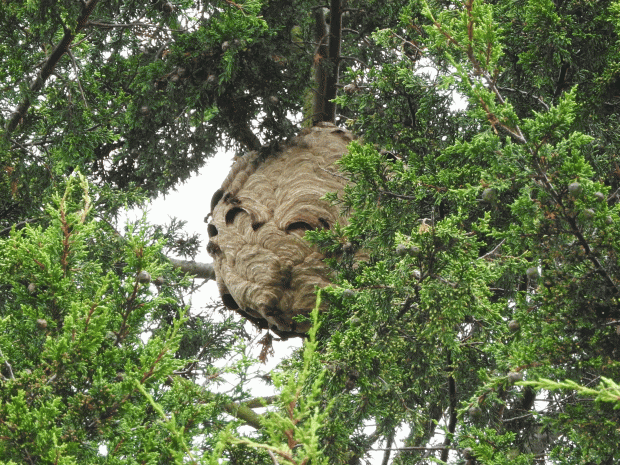
Asian hornet nest discovered in Gloucestershire


Hive the size of a large pumpkin found at top of 17-metre tree
 
Wednesday 5 October 2016

A giant Asian hornets' nest has been found in a tree in Gloucestershire, prompting concern from Government experts about the species' threat to bee populations. 

asian-hornet-nest.gif
National Bee Unit
The hive, which was located at the top of a 17-metre tree and is the size of a large pumpkin, has now been destroyed.

The Asian hornet is smaller than bees native to the UK and they pose a risk to honey bees. 
Steps are being taken to locate, destroy and remove any nests that are found and experts have been deployed across the area. 

Nicola Spence, Defra Deputy Director for Plant and Bee Health, said the bees pose no greater risk to human health than those already present in the UK.

“We have been anticipating the arrival of the Asian hornet for some years and are implementing our well-established protocol to eradicate them and control their spread,” Ms Spence said.

“It is important to remember they pose no greater risk to human health than a bee, though we recognise the damage they can cause to honey bee colonies. That’s why we are taking swift and robust action to identify and destroy any nests.

 “We remain vigilant across the country, working closely with the National Bee Unit and their nationwide network of bee inspectors.”

It comes after sightings of the Asian hornet in Somerset. 

Tim Lovett, of the British Beekeepers Association, said the evidence suggests the invasion started a while ago. 


Monday, 28 September 2015

Wallaby loose in English outback after giving police the hop

Public warned not to approach “strong and powerful” animal last seen heading for woodland
Sunday 27 September 2015 12:48 BST
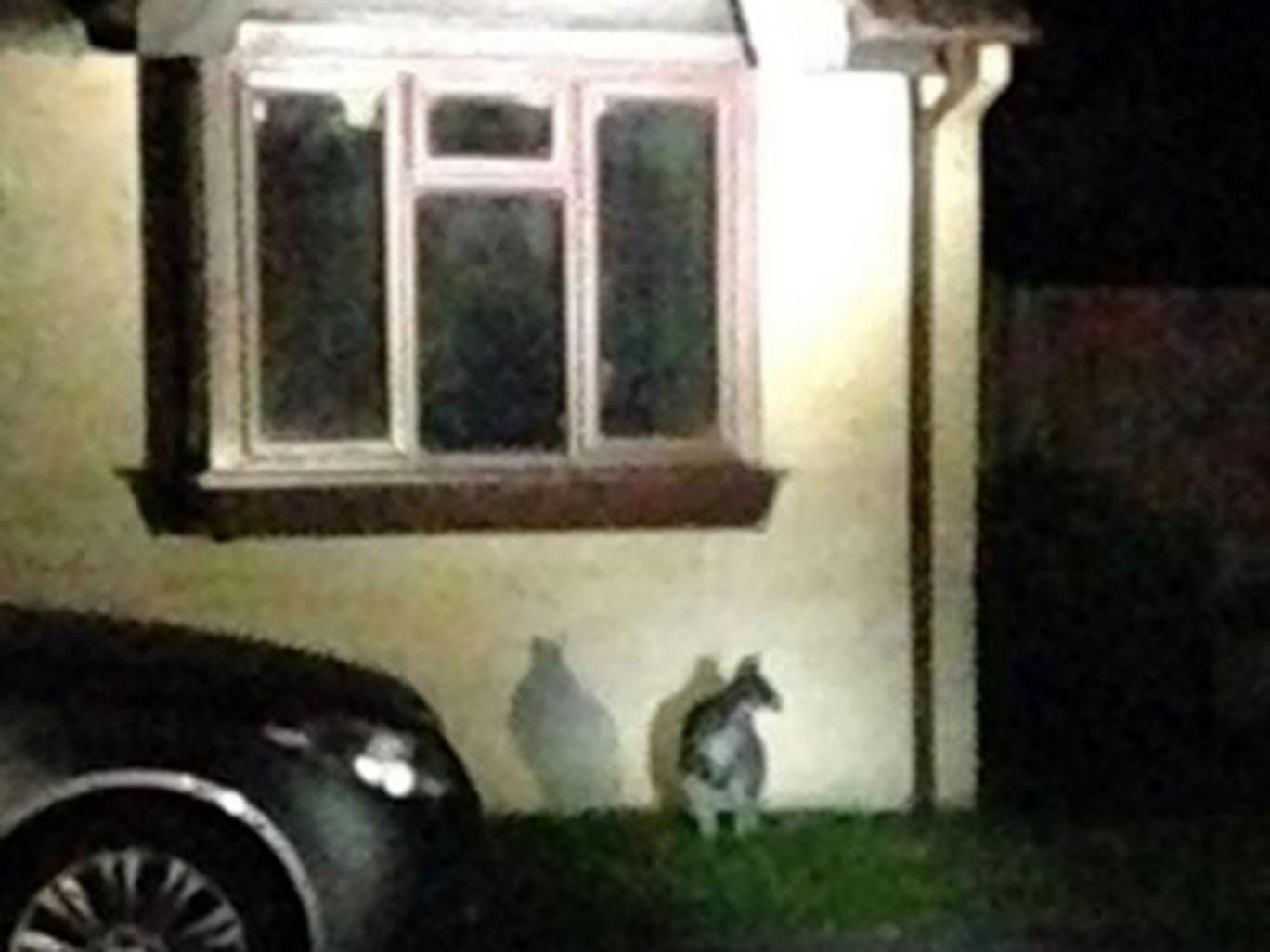
A picture of the wanted wallaby on the loose in Dursley,
Gloucestershire, released by police PA
A wily wallaby is loose in the English outback after giving police the hop. 

Officers cornered the Australian marsupial after it was spotted in the small town of Dursley, Gloucestershire, on Saturday night.

But the crafty creature – at first mistaken for a kangaroo - somehow evaded capture and bounced off towards woodland around the nearby village of Woodmancote.

Police, who covered the bizarre chase in a series of tongue-in-cheek Facebook postings, have warned the public not to approach the ‘strong and powerful’ animal.

Monday, 20 April 2015

Vets call for an end to shooting of badgers

British Veterinary Association says cull is necessary to stop spread of TB in cattle but current methods are not effective or humane

Sunday 19 April 2015 00.05 BSTLast modified on Sunday 19 April 201500.06 BST

The association for British vets has called for an end to the shooting of badgers, claiming that, two years in, the four-year pilot scheme to cull the animals has not shown it is an effective or humane method of killing them.

The British Veterinary Association (BVA) said it still supports the government’s controversial cull as necessary to control the spread of TB in cattle, but said projects in Somerset and Gloucestershire should be completed using the “tried and tested” method of trapping the badgers and then shooting them.

The BVA concluded that the results had not demonstrated conclusively that “controlled shooting”, when badgers are picked off in the wild, could work without cruelty. An independent expert panel had previously concluded from the cull’s first year that controlled shooting did not work very well.

BVA president John Blackwell said he was concerned that a disproportionate focus on the cull meant that other methods for controlling TB, including vaccination, were being forgotten: “BVA supported the pilots to test the use of controlled shooting, but data from the first two years of culling has not demonstrated conclusively that controlled shooting can be carried out effectively and humanely based on the criteria that were set.

Thursday, 22 January 2015

Activist gets six-month suspended jail sentence for disrupting badger culls

Jay Tiernan of Stop the Cull campaign found in contempt of court for nine breaches of an injunction brought in by the National Farmers’ Union


Wednesday 21 January 2015 15.59 GMT

A prominent animal rights campaigner has been given a six-month suspended jail sentence for breaking an injunction designed to prevent him from disrupting the trial badger culls.

Jay Tiernan, a leading campaigner in the Stop the Cull movement which backs direct action, was also ordered to pay costs that could total as much as £55,000.

High court judge, Sir David Eady, ruled that Tiernan was in contempt of court for nine breaches of an injunction secured by the farmers union the NFU, which championed the trial culls in Somerset and Gloucestershire.

The breaches ranged from Tiernan filming someone involved in the cull to him protesting outside an NFU office wearing a T-shirt reading: “FCK NFU”, and failing to pass on details of the injunction to other protesters.

Saturday, 3 January 2015

Badger cull fails to meet target in Gloucestershire

18 December 2014 Last updated at 15:33

Fewer than half the target number of badgers were killed in this year's cull in Gloucestershire, Defra has announced.

Figures released show 274 were culled by shooting or cage trapping in the county. The minimum target was 615.

In Somerset, where 316 was the minimum target, 341 badgers were killed. The six-week cull ended in October.

Defra said the level of interference by anti-cull activists had been higher in Gloucestershire than in Somerset.'Intimidation'

Writing in a statement to the government, Environment Secretary Liz Truss said: "The results in Gloucestershire reflect the challenges of extensive unlawful protest and intimidation."

However, Gloucestershire Police said there were only three arrests for criminal offences during the entire period of the cull and most protest activity was conducted lawfully.

"All reports made to Gloucestershire Constabulary of intimidation and harassment have been fully investigated and there are no prosecutions pending," a spokesman added.

Last year's pilot cull failed to meet its target in both Gloucestershire and Somerset, and an independent panel found the culls were ineffective and inhumane.


Thursday, 18 December 2014

Government admits badger cull could fail to reduce bovine TB

Controversial cull will continue despite government admitting for the first time that the Gloucestershire cull may prove unsuccessful due to low number of badgers killed


Thursday 18 December 2014 11.58 GMT

The controversial badger cull in Gloucestershire may not succeed in reducing tuberculosis in cattle, the government has admitted for the first time.

But environment secretary Liz Truss, releasing the results of the 2014 cull pilotsin Gloucestershire and Somerset on Thursday, said she is determined to continue culling.

The Gloucestershire pilot failed dramatically, as predicted by the Guardian in October, killing fewer than half the minimum number required. In Somerset, the minimum target was met, but the target has been criticised as “rubbish” and “unbelievably easy” by a leading expert.

The UK’s chief vet, Nigel Gibbens, said: “Given the lower level of badger population reduction in the Gloucestershire cull area over the past two years, the benefits of reducing disease in cattle over the planned four-year cull may not be realised there.” But he said the results in Somerset showed that, “in the right circumstances”, culling could work.

Wednesday, 29 October 2014

Badger cull campaigners lose legal battle

Court of appeal rules against Badger Trust’s claim that lack of an independent panel to monitor government’s latest round of culls is unlawful


theguardian.com, Wednesday 29 October 2014 11.05 GMT

A legal challenge to how the government monitors the humaneness of it badger culls has been defeated.

The Badger Trust applied for a judicial review in August to declare the lack of an independent team monitoring of a second round of culls in Somerset and Gloucestershire unlawful.

But on Wednesday the court of appeal rejected the Trust’s challenge, meaning any future culls would be able to go ahead without such monitoring.

The first culls, which took place last year in a bid to tackle bovine TB which can be spread from badgers to cattle, were deemed to have failed the humaneness test by an independent expert panel. Not enough badgers were shot in the pilot culls, leading to the abandonment of plans for a nationwide roll-out.

Figures obtained by the Guardian suggest the second round of culling this year has failed, with just 253 badgers killed in Gloucestershire out of a minimum target of 615 after a six-week cull. If fewer badgers than the minimum target are killed, it can increase bovine TB infections due to the perturbation effect of making badgers move around more than usual.

Sunday, 19 October 2014

Badger cull set to fail for second year running

Two-thirds of the way through Gloucestershire cull, fewer than a third of required badgers had been shot


theguardian.com, Friday 17 October 2014 15.18 BST

The controversial badger cull in England is set to fail for the second year running, with shooters far behind the required number of kills, according to Guardian sources.

The six-week culls are due to end on Monday and environment secretary, Liz Truss, says the outcome will determine whether they are rolled out across the country in an attempt to curb rising tuberculosis in cattle. Over 26,000 TB-infected cattle were slaughtered in 2013.

But ministers have abolished independent expert analysis of the culls, a move being challenged by an ongoing legal battle. A leading badger expert said on Friday that the targets set for the latest culls were scientifically “rubbish”, meaning no conclusion would be able to be drawn from them.

Monday, 15 September 2014

Very rare moth spotted in a Gloucestershire garden

One of the UK’s rarest and most spectacular moths has been spotted in a Gloucestershire garden – the first time it has been seen in the county for eight years, wildlife charity Butterfly Conservation (BC) has revealed.

BC Gloucestershire Branch has only ever received five records of the moth being seen in the county, with the last in 2006.

The oleander hawk-moth was recently recorded in the Cotswolds by Jean Booth, who found it near to her tobacco flowers – a known food plant of the giant moth.

The moth can be identified by the swirling cream and pinkish-brown markings on its green coloured forewing. A white band across the front end of its abdomen is also distinctive.

Sunday, 31 August 2014

Badger cull legal challenge in Somerset and Gloucestershire fails

29 August 2014 Last updated at 11:29

A High Court bid to halt this year's badger culling, which will take place without independent monitoring, has failed.

The Badger Trust argued the "controlled shooting" in Gloucestershire and Somerset should only take place with independent observers overseeing it.

Defra lawyers said the monitoring was only intended to run in the first year.

Dominic Dyer, of The Badger Trust, said the group was "considering its options" following the ruling.

Mr Dyer called on Environment Secretary Liz Truss to halt the culls or reinstate monitoring.

He added the High Court ruling "does not detract from the serious public concerns over the continuation of the cull".

Wednesday, 27 August 2014

Badger cull targets announced for Gloucestershire and Somerset

A target number of badgers to be killed in this year's pilot cull has been announced.

Authorisation letters for the cull have been issued by Natural England. A minimum of 615 in Gloucestershire and 316 in Somerset need to be killed.

In 2013, 921 badgers were killed in Gloucestershire and 940 in Somerset in a bid to tackle TB in cattle.

The companies carrying out the cull have not announced when it will start this year.

A maximum number of badgers that can be culled this year has been set at 1,091 in Gloucestershire and 785 in Somerset.

Original population estimates for badgers have now been revised by the Department for Environment, Food and Rural Affairs (Defra) to 1,904 in Gloucestershire and 1,876 in Somerset.

The four-year pilot cull aims to kill 70% of the initial population to test how effective, humane and safe a cull can be.

Tuesday, 27 May 2014

Badger cull company used Somerset's constabulary 'as private police force'

HNV Associates Ltd and the National Farmers Union directed police operation from control room, according to a police report


The Guardian, Sunday 25 May 2014 17.58 BST

Employees of the company that ran last year's badger cull in Somerset directed the deployment of police officers against protesters, according to a police investigation.

Policing the culls cost millions of pounds and the report, seen by the Guardian, shows that half the personnel in the police's night-time control centre were either from HNV Associates Ltd or the National Farmer's Union (NFU).

Those opposed to the cull say the report suggests officers acted as a "private police force" for the cullers and breached protesters' privacy by allowing the cullers to learn their names and addresses.

Police in the other cull zone in Gloucestershire have been accused of "highly questionable" actions by civil liberties lawyers, after telling protesters that their personal details would be passed to the NFU and handing out NFU-produced leaflets. A spokesman for Avon and Somerset police said having cull representatives in the control room gave them real-time information that helped keep the public safe and said changes to policing the cull when it resumes this year were still being discussed. The NFU, which also speaks for HNV Associates, denied that its members or anyone from the culling company had directed police action.

Friday, 2 May 2014

Independent badger cull monitors will not be asked to oversee again

The second year of the badger cull in Somerset and Gloucestershire will not be monitored by The Independent Experts Panel, the Government has revealed.

The news was criticised by Labour MP Maria Eagle who accused the Government of ignoring advice they didn’t like or didn't want to hear. 

“Now ministers have confirmed that they will not allow further expert scrutiny of their disastrous policy when the cull resumes later this year. What do the Tories do if they don’t like the independent scientific advice they get? Stop asking for advice,” she says.

Maria Eagle MP, Labour’s Shadow Environment Secretary, asked the Secretary of State for Environment, Food and Rural Affairs at Parliamentary Questions: “Whether he plans to ask the Independent Expert Panel, which recently reported on the first year of the pilot badger culls in Somerset and Gloucestershire, to report on the second year of such culls.”

Monday, 21 April 2014

Hundreds march in Gloucester against badger cull

Hundreds of people have been protesting against badger culling in Gloucestershire.

About 500 people joined the Gloucestershire Against Badger Shooting demonstration in Gloucester city centre.

Pilot culls in Gloucestershire and Somerset were aimed at limiting the spread of bovine tuberculosis (TB).

Earlier this month Environment Secretary Owen Paterson said the pilots would continue.

'Recipe for disaster'
Organiser Carol Cook said the number of people who turned out to demonstrate shows "it is not acceptable for an industry to be killing our wildlife".

She said they were "sympathetic" towards farmers, but added that the "industry needs to look at its own practices" and improve "bio-security in the farmyards themselves" to stop the spread of the disease.

"It isn't us against the farmers at all - everyone can work together to stop this awful disease," she said.

Thursday, 3 April 2014

Elver migration in Somerset and Gloucestershire aided by fishermen

Conservationists have been moving millions of elvers - or young eels - upstream in an attempt to give them a better chance of survival.

They are arriving on high spring tides and making their way into UK rivers, including the Parrett in Somerset and the Severn in Gloucestershire.

They need to swim upstream to mature, but in most cases waterways are blocked by man-made obstacles.

Without being helped most would die if they stayed downstream.

'Critically endangered'
Their paths are blocked by hundreds of barriers including weirs, dams and flood defences.

The number of elvers arriving in West Country estuaries on spring tides this year is estimated to be at least 10 times bigger than last year.

Monday, 2 December 2013

Badger cull called off in Gloucestershire

Pilot cull to end earlier than planned after Natural England revokes licence over failure to meet greatly reduced targets

The controversial badger cull in Gloucestershire is being abandoned after marksmen failed to kill enough animals to meet even drastically reduced targets, the Guardian revealed on Friday.

The collapse of the culling trial represents a humiliation for the government's policy as it means every target set has now been missed.

Natural England (NE) will revoke the culling licence and the cull will end at noon on Saturday, three weeks earlier than planned. The cull, intended to help curb tuberculosis in cattle, was initially tasked with killing 70% of all badgers in the area in a maximum of six weeks.

But just 30% were killed in that time, leading to an eight-week extension that was granted against the advice of the lead scientist on NE's board.

Sunday, 27 October 2013

Gloucestershire badger cull extended by 8 weeks – Risks spreading bTB

Humane Society UK appalled & flabbergasted at "madness" of Gloucestershire badger cull 8 Week extension, risks spreading bTB

October 2013. Leading animal welfare charity, Humane Society International UK, is appalled by news that an eight week extension to the Gloucestershire badger cull has been granted by Natural England. The charity warns that prolonging the shooting is the very worst thing the government can do because it increases the risk of spreading bovine TB as badgers flee the area. 

Perturbation danger 
The extension of the killing period in Gloucestershire more than doubles the original six weeks to 14 weeks. The seminal Randomised Badger Culling Trial highlighted the importance of any cull to be done quickly because of the danger of perturbation. 

Fiasco
Mark Jones, Gloucestershire resident and Executive Director of HSI UK said: "I am appalled & flabbergasted that an eight week extension has been granted to DEFRA's badger killing fiasco in Gloucestershire. By extending culls here as well as in Somerset, the pilots are moving even more dangerously away from the recommendations of the Randomised Badger Culling Trial which were very clear - the longer you subject badgers to this sort of disruption, the greater the risk of worsening the spread of bovine TB among both badgers and cattle. It is utterly illogical to continue with a policy that has already proven such a disaster, and flies squarely in the face of sound scientific advice. Surely somebody in Government can put a stop to Owen Paterson's badger cull madness before it's too late."


In Gloucestershire 708 out of a target 1,650 badgers have been killed. In Somerset 850 badgers out of a target 1,020 have been shot. 

HSI UK has also written to Owen Paterson to ask him to explain himself over unsubstantiated claims he made last week about badger suffering. On 10th October he stated in a parliamentary answer to a question from Angela Smith MP that ‘...some of the animals we have shot have been desperately sick-in the final stages of disease...'.

Thursday, 10 October 2013

Badger cull extended as kills fall short of target

Environment Secretary Owen Paterson has told the House of Commons that extensions of the badger culls in west Somerset and Gloucestershire are now being considered by Natural England.

Mr Paterson said that the pilot culls could be extended by up to three weeks as marksmen have failed to kill enough badgers to reach their original targets.

He told the Commons that 850 badgers had been shot in Somerset during the six-week trial, just over 40% of an initial target of 2,081.

But he insisted the Somerset scheme had been effective and successful.

The controversial pilot culls set out to study if badgers could be killed safely, effectively and humanely.

They are being carried out in an attempt to control TB in cattle, which can be spread by badgers - though opponents say the culls will have no impact.

The plan was to kill 70% of the badgers in the areas of west Somerset and Gloucestershire by free shooting.

Across both regions, this meant around 5,000 badgers were to be killed in total.


Badgers 'moved goalposts' says minister Owen Paterson

A government minster said "badgers moved the goalposts" when asked why marksmen failed to reach a cull target.

A pilot badger cull in west Somerset may be extended by up to three weeks in an effort to make up the shortfall.

Environment Secretary Owen Paterson was asked if he had "moved the goalposts" by claiming the cull was a success.

"The badgers moved the goalposts. We're dealing with a wild animal, subject to the vagaries of the weather and disease and breeding patterns," he replied.

The pilot culls in Gloucestershire and Somerset set out to study if badgers could be killed safely, effectively and humanely.

They are being carried out in an attempt to control TB in cattle, which can be spread by badgers. Opponents say they will have no impact.

Related Posts with Thumbnails

ShareThis