Showing posts with label mountain pygmy possum. Show all posts

Sunday, 10 November 2019

Aussie researchers mount rescue bid for endangered pygmy possum

NOVEMBER 4, 2019


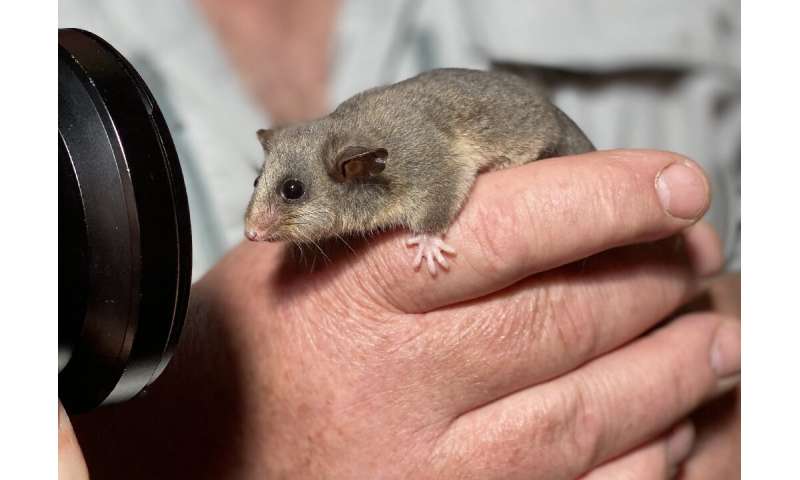
The tiny mountain pygmy possum lives in Australia's alpine regions but less than 2,500 remain in the wild, according to estimates, with winter snowfall declines and warmer weather threatening extinction

Climate change is threatening to wipe out Australia's critically endangered mountain pygmy possum, but researchers are hoping to save the hibernating species by relocating the last remaining mammals to cooler lowlands.

The tiny mammal lives in alpine regions but less than 2,500 remain in the wild, according to estimates, with winter snowfall declines and warmer weather threatening extinction.

The possums hibernate deep inside humid rock piles that are insulated by snow during winter and provide shelter from high summer temperatures that can prove fatal.

The species—Australia's only hibernating marsupial—needs temperatures to hover just above freezing to hibernate successfully, but without enough snow the cold air outside penetrates the rocks and chills the atmosphere inside, University of New South Wales (UNSW) associate lecturer Hayley Bates said Monday.

"Anything less than 0.6 Celsius will wake them from their hibernation and they can shiver and starve to death," she added.

"You just need two bad winters like this and the species could collapse."

Scientists at UNSW have started a breeding program in a lowland area of New South Wales state in an attempt to acclimatise the possums to a new home, with hopes of establishing an inital colony of 25 animals.

Monday, 11 March 2019

Decline in bogong moth numbers leaves mountain pygmy possums starving


Exclusive: climate change linked to ‘astonishing’ drop in Australian moth numbers, the key food source for possums while breeding
Sun 24 Feb 2019 23.01 GMTLast modified on Mon 25 Feb 2019 06.19 GMT
Numbers of unique Australian moths that migrate in their billions to alpine areas have crashed, ecologists say, putting extra pressure on the endangered mountain pygmy possum.
Scientists believe the “astonishing” drop in bogong moth numbers is linked to climate change and recent droughts in areas where the moths breed.
At the same time checks on the endangered mountain pygmy possum, which exists only in Australia’s alpine regions, have revealed dead litters in the pouches of females. The moths are a key food source for the possums as they wake from hibernation.
In 2018, scientists revealed bogong moths were the only known insect to use the earth’s magnetic field to help them navigate from grasslands in northern New South Wales and southern Queensland – sometimes at distances of 1,000km. Around two billion moths are estimated to make the journey.
The ecologist Dr Ken Green has been monitoring bogong moths for 40 years. He said: “Last summer numbers were atrocious. It was not just really bad, it was the worst I had ever seen. Now this year it’s got even worse.”
The moths find caves and cracks in boulders to hide away in a torpor state. A cave at Mount Gingera, near Canberra, has been known to house millions of the moths but last month Green and colleagues counted just three individuals. Searches of about 50 known sites have turned up similar catastrophic absences.

Related Posts with Thumbnails

ShareThis
