Showing posts with label Kenya. Show all posts

Thursday, 19 March 2020

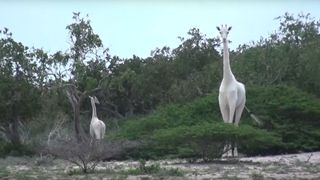
Two of the last white giraffes on Earth were slaughtered by poachers


There may be just one white giraffe left, conservationists said.


Two rare white giraffes spotted in Kenya's Ishaqbini Hirola Community Conservancy in 2017.
(Image: © Hirola Conservation Program)


Rangers at a nature conservancy in Garissa County, Kenya, have discovered the skeletal remains of two rare white giraffes that went missing several months ago. 

According to a statement issued on Twitter, the carcasses belong to a mother and her 7-month-old calf — two of only three white giraffes living in Ishaqbini Hirola Community Conservancy — and appear to have been there for four months. All signs indicate that the animals were killed and butchered by armed poachers.

"This is a very sad day for the community… and Kenya as a whole. We are the only community in the world who are custodians of the white giraffe," Mohammed Ahmednoor, manager of the conservancy, said in the statement.

Wednesday, 25 September 2019

Deaths and maiming are the norm as snakes ravage kitui and Lower Eastern (Kenya) – via Herp Digest


by Joe Ombour, 9/22/19 Standardmedia.com

The Mui River Basin in Mwingi Sub County, Kitui County is better known for its unexploited coal deposits. But this fertile basin, like most of the rain-starved Lower Eastern region, abounds in snakes.

The serpents with deadly fangs virtually rule the singed surface where temperatures favour their proliferation.

While natives do not eat them as happens in faraway China, belief has it that ill-intentioned folks use them to kill or maim their brethren. Wait! How is that possible? Father of nine Muasya Manzi says his daughter is a case in point.

“I wish snakes would talk,” muses Mr Manzi. “They would tell you exactly how it happens because the people who do it cannot go public. But I have no doubt in my mind that the snake that bit my daughter, a black mamba was sent by our enemy. It happens a lot here.”

He says he has killed 15 snakes in his bush ringed homestead hugging Mui Shopping Centre in the four years he has lived there, without a single case of snakebite. “How come my daughter was bitten in her sleep in a well-lit, well-plastered room at the shopping centre? I see a person’s hand in it,” he says.

His daughter, mother of four Lena Mwikali was asleep when she was bitten by a snake two years ago. She recounts: “I used to lodge in a room at Mui shopping centre and regularly walked from here after supper to spend the night there. I shared the room with another woman and we slept on a mattress on the floor.”

“We covered ourselves and slept after switching off the light on a fateful night, only to be awakened by sharp pain around 1 am. Something had pricked me on the elbow. I told my roommate to switch on the light upon which we saw a snake lying at the edge of the mattress parallel to the wall. We shouted and people came. They killed the snake and rushed me to a clinic where I was given some injections.”

Lena was the following day rushed to Mwingi where celebrated snakebite therapist Peter Musyoka saved her life with anti-venom neutralisers.

Kathini Mulyungi was not lucky when she was bitten by a black-necked cobra 22 years ago, aged only seven. She lost her right arm. “I was in Class Two at Mwingi Primary School,” she recalls, sadness permeating her face. ”I had just retired to bed that I shared with a niece when I was bitten in the wrist.”

“I have rushed to Mwingi Level Four hospital about four kilometres away, where anti-snakebite serum was out of stock. After first aid, I was put on strong painkillers for three months before I was transferred to the provincial hospital in Embu.

Kathini says her arm had developed gangrene, prompting doctors in Embu to amputate it to save her life. “I remained in hospital for one and a half months as my arm healed. Treatment cost Sh100,000 that my parents paid after selling livestock.”

She returned to school and sat the KCPE in 2005. Now a single mother of one, Kathini did not proceed to secondary school for lack of fees. She owns two donkeys and sells water in Mwingi town for a living. Benedict Kandali Mukengei, 25, was resting under a tree after labouring in the farm when he felt something heavy and cold land on his neck with a thud.

“It was a puff udder that quickly coiled itself around my neck after falling from the tree under which I was resting,” he narrates. Frightened to the bone, Mukengei stood and struggled to uncoil the serpent from his neck.

“I saw and smelt death. I cried loudly as I struggled with the snake that bit me in the back before it fell to the ground and slithered away into the bushes.”

“People from nearby homes who heard my distress call came and gave me raw eggs to swallow before they carried me home because I was feeling dizzy and could not walk.”

Mukengei says Good Samaritans used his phone to call Mr Musyoka who arrived promptly from his clinic in Mwingi, 15km away.

“I was still conscious, thanks to the raw eggs. Musyoka gave me two injections and a glass of water after every 10 minutes. I urinated and started feeling better,” he recounts. Today, Mukengei is a Boda Boda rider in Mwingi town.

Victims of snake bites in Mwingi and other areas within the Lower Eastern region have lost their lives for lack of immediate and appropriate attention.

Kamengele Mueni, a blind grandmother from Muumoni area north of Mwingi went to sleep unaware that a black-necked cobra had taken refuge in her bed, narrates her granddaughter, Roselyn Nduko. She died after she was bitten by the snake.

Thursday, 12 September 2019

Rare giraffes fitted with solar-powered trackers

Conservationists have fitted members of an endangered giraffe species in northern Kenyan with satellite-tracking devices, part of a campaign to monitor and understand them better.

A total of 28 reticulated giraffes have been fitted with the tracking devices, a feat said to be the largest GPS satellite tagging of giraffe in history, the Giraffe Conservation Foundation says.

The species is considered endangered after its population shrank by 60% in three decades, according to the International Union for Conservation of Nature (IUCN).

The solar-powered tracking devices will help conservationists understand their movements and use of the environment.

Approximately 115 giraffes in six African countries have so far been fitted with the trackers, the Giraffe Conservation Foundation says.

“Knowing where giraffe are, how much space they need, and how they move across the landscape seasonally, is vital to inform effective conservation and planning," it said in a statement.

Source

Friday, 2 August 2019

Fossil of smallest Old World monkey species discovered in Kenya


JULY 15, 2019

by Matt Mcgowan, University of Arkansas
Researchers from the National Museums of Kenya, University of Arkansas, University of Missouri and Duke University have announced the discovery of a tiny monkey that lived in Kenya 4.2 million years ago.
Nanopithecus browni was the same size as a modern talapoin monkey, the smallest living Old World monkey species that weighs only 2 to 3 pounds, about the size of a cottontail rabbit. Talapoins are part of a large group of monkeys called guenons, which are commonplace and widespread across Africa today. Most species are several times larger in size than Nanopithecus browni.
Guenon evolution is poorly understood but thought to be driven by changes in forest habitats, with the distribution of modern species reflecting the breakup and re-convergence of ancient forests. Talapoins live only in West Central Africa, are confined to tropical forests, and are thought to be dwarfed from a larger ancestor in response to life in woody, swampy habitats.
Nanopithecus browni, though, was found in Kenya on the eastern side of the continent, at a site called Kanapoi. The Kanapoi habitat was dry and covered with grasslands and open forests—a very different place from the tropical forests of Cameroon and Gabon in West Central Africa. It is also at Kanapoi where remains of some of the earliest human ancestors, Australopithecus anamensis, have been found and would have lived alongside Nanopithecus browni.


Monday, 25 March 2019

Fossil teeth from Kenya solve ancient monkey mystery


Date:  March 11, 2019
The teeth of a new fossil monkey, unearthed in the badlands of northwest Kenya, help fill a 6-million-year void in Old World monkey evolution, according to a study by U.S. and Kenyan scientists published in the Proceedings of the National Academy of Sciences.
The discovery of 22-million-year-old fossilized monkey teeth -- described as belonging to a new species, Alophia metios -- fills a void between a previously discovered 19-million-year-old fossil tooth in Uganda and a 25-million-year-old fossil tooth found in Tanzania. The finding also sheds light on how their diet may have changed the course of their evolution.
"For a group as highly successful as the monkeys of Africa and Asia, it would seem that scientists would have already figured out their evolutionary history," said the study's corresponding author John Kappelman, an anthropology and geology professor at The University of Texas at Austin. "Although the isolated tooth from Tanzania is important for documenting the earliest occurrence of monkeys, the next 6 million years of the group's existence are one big blank. This new monkey importantly reveals what happened during the group's later evolution."
Since the time interval from 19 to 25 million years ago is represented by a small number of African fossil sites, the team targeted the famous fossil-rich region of West Turkana to try to fill in that blank.


Thursday, 7 March 2019

Scientists look to past to help identify fish threatened with local extinction


Date:  February 13, 2019
Source:  Wildlife Conservation Society
Marine scientists from the University of Queensland, WCS (Wildlife Conservation Society) and other groups have developed a methodology to assess fish stocks that combines new data with archeological and historical records -- some dating back to the 8th Century AD. In a study conducted in along the coast of Kenya, the researchers reconstructed species' occurrences by combining modern underwater transect surveys and catch assessments with historical records that included observations from 18th century naturalists and data from archaeological sites including ancient middens dating back more than a thousand years.

Thursday, 22 November 2018

Earth's Smallest Ape Weighed 8 lbs., Lived 12.5 Million Years Ago


By Owen Jarus, Live Science Contributor | November 6, 2018 04:00pm ET
The remains of the smallest ape ever known to walk the Earth may have been discovered in the hills of Kenya, scientists say.
Weighing around 7.7 pounds (3.5 kilograms), the ape lived around 12.5 million years ago in Kenya. While other species of small ape are known to have existed, this one may be the smallest, scientists wrote in a paper set to be published in December in the Journal of Human Evolution.
Named Simiolus minutus, the new species is known from only three tiny teeth, one of which was discovered by James Rossie, an anthropology professor at Stony Brook University in New York, during fieldwork in Kenya's Tugen Hills, in 2004. [In Photos: A Game-Changing Primate Discovery]
Rossie and his co-author, Andrew Hill, an anthropology professor at Yale University who died in 2015, examined the tooth to see if it matched any known species of ape. It did not, though the tiny tooth is anatomically similar, they found, to two other teeth uncovered in previous paleontological expeditions in Kenya. They concluded that the three teeth belong to a new species of ape.

Thursday, 20 September 2018

New research could reduce primate electrocutions and help conservation strategies


Date:  September 5, 2018
Source:  University of Bristol
New research has mapped and analysed the incidence of primate electrocutions in Diani, Kenya to identify hotspot areas that should be prioritised to reduce the risk of electric shock. The study could also inform conservation strategies in other parts of the world where primate electrocutions are common. Electrocution threatens a wide range of primate species across the world and the hazard could become more widespread as species are increasingly restricted to human-dominated landscapes.
The study, published in International Journal of Primatology, led by Master's student Lydia Katsis and Dr Katy Turner, Reader in Infectious Disease Epidemiology from Bristol Veterinary School, aimed to investigate primate electrocutions along power lines, which threatens five of the six primate species living in the Diani area.
The research team worked with local primate conservation organisation, Colobus Conservation, who regularly attend primate welfare callouts, such as electrocutions, in the area. As well as providing veterinary treatment to the primates, the organisation record the location of the incident either by documenting the GPS co-ordinates or describing the location.


Monday, 20 August 2018

Hippo bite kills Taiwan tourist in Kenya


13 August 2018

A Taiwanese tourist has died after being bitten in the chest by a hippo he was trying to photograph in Kenya.

Chang Ming Chuang, 66, was tracking the animal at a wildlife resort on Lake Naivasha, 90km (56 miles) north-west of the capital, Nairobi.

A second tourist, also from Taiwan, was injured. Wildlife officials later shot dead the hippo.
High water levels have seen hippos - the world's deadliest large land mammal - stray on to resorts for pasture.

The Kenya Wildlife Service (KWS) initially identified the two tourists as Chinese but Taiwan's foreign ministry later confirmed they were Taiwanese nationals.

Kenya has no formal ties with Taiwan and recognises China's claims over the island.

Witnesses said the two had come too close to the animal near the Sopa hotel. The bitten man was rushed to hospital bleeding profusely but later died.

The second tourist, named as Wu Peng Te, was treated for minor bruising at Naivasha District Hospital.

"Our officers tracked and shot the animal after the incident," said KWS warden Nelson Cheruiyot.

Thursday, 9 August 2018

Dr Seuss's Lorax 'inspired by orange Kenyan monkeys'


Moustachioed animals’ relationship with whistling thorn acacia trees resembles that of the Lorax with truffulas, researchers say

Mon 23 Jul 2018 16.00 BSTLast modified on Mon 23 Jul 2018 17.10 BST

 “I am the Lorax, I speak for the trees,” says the eponymous hairy hero of Dr Seuss’s children’s book after he climbs out of the stump of a truffula tree. An irate orange figure with a bristling moustache, the Lorax is an environmental activist who wastes no time in berating the axe-wielding Once-ler, a shady money-grabbing interloper who lays waste to the environment to produce peculiar knitted outfits called thneeds.

Now researchers say the book may have been inspired by the things Seuss saw on a trip to Kenya, and that the bristly character may have been based on the orange moustachioed patas monkeys indigenous to the area.

Donald Pease, a Seuss expert and professor of English and comparative literature at Dartmouth College who is a co-author of the research, sees a parallel between the relationship of the patas monkey to its habitat and that of the Lorax to his truffula trees.

“The patas monkey is in a commensalist relationship with the whistling thorn acacia trees,” said Pease. “That means that it depends upon the acacia tree as its primary source of nutriment but it doesn’t threaten the survivability of the acacia trees.”

Sunday, 22 July 2018

Fuzzy yellow bats reveal evolutionary relationships in Kenya


Date:  July 12, 2018
Source:  Field Museum

Summary:
DNA analysis of fuzzy yellow bats in Kenya revealed at least two new species unknown to science. It's important because Africa's biodiversity is often under-studied and poorly understood, even though bats play a crucial role in agriculture and public health.

After Halloween, people tend to forget about bats. But, for farmers, residents of Kenya, and scientists, bats are a part of everyday life. While North America has 44 species, Kenya, a country the size of Texas, has 110 bat species. Many of these species also contain subspecies and further divisions that can make the bat family tree look like a tangled mess. Researchers set out to cut the clutter by sorting the lineages of yellow house bats and in the process found two new species.


Friday, 6 July 2018

Tourism preventing Kenya's cheetahs from raising young, study finds


Research in Maasai Mara linked areas with high density of vehicles to lower numbers of cubs raised to independence

Niki Rust
Thu 21 Jun 2018 10.10 BSTLast modified on Fri 22 Jun 2018 08.24 BST

High levels of tourism can lead to a dramatic reduction in the number of cheetahs able to raise their young to independence, new research has found.

A study in Kenya’s Maasai Mara savannah found that in areas with a high density of tourist vehicles, the average number of cubs a mother cheetah raised to independence was just 0.2 cubs per litter – less than a tenth of the 2.3 cubs per litter expected in areas with low tourism.

Dr Femke Broekhuis, a researcher at Oxford University and the author of the study, surveyed cheetahs in the reserve between 2013 and 2017 to assess how the frequency of tourist vehicles affected the number of cheetah cubs that survived to adulthood.

“During the study there was no hard evidence of direct mortality caused by tourists,” such as vehicles accidentally running over cubs, Broekhuis said. “It is therefore possible that tourists have an indirect effect on cub survival by changing a cheetah’s behaviour, increasing a cheetah’s stress levels or by minimising food consumption.”

Broekhuis said she has seen as many as 30 vehicles around a single cheetah at the same time. “The most vehicles that we recorded at a cheetah sighting was 64 vehicles over a two-hour period,” she said.

Friday, 10 February 2017

Habitat features and social behavior impact how baboons move as a group


Date: January 31, 2017
Source: eLife

When deciding what path to take during collective movement, individual baboons will likely follow the road most travelled by their group mates, according to new findings published in eLife.

The study also suggests that environmental factors, such as roads and the vegetation density of their habitat, play a key role in how baboons move together as a group.

To investigate this behaviour, researchers from the US and Germany tracked 25 wild olive baboons belonging to a single troop with second-by-second global positioning system (GPS) tracking at the Mpala Research Centre in Laikipia, Kenya. They also used drone-based imaging technology to provide a high-resolution, three-dimensional reconstruction of the physical and vegetation structure of the baboons' environment. The data were then combined with a modelling system to help predict the animals' steps.

These methods reveal for the first time how the habitats of baboons and the animals' social interactions (in particular their tendency to follow each other closely) combine to influence the movements of individuals in a troop and ultimately determine the overall group structure.

They show that the most important predictor of baboons' decisions about where to move is where other troop members have gone in the recent past -- specifically, within the last five minutes. The more baboons have walked through a certain spot in this time, the more attractive it is to individuals.


Monday, 6 February 2017

Kenya bans export of snakes to zoos and pet shops


Trafficking of endangered snakes as pets or for their skins is having a negative impact on breeding patterns and size of species
 
Gitonga Njeru in Nairobi
Monday 30 January 2017 17.14 GMT 

Kenya has banned the export of various snake species, including the African rock python, to zoos and pet shops around the world after reports of animal abuse and snakes being sold on the black market for their meat and skins. 

The trafficking of the endangered snakes by cartels is also having a negative impact on the environment, said authorities. 

“We have conducted strong research and it shows that the ecology of the snakes has been negatively affected, especially the pythons,”said Dr Patrick Kinyatta Malonza, senior research scientist in charge of herpetology at the National Museums of Kenya.

“Their breeding patterns have changed and their sizes when fully grown have reduced in just a few years. For instance, the rock python used to grow up to a length of 16 feet; now a fully grown one is, on average, just 10 feet long,” said Malonza. 

Malonza added that less than 10 years ago a rock python used to produce about 33 young on average, but now it is unusual for a female snake to produce even half that number.

“Constant illegal smuggling has been the biggest single obstacle,” Malonza said. “It is even worse than habitat destruction. When you smuggle, you also interfere with breeding [and] their feeding patterns.”

He said it is difficult to estimate the number of rock pythons in the wild as no census has ever been done but he estimates that only a few hundred remain in the wild in east Africa. The number does not include snake farms, which have also been banned from exporting.

The Kenya Wildlife Service (KWS), the government agency in charge of wildlife management, played a big role in imposing the ban that took effect this month. The snakes were destined for zoos and pet shops in the UK, Czech Republic, Germany, the US, Mexico, Brazil and China respectively where, the KWS said, they fetch between $100 and $200, depending on the type of snake.

Read on  
Related Posts with Thumbnails

ShareThis