Showing posts with label animal rescue. Show all posts

Wednesday, 4 March 2020

Sixteen more snakes dumped in pillowcases in Sunderland

Discovery of reptiles comes days after 13 royal pythons were found in same location


PA Media

Mon 17 Feb 2020 17.49 GMTLast modified on Mon 17 Feb 2020 20.00 GMT

A second nest of 16 snakes has been found dumped outside a fire station, days after 13 royal pythons were found in the same spot.

The reptiles were found abandoned in pillowcases outside Farringdon fire station in Sunderland. The first nest was found on Thursday, and one snake has died.

On Saturday, a further 15 corn snakes and one male carpet python were found abandoned in two pink pillowcases, inside a bin behind the station.

The snakes were rescued by an RSPCA inspector, Heidi Cleaver, and taken to the vets. “I couldn’t believe it when the call came through to say there had been even more snakes found in the exact same spot. These snakes had been left inside the bin so they were incredibly lucky they didn’t end up in the landfill,” she said.

Monday, 2 March 2020

Love at first bite! Male snakes tries to seduce a female before being EATEN and regurgitated alive - as experts say the reptiles are turning on each other- via Herp Digest


Tasmanian snake handler finds copperhead snake eating another smaller snake  

Chris Daly said smaller snake was probably trying to mate before being eaten 

Amazingly it was regurgitated by the larger snake and survived 


An experienced snake handler has made an interesting discovery - finding a female snake eating her smaller male mate.

Reptile Rescue Tasmania snake handler Chris Daly was called out to a house in Sorell, Tasmania to collect a serpent on Saturday.

'When I pulled up I noticed she was a little, well, girthy, and wasn't moving as quickly as you would expect her to,' he said. 

Experienced snake handler Chris Daly shared images of a female copperhead snake he was called to relocate only to find it midway through ingesting another snake.

'She still had the little guy in her mouth and was moving around while the tail was still wriggling around.' 

'I think he was wanting to have a go and she wasn't having any of it and decided she wanted to eat him instead,' Mr Daly said.   

Amazingly the larger female seemed to change her mind after being caught and decided to regurgitate her potential mate, who was still alive when he was spat out. 

Mr Daly said it wasn't likely she regurgitated the snake because of his size.

Copperhead snake eats and regurgitates another

'She was about two and a half foot and he was about two foot long, so she was probably going to cruise around with the tail hanging out until her stomach acids broke him down enough to swallow a little more, like a noodle,' he said. 

'The male snake was a little lethargic afterwards so I took him back and hydrated him, heated him up and he is doing pretty well. 

'I plan to release him again soon.' 

Mr Daly released the female snake back into an area close to where she was found but said it wasn't wise to do the same with the male snake. 

He didn't want to run the risk of it being eaten again so he will release him in a new area.

Mr Daly said it wasn't unusual for copperhead snakes to eat other snakes, in fact it was their main source of survival in the recent Tasmanian drought. 

'With the drought there are less frogs around, there is less water and prey animals, things are really dry but from our research we found the bigger copperheads were preying on smaller snakes,' he said. 

'Similar to the mainland Red-bellied black snake they can be quiet cannibalistic,' he said.   
Amazingly when he collected the snake she started to regurgitate the smaller male snake (pictured together) which managed to survive the attempted ingestion

Wednesday, 19 February 2020

Northampton Superdrug badger 'sheltering from Storm Ciara'


A badger that fell through the ceiling of a Superdrug store had been sheltering from Storm Ciara in a ventilation shaft.
The animal shocked staff at the outlet in Northampton's Grosvenor Centre when it came through a ceiling panel, before running under the perfume counter.
The Northamptonshire Badger Group was called to rescue the female badger, and subsequently set it free.
A spokeswoman for Superdrug said the animal took refuge amid stormy weather.
The store was shut on Sunday due to a "visiting badger" which "snuck in through a ventilation shaft to take shelter from Storm Ciara," she said.
Storm Ciara swept across the UK from Sunday, bringing strong winds and rain.
Sally Jones, from the Northamptonshire Badger Group, described the Superdrug rescue as "the oddest" it has ever carried out.
She said staff saw the badger "fall through the ceiling", hit the floor, and then trundle off "a bit dazed".
Ms Jones said by the time the group arrived "there were perfume bottles strewn over the floor".
They were able to capture the animal and took it away to "assess her".
Ms Jones said: "She was very calm. No sign of any injuries or anything, and we took [the badger] to a safe place that we know she can be released."
The badger was set free later the same day.


Sunday, 2 February 2020

Sperm whale stuck in Thames Estuary off Whitstable dies

1 February 2020

A sperm whale which became stuck in the Thames Estuary has died.

The mammal was spotted about 100m (328ft) off the coast of Whitstable, Kent, on Thursday.

Medics monitored its progress and behaviour over the past two days and said it appeared to be distressed and confused.

A spokesman for British Divers Marine Life Rescue (BDMLR) said the whale had since died and was currently at Elmley marshes.

At first the whale was thought to be a minke or possibly a humpback, but when photos emerged from a member of public the BDMLR team said it "became clear that it was more likely to be a sperm whale".

They are not usually found around the UK but it is not the first time a whale has swum into its waters.

Benny the beluga became a minor celebrity when it appeared in the River Thames at Gravesend in September 2018. It is believed the whale made its way back out of the estuary in January 2019.

Thursday, 7 November 2019

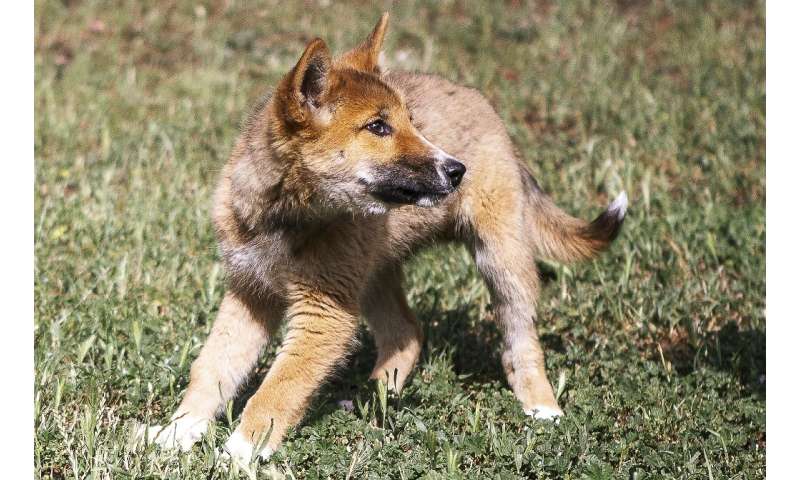
Lost pup turns out to be a rare purebred dingo

NOVEMBER 6, 2019


Dingo pup Wandi romps at the Australian Dingo Foundation headquarters near Melbourne

He's furry, playful, and has puppy eyes. It's little wonder Wandi was mistaken for a dog when he was found in an Australian backyard—but DNA testing has confirmed he's a rare 100 percent dingo.

The pup was discovered whimpering and alone in a country town in Victoria in August with talon marks on his back, leading to speculation it could have been dropped by a large bird of prey.

Rescuers at first thought Wandi was either a dog or a fox, but months later DNA samples have revealed that he is in fact a purebred dingo.

Most of the creatures seen in the wild are usually, to some degree, dingo-dog hybrids.

Australian Dingo Foundation director Lyn Watson said that when Wandi "fell out of the sky" it was an "answer to a prayer"—he can now join 40 other dingoes in a breeding program at the charity's sanctuary.

"When we sent his DNA off we were hoping that he would be of high content, but we were pleasantly surprised to find he was as much dingo as you could get," she told AFP.

Watson hopes Wandi—whose unusual origins story and endearing looks have attracted global attention—will help recast the narrative surrounding dingoes and change government policies toward the much-maligned animal.

Monday, 14 October 2019

Norfolk RSPCA centre saves 50th seal with injuries from rubbish


11 October 2019

A grey seal rescued on the North Sea coast has become the 50th to be treated by a wildlife centre for injuries caused by discarded man-made rubbish.

The animal, a male named Scylla, was found with an infected wound caused by a fishing net embedded around his neck.

The RSPCA centre in Norfolk said 2019 could be a record year for seal rescues "for all the wrong reasons".

"It's hard to describe how much pain and distress this can cause a seal," said manager Alison Charles.

"They are weighed down by this huge mass of netting, which must make it hard for them to swim, and then the net starts to cut and embed into their neck too.

"The injuries are horrendous, sometimes inches deep, and all the while the seal is becoming weaker and weaker and cannot feed so their suffering continues and they slowly starve to death.

"It is just horrific."

Tuesday, 10 September 2019

Rare, Two-Headed Rattlesnake Named 'Double Dave' Rescued from Certain Doom in New Jersey

Four eyes, two tongues, can't lose.

Two herpetologists in New Jersey — both named Dave — have discovered a rare, two-headed snake, which they've named Double-Dave. Members of the Nobel Prize committee: The ball is in your court.

Double-Dave is a baby rattlesnake, just a few weeks old and about 9 inches (23 centimeters) long, according to a recent segment on ABC News. Herpetologists Dave Schneider and Dave Burkett, who work with the Herpetological Associates in Pemberton, New Jersey, found the critter a few weeks ago while surveying the nearby Pine Barrens — a heavily forested area stretching across the southern tip of the state. 

Wednesday, 7 August 2019

Snake on a building site shock for Ipswich workmen


Builders found a brightly-coloured albino milk snake on their construction site.
The 1.5 ft (0.5m) red and white reptile was discovered slithering around in the dirt in Europa Way, Ipswich.
The snake appeared to be in good health. It is not venomous or dangerous to humans.
The RSPCA said it was not clear if it was an escaped pet or had been abandoned, but was taken to a local specialist to be looked after.
The RSPCA revealed it rescued more than 4,000 exotic animals - including 500 snakes - across England and Wales in 2018.
A large corn snake nicknamed Dave was found by police officers in a street in Cambridge in May, while a 9ft (2.7m) python that escaped from its owner, also in Cambridge, was recaptured earlier this month after several days on the slither.

Sunday, 4 August 2019

Off the hook: Manta ray asks divers for helping hand


JULY 15, 2019

A giant manta ray with several fishing hooks caught below its eye appeared to ask two nearby divers for help in removing them, and then waited patiently for them to do so.
Underwater photographer Jake Wilton was diving off Australia's west coast when the three-metre wide animal moved toward him, footage showed.
"I'm often guiding snorkelers in the area and it's as if she recognised me and was trusting me to help her," Wilton said in a statement Monday.
"She got closer and closer and then started unfurling to present the eye to me."

Thursday, 4 July 2019

Two whales flown from Shanghai aquarium to sanctuary in Iceland


Female 12-year-old beluga whales Little Grey and Little White arrive at Klettsvik Bay
AFP in Reykjavik
Thu 20 Jun 2019 00.21 BST
Two beluga whales from a Shanghai aquarium have arrived in Iceland to live out their days in a unique marine sanctuary that conservationists hope will become a model for rehoming 3,000 of the creatures currently in captivity.
Little Grey and Little White, two 12-year-old female belugas, left behind their previous lives entertaining visitors at the Changfeng Ocean World and were flown across the globe in specially tailored containers.
The whales, which each weigh about 900kg and are four metres long, will continue their epic journey by truck and ferry to the sanctuary at Klettsvik Bay at Heimaey, one of the Westman Islands off the south coast of Iceland.
The conservation charity Sea Life Trust, which has been at the forefront of the project, said the bay is the world’s first open water beluga sanctuary and had been selected to “provide a more natural sub-Arctic environment and wilder habitat for these amazing whales to call home”.


Wednesday, 19 June 2019

4,000 live reptiles rescued in biggest global raid of its kind – via Herp Digest


Police nabbed suspected traffickers in airports, breeding centers, and pet stores across 22 countries.

By Dina Fine Maron National Geographic/UK, 6/5/19

More than 4,000 live reptiles, including six Kenyan sand boa snakes found in air cargo in the United States, have been seized as part of Operation Blizzard, a global law enforcement bust targeting reptile traders.

Global police forces have carried off the largest reptile trade bust to date, arresting 12 suspects and seizing more than 4,000 live reptiles at airports, breeding facilities, and pet stores across Europe, North America, and elsewhere throughout April and May.

The initiative, dubbed Operation Blizzard—a play on words referring to the deluge of activity around lizards—was coordinated by Interpol and Europol in response to the illegal trade in snakes, turtles, and other protected reptiles. Trafficking of these animals is threatening some species with extinction and also fuelling disease outbreaks among humans. 

The exotic reptile trade has exploded in the past two decades, with millions of the animals now imported—legally and illegally—into the European Union and United States as household pets. Some reptiles are also coveted for their skins, made into high-end fashion items such as shoes, belts, and handbags. (Learn more: The Exotic pet trade, explained.)

Few protections exist for reptiles: Only about 8 percent of the roughly 10,000 species are included in the Convention on International Trade in Endangered Species of Wild Fauna and Flora, the international treaty that regulates the commercial trade of wildlife across national borders.

As part of Operation Blizzard, law enforcement agencies in 22 countries—including New Zealand, Italy, Spain, South Africa, and the U.S.—scoured intelligence reports, cross-referenced earlier cases, monitored social media, and conducted targeted inspections of breeding facilities, says Sergio Tirro, a project manager for environmental crime at Europol who helped collect intelligence for the operation. Sharing intel across borders allowed them to identify more than 180 suspects.

“This operation clearly demonstrates the value of international cooperation” says Chris Shepherd, executive director of Monitor, a nonprofit organisation in British Columbia, Canada, dedicated to combating illegal wildlife trade. “It also illustrates the scale of this massive and well-organised trade.”

Six arrests have already been made in Italy and another six in Spain, with further arrests and prosecutions expected, according to a statement from Interpol. In one case, according to Europol, an airline passenger had 75 live turtles in his luggage without any of the required paperwork. (Read more about the illegal turtle trade.)

“Generally, our main target is a not a single passenger or individual—our focus is organised crime groups behind the illegal trade,” Tirro says. Still, many of the individuals identified were small-scale participants rather than organised crime leaders, he notes, adding that law enforcement hopes this work will help them build cases against top-tier people who are coordinating the illegal trade.

The seizures included more than 20 crocodiles and alligators, six Kenyan sand boa snakes found in air cargo in the U.S., and 150 items made from reptile skins—including handbags, watchstraps, traditional medicines, and taxidermied products. Although the main focus of the operation was on reptiles, law enforcement also nabbed other animals and wildlife products: live owls, falcons, swans, elephant ivory, bushmeat.

Nine reptiles being smuggled from Washington State into British Columbia were seized in Canada, says Sheldon Jordan, who heads up the wildlife crime unit of Environment and Climate Change Canada. Three of those animals had died in transit, underscoring how deadly the illegal wildlife trade can be, he says. Operation Blizzard was conducted at this time of year because most reptile trading in the northern hemisphere takes place during the spring and summer months, when these cold-blooded animals are more likely to stay warm enough to survive, Jordan says.
Seizing 4,000 reptiles is significant, Shepherd notes, but “there are millions of reptiles being illegally traded every year,” and the market for these creatures keeps growing. Dismantling the well-organised networks that orchestrate the reptile trade and working with the countries where these animals are stolen from the wild, he says, are essential.

Thursday, 23 May 2019

37 spotted seal pups rescued from China traffickers released


MAY 11, 2019

Animal rights groups have cheered the release of 37 spotted seal pups rescued from traffickers into the wild in northern China.
Humane Society International says the pups were discovered three months ago by police in a shed on a remote farm in the northern city of Dalian, many of them starving and dying. Eight suspects were arrested in the operation.
It says the pups had been taken from the wild by traffickers for the aquarium industry and for display in commercial venues like shops and restaurants. Another 29 pups could not be rescued and died, having been only about 2 weeks old when found and not yet weaned from their mothers.
Once hunted for their use in traditional Chinese medicine, spotted seals are now a protected species in China.

Thursday, 9 May 2019

Several small steps: Elephant calves caught on camera in Cambodia


APRIL 30, 2019

First, the good news. Footage from the 46 camera traps deployed by Fauna & Flora International (FFI) in Cambodia's Cardamom Mountains is giving us a privileged insight into the lives of the Asian elephants that roam through in one of the continent's last remaining forest wildernesses.
Genetic analysis of elephant dung undertaken by our partner, Royal Zoological Society of Scotland, leads us to believe that the core population in the southern Cardamoms comprises around 50 elephants. And our camera traps have provided us with intimate footage of some of these magnificent beasts, including their calves.
Unfortunately, our monitoring has also revealed that the remaining elephants are under severe pressure, not least from the growing use of snares, a disturbing trend linked to the increased urban appetite for bushmeat.


Friday, 3 May 2019

Over 75 turtles rescued from east Arkansas wastewater tank – via Herp Digest


by Josh Snyder | April 23, 2019 .Arkansas Democrat Gazette

(Editor of HerpDigest, Turtles found in the filters/ tanks of waste water treatment plants is common all over the U.S. Any artificial pond-for example Turtle Pond in Central Park, NYC, In Turtle Pond ,when it rains, the excess water flows into an over-flow drain at the far western end of the pond and are usually caught in the filters at the end of drainage pipes into the tanks.. They are mostly red eared sliders that are now near 80-90% of the turtles in the park. What happens to them afterwards I don’t know. Go to https://bit.ly/2V2rVEP for video of rescue and closer view of turtles. One snapper, rest definitely red-eared sliders.

Workers release the rescued turtles into the waters of the Mississippi River. (Courtesy West Memphis Animal Shelter)

Almost 80 turtles were rescued by animal control from a wastewater treatment filter over the course of two days in West Memphis, officials said. Employees at the plant, though, said this was a “small incident” compared to numbers they’ve experienced in the past.

The West Memphis Animal Shelter was notified by the neighboring wastewater treatment plant of the trapped turtles on Wednesday, said Wesley Burt, an animal control officer. By the end of Thursday, rescuers had pulled about 75 of the reptiles from the filter.

Turtles are a common sight in the treatment plant’s retention pond, Paul Holloway, superintendent of wastewater for the city, said. The animals find its waters a good place to live and breed, he said.

But when rains [it  gets bad], the sewage ponds are pumped to prevent overflowing, according to Burt. The pumped water flows into a concrete container about 20-feet deep before continuing on to the Mississippi River.

This is where the turtles became trapped, according to Burt.
Rescuers from the animal shelter assembled long extension poles with netting at the end and scooped the reptiles to safety, officials said. They were placed in kiddie pools, taken to the banks of the Mississippi River, and released into its waters.

“It was good to save the turtles’ lives,” Burt said. “We couldn’t just see them drown.”

Most of the saved animals were box turtles, though one was a snapping turtle, Burt said. According to officials, one of the animals drowned before it could be pulled from the hole.
Though Burt said this was the first time in the roughly four years he’s served at the shelter that they’d been notified of turtles being trapped in the pond’s filter, Holloway at the treatment plant said “this happens all the time.”

“This happened many, many times before,” he said. “Every time we bypass this happens.”

Holloway said that whenever they find turtles in the container they release them into the river. Further, he said his personnel have seen “way more than that.”
According to Holloway, he’s seen up to 400 turtles at a time during his approximately 12 years at the facility.
“This is nothing new,” he said.

However, efforts are being made to prevent this from happening again. Burt said the animal shelter are checking the spot daily to look for turtles, and that the water department intends to inform them whenever they intend to activate the pumps.

Wednesday, 24 April 2019

Stranded baby elephants rescued by Thai rangers


MARCH 30, 2019
The elephant calves were stuck in a muddy watering hole when they found by park rangers
Six baby elephants separated from their parents and trapped in a muddy pit for days have been rescued by park rangers in rural Thailand, officials said Saturday.
Patrolling rangers chanced upon the struggling herd in a national park east of Bangkok on Wednesday afternoon, park superintendent Prawatsart Chantheap told AFP.
Once the rangers realised the calves, aged between one and four years old, could not climb out of the dirty watering hole, some left the forest to bring back digging tools while others stayed overnight to keep watch over the frightened creatures.
"Our team arrived with hoes (on Thursday morning)... and we began to dig around the rim (of the mud pit) to make it less steep," he said.
After three hours of digging to build a makeshift ramp, the mud-covered babies managed to stumble out of the pit one-by-one as the rangers cheered them on.
"Go, go, follow each other!" the rangers yelled in a video recorded by the national parks department. "Go, children, go!"

Friday, 1 March 2019

Volunteers save nearly 200 turtles from canal nearing end of construction – via Herp Digest


by Danni Dikes WASV3-TV Feb 09, 2019 10:29 PM EST
Go to https://bit.ly/2Ibp0DK for short video.
Volunteers rescue turtles on Wilmington Island
WILMINGTON ISLAND, Ga (WSAV) - Volunteers are working tirelessly to rescue a habitat, as crews finish construction on a canal on Wilmington Island. 
Construction workers are filling the ditch with dirt on Concord Road and Penn Waller Road, that's home to dozens of turtles. The project manager said they're only days away from finishing the SPLOST project that's meant to spruce up the neighborhood. 
However, volunteers are fishing out a lot more than just trash. 
"The strong ones will be able to get out. The ones that aren't strong enough will eventually suffocate and die," said Kristofer Moench, one of the volunteers helping to scoop up the turtles.
They said they have saved nearly 200 turtles since the project began in April. They are running the critters to veterinarians and plopping them in nearby ponds. 
Volunteers told News 3 that while they are grateful for the community's help, some of them have found a message in the mud.
One former Marine Biology teacher said, "it really kind of warms my heart because being a teacher of that age, just the awareness and the appreciation of everything going on, people seem to really not want this to happen.”
Moench said, "after the fact, when you see the turtles on the road after the construction starts and one or two get hit, all of a sudden people start getting upset and 'why's this happening?' Well, when these guys are already here doing the work, it's too late. You can't stop it. You need to be active and find out what is going on in your community.”
Volunteers say more help is always welcome. 


Sunday, 20 January 2019

Carpet python riddled with ticks now has anaemia but vets hopeful of recovery – via Herp Digest


By Lily Nothing 1/13/19, Australia, Broadcast News


For video go to

A carpet python "saved from certain death" after being rescued from a Gold Coast pool is being treated for anaemia after having more than 500 ticks removed from its body, a wildlife hospital says.

The snake, which has been named Nike, was discovered at a Coolangatta property last week.

Tony Harrison from Gold Coast and Brisbane Snake Catcher, who was called out to retrieve the animal, said the snake was "trying to drown" the ticks in the water.

The python was taken to the Currumbin Wildlife Hospital for treatment, where it underwent testing and had 511 ticks removed from its body over several hours.

Senior vet Michael Pyne said the snake was very weak when it was brought in for treatment.

"The initial thing is to get some heat into them, reptiles are solar driven and … this guy was obviously found in a pool and was very cold," Dr Pyne said.

"We do see a number of animals come in with significant tick burdens, but this guy was at the very extreme end.

"To have 500-odd ticks on him was just remarkable."

Dr Pyne said while it was typical for snakes to attract ticks, the reptiles were usually able to rub them off.

"There's no doubt he wouldn't have survived if he wasn't brought in," he said.

Dr Pyne said the python had probably been looking to soothe its skin rather than trying to drown the ticks in the pool.
"It's typical of snakes to look for water when they have skin irritations," he said.

"He certainly wasn't going to be able to drown the ticks, he'd run out of breath well before the ticks will.”


In a post on Facebook, the Currumbin Wildlife Hospital Foundation thanked the public for its well wishes and interest in the case.

"Our hospital staff removed 511 ticks from Nike, which left him very unwell with anaemia," the post said.

"Nike also has a nasty infection which may have caused his immobility, allowing the ticks to take advantage of him.

"Nike isn't out of the woods yet, but we are hopeful he will make a full recovery and be released back into the wild in the coming months.”

The snake has been left in the hands of an experienced wildlife carer.

Sunday, 6 January 2019

Indonesia tsunami: volunteers rescue dozens of stranded turtles


After a harrowing week of human tragedy, rescuers find a moment of hope as they return more than 30 turtles to the sea
Jamie Fullerton in Banten province, Indonesia
Fri 28 Dec 2018 04.10 GMTLast modified on Fri 28 Dec 2018 15.30 GMT
For the officials and volunteers aiding rescue efforts after the tsunami that killed at least 430 people in Indonesia, it has been a grim week.
After deadly waves hit the coasts of Java and Sumatra in the Sunda Strait, they know they are more likely to find bodies than survivors. Amidst the horror, volunteers are clinging to any victories, however small, to keep them going.
One bright moment in an otherwise horrific week has been the rescue of more than 30 turtles that the tsunami washed up on the west coast of Banten.
The majority were at Tanjung Lesung resort, where more than 106 people died. As volunteers were attending to the bodies they noticed the turtles, some weighing almost 200kg, stranded around the resort. After the human casualties had been attended to, volunteer Eko Sulistio, 45, organised a seven-person turtle rescue group.
Since then more than 20 turtles have been carried to the ocean and released by the team. They included loggerhead sea turtles plus rare hawksbill and green sea turtles, according to volunteers and experts. Another 13 turtles were rescued by a second team from the locally based Serang Nature Conservation Agency.

Choking loggerhead turtle rescued from pufferfish – via Herp Digest


1210/18, The San Pedro Sun
It was supposed to be just an ordinary evening out on the water, sailing aboard the Felicity on a sunset cruise. However, as tour guide Carlos Soto found out, always expect the unexpected! About 400 feet away from the main Hol Chan Marine Reserve he and Captain Horace Bladen noticed splashing and a struggle in the waters ahead. Fearing that someone was drowning, they drew closer, but their keel would not let them get close. It was close enough, however, that they realized it was a loggerhead turtle in distress.
“We recognized it as the friendly loggerhead turtle from Chato’s Graveyard, and of course, the poor animal looked like it was drowning,” said Soto. “We would see it sinking underwater, then try to come up again for air. There were boats passing but they didn’t notice.” He says that they quickly began signaling and calling for help any way they could, until one boat stopped. After explaining the situation, that boat captain caught the attention of a Marine Park Ranger, who eventually was able to pull the turtle out of the water and into their boat.
Soto thought the turtle was choking on a piece of plastic, but to everyone’s surprise, when the culprit was finally removed from the loggerhead’s windpipe, it was a pufferfish. “We were surprised, but also glad it wasn’t plastic,” said Soto. “The rangers did a great job of removing the fish from the friendly loggerhead, and we’re glad that he will continue to greet our visitors for years to come.”
We too are thankful that Soto and Bladen took the initiative to save one of our beloved sea turtles. These magnificent creatures are a vital part of our waters, and practically mascots of the Hol Chan Marine Reserve.

Monday, 3 December 2018

Visually impaired sea lions join group at New Orleans zoo

December 1, 2018

A pair of visually impaired 2-year-old sea lions has joined the four sea lions already at the zoo in New Orleans.

Audubon Zoo officials say in a news release that Ayah and Jolee were both malnourished when rescued along different parts of the California coast in June 2017.

Jolee has cataracts in both eyes, and had an injury in her left eye when she was found on an El Segundo jetty. She gets around by following Ayah, who lost her left eye to a small-caliber bullet found in her brain after she came to Audubon.

Ayah was found off the Malibu coast.

Both youngsters were nursed back to health at the Marine Mammal Care Center Los Angeles. Its staff veterinarian, Lauren Palmer, says Audubon saved their lives by accepting them.


Related Posts with Thumbnails

ShareThis