Showing posts with label fishing ban. Show all posts

Wednesday, 6 December 2017

Nations agree to ban fishing in Arctic Ocean for at least 16 years


By Hannah HoagDec. 1, 2017 , 1:30 PM

Nine nations and the European Union have reached a deal to place the central Arctic Ocean (CAO) off-limits to commercial fishers for at least the next 16 years. The pact, announced yesterday, will give scientists time to understand the region’s marine ecology—and the potential impacts of climate change—before fishing becomes widespread.

“There is no other high seas area where we’ve decided to do the science first,” says Scott Highleyman, vice president of conservation policy and programs at the Ocean Conservancy in Washington, D.C., who also served on the U.S. delegation to the negotiations. “It’s a great example of putting the precautionary principle into action.”

The deal to protect 2.8 million square kilometers of international waters in the Arctic was reached after six meetings spread over 2 years. It includes not just nations with coastal claims in the Arctic, but nations such as China, Japan, and South Korea with fishing fleets interested in operating in the region.


Friday, 10 July 2015

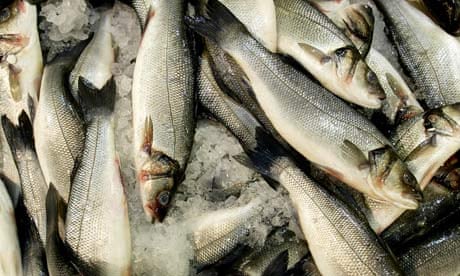
Sea bass stocks on brink of collapsing, warn conservationists

Call for temporary fishing ban if EU agreement to manage critically low stocks can’t be reached

Friday 10 July 2015 09.56 BST

Urgent action is needed to prevent rapidly declining sea bass stocks from collapsing, conservationists have warned.

A temporary ban on all fishing of wild sea bass may be needed if agreement to manage stocks cannot be reached, the Marine Conservation Society (MCS) said after new scientific advice warned the situation for the species was getting worse.

Last year, the scientific experts at the International Council for the Exploration of the Sea (ICES) called for total catches of both recreational and commercial fisheries to be cut by 80% to stem the declines.

The MCS said the population in the north east Atlantic had been rapidly declining since 2010 and was on track to plummet to levels from which it could struggle to recover.

A failure by European Union countries to agree a management plan for sea bass stocks led to emergency measures to ban pelagic trawling – fishing away from the bottom of the sea in the water column - for the spawning period between January and April this year.

Monday, 17 June 2013

Fishing ban proposed near Rockall after rare scientific finds

Fishing is expected to be banned near the Atlantic islet of Rockall after a rare methane gas vent in the seabed and two new shellfish species were discovered by British scientists.

The methane, which leaks through a so-called "cold seep" vent in the ocean floor, was found last year by scientists working with the government agency Marine Scotland. It is the first of its kind to be found near UK waters and only the third in the north-east Atlantic.

It was detected after Marine Scotland's Scotia survey ship trawled up two new species of deep-water clam that have a "chemosynthetic" relationship with the methane: the clams' food source is a bacteria that harvests the gas. That implies there may be a complex ecosystem around the mouth of the vent.

Francis Neat, the Marine Scotland scientist who oversaw the survey, said the site roughly four miles west of Rockall island was comparable to the complex habitats that build up around often exceptionally hot mineral-rich hydrothermal vents found on mid-ocean ridges.

The clams were "packed full" of polychaete worms that are also expected to be new to science, he said.

The International Convention on the Exploration of the Seas, an intergovernmental agency which polices fish stocks in the North Atlantic, has now recommended a fishing ban for the site (pdf), which is international waters, to protect it from highly damaging bottom trawling.

It has also requested additional fishing bans – adding to several already in place - at three other sites around Rockall to protect rare cold-water coral, sea sponge colonies, and sea fans or gorgonians which are being harmed by bottom-trawling.

The agency's surveys around Rockall also caught a frilled shark, an ancient "living fossil" species of shark that dates back at least 90m years and is rarely seen in northern waters. They found unusually large adult cod – known as "buffaloes" by fishermen, and large ling, saithe and haddock, suggesting Rockall's waters were very rich in food.

Two large areas around Rockall, the remote islet 230 miles west of the Outer Hebrides that adventurer Nick Hancock unsuccessfully tried to occupy this month, are already closed to fishing.


Friday, 19 November 2010

Battle lines emerge in bluefin tuna battle

PARIS (AFP) – A meeting on the fate of the Atlantic bluefin tuna got into its stride on Thursday as Europe mulled a call for a modest cut in catches and Japan said it would propose a fishing ban on nations that cheat.


At stake is the viability of billion-dollar fishery for the open-water predator and perhaps even the species' long-term survival, say conservationists.

Industrial-scale fishing using huge trap-nets during spawning season has drastically reduced stocks in the Mediterranean over the last three decades.

Nearly 80 percent of each year's catch is shipped to Japan, where it is a hallowed part of the national diet, eaten raw as gourmet sushi and sashimi.

The 48-member International Commission for the Conservation of Atlantic Tunas (ICCAT), meeting in Paris until November 27, sets the rules and quotas for Atlantic fisheries and monitors compliance.

European Union (EU) nations, overcoming internal divisions, agreed late Wednesday to push for a "stable or partially reduced quota".

European fisheries commissioner Maria Damanaki, backed in particular by Britain, called last month for slashing yearly quotas to 6,000 tonnes.

This is less than half of the 13,500 tonnes extracted from the eastern Atlantic and Mediterranean in 2010.

Fishing industry countries led by France -- including Spain, Italy and Malta -- had called for rolling over the current quotas for at least another year.

Eventually, though, all 27 member nations agreed on a proposal to "negotiate the bluefin tuna quota between its current level of 13,500 tonnes and a partial reduction", a European diplomat told AFP.

Another diplomat said the EU 27 were ready to accept a reduction of 2,000 tonnes.

Japan, meanwhile, said it would table a proposal by which countries that cheat on their quotas would be banned from fishing the following year unless they improved monitoring and enforcement measures, the daily Asahi Shimbun reported.

"Japan will take leadership in the meeting to ensure the recovery of the stock," Masanori Miyahara, the head of the Japanese delegation, told NHK television in Paris.

The United States has in the past pushed for "zero" quotas, but is under pressure from its own domestic industry, centered in Massachusetts, to ease up on restrictions to boost employment.

Going into the meeting, ICCAT Chairman Fabio Hazin said that a proposal favoured by four major green groups to suspend industrial fishing in the Mediterranean in favour of more traditional methods was under consideration.

"That is a realistic scenario," he said. "One of the things being discussed is the possible suspension of purse-seine fishing and the caging activities."

ICCAT scientists are cautious about quota numbers, saying that they could be skewed by high uncertainty about fish populations and the true tonnage of catches.

A single Atlantic bluefin tuna can fetch more than 100,000 dollars in wholesale markets in Japan. There, the fish is known as "kuro maguro" (black tuna) and prized by sushi connoisseurs as the "black diamond" because of its scarcity.

Bluefin make up less than one percent of the global tuna catch, which includes five species.


by Marlowe Hood
http://news.yahoo.com/s/afp/20101118/sc_afp/environmentfishtuna_20101118120441
Related Posts with Thumbnails

ShareThis