Showing posts with label hirola. Show all posts

Wednesday, 24 February 2016

World's Rarest Antelope Flourishes Under Community Conservation

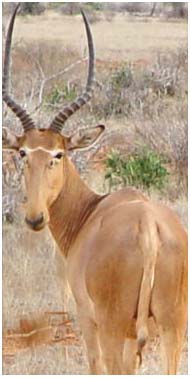
Most people have never heard of the hirola. The fawn coloured antelope is a shy animal, with a long thin face and spectacled eyes. And yet this unassuming creature is the centre of what may be one of the most successful conservation efforts in recent history. And the heroes - the equally unassuming Somali pastoralists who live alongside them on the East bank of the Tana River.

The Abdullah Somali community that run the Ishaqbini Conservancy in north-east Kenya have always had a fondness for the hirola, whose docile nature has earned it the nickname of ‘the stupid antelope’ in other communities. It is endemic to north-east Kenya and south-west Somalia, but populations have declined by over 80% since 1990. Numerous factors, including disease, hunting and loss of grasslands, have contributed to this.

Ishaqbini is part of a network of 33 community conservancies in northern Kenya, operating under the umbrella of the Northern Rangelands Trust (NRT). Together they are managing over 44,000 km² of land, stretching from the Indian Ocean to the Great Rift Valley. Not only are they conserving wildlife, but they are securing peace and building resilient livelihoods for rural communities on the back of it.

Friday, 5 December 2014

Good news in the crusade to save the endangered Hirola antelope

Hirola2.jpgThe critically endangered Hirola is the last living representative of an evolutionary lineage that originated over three million years ago. The surviving herds of fewer than 240 individuals only live along the Kenya-Somalia border, inhabited by the Pokomo community and Ishaqbini Conservancy.

Resembling a hybrid of Impala and Hartebeest, the Hirola is instantly recognisable by its trademark white “spectacles”.
In 2006, the Ishaqbini Hirola Community Conservancy was established by The Northern Rangelands Trust (NRT), The Nature Conservancy, the Kenya Wildlife Service (KWS), and community partners to protect Hirola. 

Rangers began anti-poaching and wildlife monitoring activities and were able to eliminate poaching within the 19,000-hectare conservancy. A predator-proof sanctuary was then built and 48 Hirola were successfully translocated to the sanctuary in August 2012. 

Thursday, 7 February 2013

World's rarest antelope GPS collared for first time in Kenya


There are an estimated 400-500 hirola living today, but these animals continue to be severely threatened by some combination of drought, predation, poaching, and habitat loss.
Hirola can now be monitored in an attempt to save this critically endangered species.

January 2013. A first ever attempt to GPS collar wild hirola in their native range has been hailed a success by conservationists from the Zoological Society of London (ZSL).

Boni Forest and Tana River
A total of nine animals were identified by field-workers in Kenya who spent eighteen months monitoring their habitat. Seven herds of hirola were identified between Boni Forest and the Tana River in north-eastern Kenya. Adult hirola were carefully captured and GPS collars fitted before they were left to roam free once again.

90% decline in population
Cath Lawson, ZSL's EDGE Programme coordinator says: "Hirola is an EDGE (Evolutionarily Distinct and Globally Endangered) species - one of the most unique and threatened animals on the planet. Over the past thirty years numbers have plummeted by almost 90 percent, and they continue to decline.

"As the sole representative of its group, the loss of the hirola would be the first extinction of a mammalian genus on mainland Africa in more than 100 years," Cath added.


Thursday, 10 November 2011

For the first time in 75 years, an entire genus of mammal is on the brink of extinction

You're looking at three of the last known hirola on Earth. Since the 1970s, unregulated hunting, habitat destruction and drought linked to climate change have driven the number of these large African antelopes living in Kenya and Somalia from over 14,000 to fewer than 400.

Of course, countless species go extinct every day — even the most conservative estimates show that the world is losing species at a rate 100 times greater than the world has seen in thousands of years.

But these hirola are not only among the last of their species, they're among the last of an entire genus — the taxonomic rank above species and below family. (As a point of reference, if the genus Canis were to go extinct, it would mean the disappearance of the planet's dogs, wolves, coyotes, jackals, and numerous other species.)

If the critically endangered hirola cannot be saved, it will be the first time the Earth has lost an entire genus of mammal in three-quarters of a century. (The death of the last known Tasmanian tiger in 1936 spelled not only the end of the genus Thylacinus, but the family Thylacinidae, as well.)

According to National Geographic, conservation efforts to save the hirola are already well under way; the Ishaqbini Hirola Community Conservancy is in the process of erecting what it claims will be a predator-free sanctuary for the species.

Whether or not hirola should be considered any more important, from a conservation standpoint, than any other animal facing the threat of extinction is obviously a subject for debate. But the more important question raised by the plight of the hirola is whether it heralds the coming of an age where the term "endangered genus" (or even "endangered family") will become as commonplace as "endangered species" is today. With levels of global biodiversity declining as rapidly as they are, such a future is frighteningly easy to envision.

http://io9.com/5857522/for-the-first-time-in-75-years-an-entire-genus-of-mammal-is-on-the-brink-of-extinction

Saturday, 4 July 2009

No safe haven for rarest antelope

Fleeting sightings of the world's rarest antelope, the hirola, in a new safe haven are cases of mistaken identity, a survey has found.

That has dashed hopes that some of the last hirola have managed to colonise a new territory where they would be less vulnerable to flooding and hunting.

Fewer than 600 wild hirola remain, confined to a small area in Kenya.

It is sometimes called a 'living fossil', being the sole survivor of a once diverse group of antelope species.

Prior to 1970, an estimated 14,000 hirola existed in the wild.

But the antelope soon came under a host of pressures which led to a dramatic decline in its population over the next 30 years.

Hunting and predation killed many, while the animals' range became restricted by habitat loss and an increase in human settlements and farms rearing livestock.

That left few animals surviving in a small area along the border between the River Tana in Kenya and the River Juba in Somalia.

The Somalia population is already thought to be extinct, while in Kenya the antelope survives in pockets within the Ijara, Garissa, Tana River and Lamu districts, while two small groups of animals translocated to the Tsavo East National park and are struggling to establish there.

Under pressure
However, in the 1990s two new threats emerged.

The collapse of the Republic of Somalia in 1991 precipitated a massive influx of refugees into Kenya.

"The majority of the Somali refugees were resettled in Garissa district which is part of the hirola's natural range," says Yakub Dahiye of the National Museums of Kenya in Nairobi. "The presence of large numbers of refugees increased poaching activities and general insecurity of the area."

In 1997 significant flooding caused by the El Nino weather phenomenon covered the region.
In response to both, many large mammals including the hirola migrated either to higher or quieter areas.

Then conservationists started receiving exciting reports of hirola in northern Garissa, an area outside of the antelope's known historical range, suggesting that the antelope was migrating to safer territory. Previously, the antelope was confined to the southern part of the district.

So to check the authenticity of the reports, Dahiye performed an extensive survey of the region.
For six days, he travelled more than 1100km criss-crossing the northern Garissa, observing and recording from the top of a moving vehicle the identity and locations of wildlife in the area. He also showed pictures of hirola to local people, asking if any had seen the elusive antelope in recent years.

None had, and despite spotting giraffe, Grant's gazelles, gerenuk, lesser kudu and oryx, Dahiye did not see a single hirola, he reports in the African Journal of Ecology.

"That confirms that the species is endemic to a small area between the lower River Tana in Kenya and the lower River Juba in Somalia," he says.

"If this small natural habitat is destroyed, then we will not have an in situ hirola population."
Effective management plans for the species are still lacking, says Dahiye.

Back in 1974, the Arawale National Reserve was set up mainly to conserve the hirola, but the reserve was later abandoned.

Local communities in Ijara district have now responded by establishing a Community Conservation Area to help protect those animals living there, but wider, strategic plans have yet to be put in place to conserve the species, Dahiye says.

Evolutionarily unique
The hirola is special because of both its rarity and evolutionary uniqueness.

Scientifically named (Beatragus hunteri), the hirola belongs to the family Bovidae, the group that includes all antelopes, cattle, bison, buffalo, goats and sheep.

Within that group, it belong to the subfamily Alcelaphinae, meaning it is most closely related to topi, wildebeests and hartbeest antelopes.

But what makes the hirola stand out is that it is the last living representative of the genus Beatragus.

The International Union for the Conservation of Nature considers it to be the most at risk antelope species, listing it as Critically Endangered, while the Zoological Society of London includes the hirola within its EDGE programme, which seeks to conserve the most evolutionary distinct and globally endangered of all animals.

Dahiye thinks that the unconfirmed sightings of the hirola in northern Garrisa, which sparked much excitement among conservationists, were cases of mistaken identity.

Local people call both hirola and impala antelopes by the same name in Somali, while the two species also look similar, he says.


Matt Walker Editor, Earth News
Related Posts with Thumbnails

ShareThis