Showing posts with label Somerset. Show all posts

Thursday, 13 September 2018

Water voles returning to national park in west country after 30 years


150 ‘Ratty’ river creatures to be released in Somerset estate where they had become extinct
Tue 11 Sep 2018 00.01 BST
One of the most beloved and endangered riverine creatures is returning to a west country national park where it has been extinct for more than three decades.
Over the next few days 150 water voles will be released at six locations in the Aller river on the Holnicote Estate on Exmoor in Somerset.
Once regularly spotted on Britain’s riverbanks, they are now the nation’s fastest declining land mammal, disappearing from 94% of their former sites due to factors including increased urbanisation, predators and a decline in natural habitat.
The new arrivals at Holnicote will be closely watched to see how they are settling in. Rangers, volunteers, students and members of the public will monitor their numbers.
They will use simple field signs to record their presence and behaviour, from actual sightings and “plopping” sounds as they dive into water to the tell-tale signal of grass blades nibbled off at distinctive 45 degree angles.
Continued  

Friday, 13 April 2018

Jaw bone on British beach belonged to huge ancient reptile


April 9, 2018

A 205-million-year-old jaw bone belonging to an ancient porpoise-like reptile known as an ichthyosaur was likely one of the largest ever known on Earth, researchers in Britain said Monday.

The bone fragments of the long-extinct fish predator were spotted on the beach at Lilstock, Somerset in May 2016, and together they measure about three feet long (96 centimeters), said the report in the journal PLOS One.

After comparing them to another set of bones in Canada scientists believe they came from an ichthyosaur that was close to 26 meters long, almost the size of a blue whale.

The bones in Canada belonged to what used to be the largest ichthyosaur known, the 21-meter-long shastasaurid Shonisaurus sikanniensis.

"As the specimen is represented only by a large piece of jaw, it is difficult to provide a size estimate," said Dean Lomax, an ichthyosaur expert at the University of Manchester.

"But by using a simple scaling factor and comparing the same bone in S. sikanniensis, the Lilstock specimen is about 25 percent larger."

Fossil remains of ichthyosaurs suggest they lived throughout the Mesozoic Era, 251 million years ago until 65 million years ago, but they were not considered dinosaurs.


Friday, 24 November 2017

‘Eight, nine, ten …’ Why people are counting sheep in Cheddar Gorge


The audit of a feral flock at the Somerset beauty spot is significant

Sunday 19 November 2017 00.04 GMT

There is a shaggy creation myth surrounding the feral sheep of Cheddar Gorge in Somerset. The story goes that during a poker game in the village in 1992 one of the gamblers, running out of money, put his seven sheep up as his stake. He lost, so the winner took the animals home and put them in his garden. The next morning the winner’s wife looked out of her window to see the new arrivals eating the garden ... and the sheep had to go.

Where they went is what draws 35 people to a layby in the chilly morning shadow of Cheddar Gorge. The winner of the two rams and five ewes deposited them on the craggy hillside there a quarter of a century ago, where they have been ever since – the seven becoming 10, becoming 50, then within five years 100 and now, well, who knows?

Hence the annual sheep count organised by the National Trust – an attempt to quantify one of England’s only flocks of feral sheep. There are feral goats in the gorge too, but ownerless sheep are something of a rarity.

Soay sheep, the variety roaming free in the gorge, are smaller than regular ones, are typically chocolate coloured, still have their tails and have the distinction of being self-shedding. But to know all that, you need first to be able to find them.

Dr David Bullock, leader of the count and the Trust’s head of nature conservation, herds together the counters, a mixture of staffers, volunteers and students in land management and agriculture from the nearby Bridgwater and Taunton College.


Sunday, 9 October 2016

British 'sea dragon' fossils are 'new to science'


By Helen Briggs BBC News
5 hours ago


Scientific detective work on fossils collected in Victorian times has identified two new species of Ichthyosaurs - the giant reptiles that swam at the time of the dinosaurs.

It brings to six the known species of Ichthyosaurus - ''sea dragons'' that ruled the oceans in Jurassic times.

Both fossils were unearthed in Somerset in the 1800s.

One specimen has been on display at Bristol University for decades, under the gaze of countless students.

The other was donated to a museum in Philadelphia, US, by Thomas Hawkins, a well-known Victorian fossil collector.

He amassed a huge collection of marine reptiles from Somerset in the first half of the 19th Century.

Such was the Victorian craze for skeletons of ichythyosaurs - the first was found by Mary Anning on the Dorset coast - that they ended up in museums and collections right across the world.

Palaeontologists Dean Lomax of Manchester University and Judy Massare of Brockport College, New York, examined hundreds of ichthyosaur fossils in Europe and North America, including some that had been kept hidden for decades.

''These are two new species - brand new species to science,'' Dean Lomax told BBC News.

''They show that during the early Jurassic - around 200 million years ago - the ichythyosaur, and specifically this particular type, was a lot more diverse than previously thought.''


Thursday, 6 October 2016

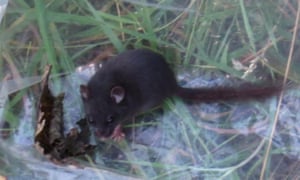
Black dormouse discovered in the UK for the first time


Rare find in Blackdown Hills in Somerset hailed as ‘fantastic’ at a time when Britain’s population of dormice is under threat
 
Photograph: Natural Futures


Steven Morris

Monday 3 October 2016 17.22 BST Last modified on Monday 3 October 2016 17.23 BST

The first black dormouse ever recorded in the UK has taken up residence in a nest box in the Blackdown Hills of Somerset.

Britain has only one native species of dormouse, the hazel dormouse. The one discovered in Somerset is a hazel dormouse but instead of having the normal golden-brown fur it is black.

A handful of black hazel dormice were found in Germany in the 1970s and two more in 2015 but it appears the Somerset specimen is a British first.

The discovery was made when staff, trainees and volunteers from the Blackdown Hills Natural Futures project were checking dormouse nest boxes as part of the national dormouse monitoring programme.

This year, the project provided 300 nest boxes and more than 60 volunteers have installed and regularly checked them. One was found to have the black specimen inside.

Conrad Barrowclough, the project officer, said: “Learning about and protecting our natural heritage is what we’re all about so finding such a rare dormouse on our doorstep is fantastic, especially at a time when Britain’s dormouse population is under threat.”

Read on and watch video

Monday, 20 April 2015

Vets call for an end to shooting of badgers

British Veterinary Association says cull is necessary to stop spread of TB in cattle but current methods are not effective or humane

Sunday 19 April 2015 00.05 BSTLast modified on Sunday 19 April 201500.06 BST

The association for British vets has called for an end to the shooting of badgers, claiming that, two years in, the four-year pilot scheme to cull the animals has not shown it is an effective or humane method of killing them.

The British Veterinary Association (BVA) said it still supports the government’s controversial cull as necessary to control the spread of TB in cattle, but said projects in Somerset and Gloucestershire should be completed using the “tried and tested” method of trapping the badgers and then shooting them.

The BVA concluded that the results had not demonstrated conclusively that “controlled shooting”, when badgers are picked off in the wild, could work without cruelty. An independent expert panel had previously concluded from the cull’s first year that controlled shooting did not work very well.

BVA president John Blackwell said he was concerned that a disproportionate focus on the cull meant that other methods for controlling TB, including vaccination, were being forgotten: “BVA supported the pilots to test the use of controlled shooting, but data from the first two years of culling has not demonstrated conclusively that controlled shooting can be carried out effectively and humanely based on the criteria that were set.

Thursday, 22 January 2015

Activist gets six-month suspended jail sentence for disrupting badger culls

Jay Tiernan of Stop the Cull campaign found in contempt of court for nine breaches of an injunction brought in by the National Farmers’ Union


Wednesday 21 January 2015 15.59 GMT

A prominent animal rights campaigner has been given a six-month suspended jail sentence for breaking an injunction designed to prevent him from disrupting the trial badger culls.

Jay Tiernan, a leading campaigner in the Stop the Cull movement which backs direct action, was also ordered to pay costs that could total as much as £55,000.

High court judge, Sir David Eady, ruled that Tiernan was in contempt of court for nine breaches of an injunction secured by the farmers union the NFU, which championed the trial culls in Somerset and Gloucestershire.

The breaches ranged from Tiernan filming someone involved in the cull to him protesting outside an NFU office wearing a T-shirt reading: “FCK NFU”, and failing to pass on details of the injunction to other protesters.

Saturday, 3 January 2015

Badger cull fails to meet target in Gloucestershire

18 December 2014 Last updated at 15:33

Fewer than half the target number of badgers were killed in this year's cull in Gloucestershire, Defra has announced.

Figures released show 274 were culled by shooting or cage trapping in the county. The minimum target was 615.

In Somerset, where 316 was the minimum target, 341 badgers were killed. The six-week cull ended in October.

Defra said the level of interference by anti-cull activists had been higher in Gloucestershire than in Somerset.'Intimidation'

Writing in a statement to the government, Environment Secretary Liz Truss said: "The results in Gloucestershire reflect the challenges of extensive unlawful protest and intimidation."

However, Gloucestershire Police said there were only three arrests for criminal offences during the entire period of the cull and most protest activity was conducted lawfully.

"All reports made to Gloucestershire Constabulary of intimidation and harassment have been fully investigated and there are no prosecutions pending," a spokesman added.

Last year's pilot cull failed to meet its target in both Gloucestershire and Somerset, and an independent panel found the culls were ineffective and inhumane.


Wednesday, 29 October 2014

Badger cull campaigners lose legal battle

Court of appeal rules against Badger Trust’s claim that lack of an independent panel to monitor government’s latest round of culls is unlawful


theguardian.com, Wednesday 29 October 2014 11.05 GMT

A legal challenge to how the government monitors the humaneness of it badger culls has been defeated.

The Badger Trust applied for a judicial review in August to declare the lack of an independent team monitoring of a second round of culls in Somerset and Gloucestershire unlawful.

But on Wednesday the court of appeal rejected the Trust’s challenge, meaning any future culls would be able to go ahead without such monitoring.

The first culls, which took place last year in a bid to tackle bovine TB which can be spread from badgers to cattle, were deemed to have failed the humaneness test by an independent expert panel. Not enough badgers were shot in the pilot culls, leading to the abandonment of plans for a nationwide roll-out.

Figures obtained by the Guardian suggest the second round of culling this year has failed, with just 253 badgers killed in Gloucestershire out of a minimum target of 615 after a six-week cull. If fewer badgers than the minimum target are killed, it can increase bovine TB infections due to the perturbation effect of making badgers move around more than usual.

Sunday, 31 August 2014

Badger cull legal challenge in Somerset and Gloucestershire fails

29 August 2014 Last updated at 11:29

A High Court bid to halt this year's badger culling, which will take place without independent monitoring, has failed.

The Badger Trust argued the "controlled shooting" in Gloucestershire and Somerset should only take place with independent observers overseeing it.

Defra lawyers said the monitoring was only intended to run in the first year.

Dominic Dyer, of The Badger Trust, said the group was "considering its options" following the ruling.

Mr Dyer called on Environment Secretary Liz Truss to halt the culls or reinstate monitoring.

He added the High Court ruling "does not detract from the serious public concerns over the continuation of the cull".

Wednesday, 27 August 2014

Badger cull targets announced for Gloucestershire and Somerset

A target number of badgers to be killed in this year's pilot cull has been announced.

Authorisation letters for the cull have been issued by Natural England. A minimum of 615 in Gloucestershire and 316 in Somerset need to be killed.

In 2013, 921 badgers were killed in Gloucestershire and 940 in Somerset in a bid to tackle TB in cattle.

The companies carrying out the cull have not announced when it will start this year.

A maximum number of badgers that can be culled this year has been set at 1,091 in Gloucestershire and 785 in Somerset.

Original population estimates for badgers have now been revised by the Department for Environment, Food and Rural Affairs (Defra) to 1,904 in Gloucestershire and 1,876 in Somerset.

The four-year pilot cull aims to kill 70% of the initial population to test how effective, humane and safe a cull can be.

Friday, 22 August 2014

Porlock Bay rare species found in marine study

22 August 2014 Last updated at 02:22

For the first time in 30 years, marine life in Porlock Bay, in Somerset, has been studied by divers for a scientific survey commissioned by the Wildlife Trusts.

Four professional divers took part in the study where they unexpectedly found two different and diverse sea bed habitats.

Crustaceans such as this long clawed squat lobster were recorded in a boulder reef north of Gore Point in the Bristol Channel, along with many sponge species. The other site studied was a sand and shell plain in the centre of Porlock Bay.

These large molluscs are called sea hares of which several were found during the two dives held at the beginning of August.

It is the first time this rare stalked jellyfish was recorded in this area. This jellyfish features in the UK Biodiversity Action Plan which means it could need targeted protection in the future as it is sensitive to environmental changes in its habitat.

Divers brought back small samples which have been analysed microscopically so they can be identified by species type. This record will help build up a picture of the biodiversity of each site. This particular species is called a branching sponge.

On both occasions, divers experienced difficulties in getting to the two dive sites due to strong currents which affected visibility. It is because of these challenges that the sites have not been explored for 30 years. The Wildlife Trusts said they have been surprised by the variety of species found in this area. They hope by knowing more about the habitat they can conserve it more effectively in the future.

Thursday, 21 August 2014

Deep sea survey reveals thriving marine life off Somerset coast

An underwater sea survey off the Somerset coast has revealed populations of sea hares, sun starfish and the rare stalked jellyfish.

Commissioned by The Wildlife Trusts the survey is the first in more than 30 years that explores the waters off Porlock Weir.

The dive is part of Somerset Wildlife Trust’s Living Seas initiative to raise awareness of Somerset’s marine environment through public surveys and events. 

Discoveries by the four professional divers and marine ecologists included two different and very diverse sea bed habitats; a boulder reef north of Gore Point and a sand and shell plain in the centre of Porlock Bay in the Bristol Channel. 

Tuesday, 27 May 2014

Badger cull company used Somerset's constabulary 'as private police force'

HNV Associates Ltd and the National Farmers Union directed police operation from control room, according to a police report


The Guardian, Sunday 25 May 2014 17.58 BST

Employees of the company that ran last year's badger cull in Somerset directed the deployment of police officers against protesters, according to a police investigation.

Policing the culls cost millions of pounds and the report, seen by the Guardian, shows that half the personnel in the police's night-time control centre were either from HNV Associates Ltd or the National Farmer's Union (NFU).

Those opposed to the cull say the report suggests officers acted as a "private police force" for the cullers and breached protesters' privacy by allowing the cullers to learn their names and addresses.

Police in the other cull zone in Gloucestershire have been accused of "highly questionable" actions by civil liberties lawyers, after telling protesters that their personal details would be passed to the NFU and handing out NFU-produced leaflets. A spokesman for Avon and Somerset police said having cull representatives in the control room gave them real-time information that helped keep the public safe and said changes to policing the cull when it resumes this year were still being discussed. The NFU, which also speaks for HNV Associates, denied that its members or anyone from the culling company had directed police action.

Friday, 2 May 2014

Independent badger cull monitors will not be asked to oversee again

The second year of the badger cull in Somerset and Gloucestershire will not be monitored by The Independent Experts Panel, the Government has revealed.

The news was criticised by Labour MP Maria Eagle who accused the Government of ignoring advice they didn’t like or didn't want to hear. 

“Now ministers have confirmed that they will not allow further expert scrutiny of their disastrous policy when the cull resumes later this year. What do the Tories do if they don’t like the independent scientific advice they get? Stop asking for advice,” she says.

Maria Eagle MP, Labour’s Shadow Environment Secretary, asked the Secretary of State for Environment, Food and Rural Affairs at Parliamentary Questions: “Whether he plans to ask the Independent Expert Panel, which recently reported on the first year of the pilot badger culls in Somerset and Gloucestershire, to report on the second year of such culls.”

Tuesday, 8 April 2014

He’s baa-baa-gantuan: Lambzilla of newborns is biggest in the world

Sunday 6 Apr 2014 9:37 pm


It’s the time of year when newborn lambs full of the joys of spring frolic in the fields.

But when you’re the size of this humongous fellow, gambolling about isn’t as easy as it’s cracked up to be.

He has been named Goliath after tipping the scales at 10kg (22.5lb) – making him the biggest spring lamb in the world.

Ann Endicott, who has been lambing with her husband, David, for 13 years, said that she had never seen anything like it.

Three times bigger: Next to a normal-sized spring arrival (Picture: SWNS)Goliath was born on Thursday at the couple’s farm in Wellington, Somerset. Mrs Endicott, 49, said: ‘He is amazing. Thankfully, the mother didn’t suffer during the birth.

‘My husband was helping her and he noticed that the lamb had extremely big feet.


The secret life of the slippery eel

Once they were nearing extinction. Now, down in Somerset, a group of fisherman have assembled to catch a million of them in a single night. What has changed?

Last Monday, an hour after sunset on the Taunton Road in Bridgwater, a cluster of white vans gathered behind the BMW garage. Beside them, a small crowd of fishermen laden with plastic buckets and wooden trays of baby glass eels stood waiting for the night's haul to be weighed. The eels slithered and roiled. High tide and a full moon had brought an extraordinary number to these shores. And on the banks of the River Perrett and the Severn, fishermen and conservationists assembled with the aim of catching a million of the creatures in a single night and – since their migratory route had been blocked by dams, weirs and flood defences – redistributing them further along the river.

The first ever eel conference was held here in 2009. It had been a hard year for eels; numbers had dwindled starkly. Over the past 200 years, we have drained and destroyed 80% of our wetlands, while 25,000 hydropower stations and tens of thousands of unscreened waterpumps across Europe threatened the species further. Early the following year, the Sustainable Eel Group (SEG) was established, and a regulation introduced, requiring each country to devise an eel-protection plan. "In Britain," says Andrew Kerr, chairman of SEG, "we lead in unblocking the eels' migratory pathways."

Thursday, 3 April 2014

Elver migration in Somerset and Gloucestershire aided by fishermen

Conservationists have been moving millions of elvers - or young eels - upstream in an attempt to give them a better chance of survival.

They are arriving on high spring tides and making their way into UK rivers, including the Parrett in Somerset and the Severn in Gloucestershire.

They need to swim upstream to mature, but in most cases waterways are blocked by man-made obstacles.

Without being helped most would die if they stayed downstream.

'Critically endangered'
Their paths are blocked by hundreds of barriers including weirs, dams and flood defences.

The number of elvers arriving in West Country estuaries on spring tides this year is estimated to be at least 10 times bigger than last year.

Thursday, 7 November 2013

Somerset badger cull fails to meet target, Defra admits


Defra said a total of 940 badgers were shot in west Somerset during the first year of the trial cull

One of the badger cull pilot schemes failed to meet its target - even after a three-week extension, the government has admitted.

The cull ended last week, with an estimated 65% reduction in the badger population in the west Somerset cull zone - the target was 70%.

The Department for Environment Food and Rural Affairs (Defra) said 940 badgers were shot in total.

A similar cull in Gloucestershire has been extended until 18 December.

Secretary of State for Environment, Food and Rural Affairs Owen Paterson said the two badger control pilots were "designed to test that controlled shooting is a safe, humane and effective means of reducing badger numbers".

"I am announcing to the House that the three-week extension period in the Somerset control area concluded as planned on Friday 1st November," said Mr Paterson.

"During this period, a further 90 badgers have been removed, giving an overall total of 940 for the first year of the four-year cull.

"This will deliver clear disease benefits as part of a four-year cull in the area.

"While conclusions will need to await the findings of the Independent Panel of Experts, current indications also suggest the pilot has been safe and humane."

Ministers and the National Farmers' Union say badger culling is needed to control incidents of TB in cattle.

About 28,000 cattle were slaughtered in 2012, at a cost of £100m to taxpayers.

However, animal welfare groups say scientific evidence does not support the policy of shooting badgers in an attempt to control the disease.

The Wildlife Trusts said the cull was a "complete failure" and should be halted.


Related Posts with Thumbnails

ShareThis