Showing posts with label New Zealand. Show all posts

Sunday, 1 March 2020

Hundreds of thousands of mussels cooked to death on New Zealand beach in heatwave

Northland residents describe ‘heartbreaking’ find as experts warn climate crisis could make it a more frequent sight

Hundreds of thousands of mussels have been cooked to death on a beach in New Zealand’s North Island, with experts saying more will die as the effects of the climate crisis accelerate.
The mass die-off in Northland was sparked by “an exceptional period of warm weather” combined with low tides in the middle of the day, which had exposed the shellfish, said Dr Andrew Jeffs, a marine scientist from the University of Auckland.
He said more marine life would soon be affected by climate change, and there was little that that could be done to protect the vulnerable shellfish, other than manual protection measures such as shadecloth, which were impractical and “unrealistic”.
Northland is experiencing drought conditions, with many parts of the region not seeing rain for a record-breaking 40 plus days. The effects of the drought have been severe, with Kiwi birds perishing as they search for water, and tankers of freshwater urgently trucked in to fill rainwater tanks in remote communities.

Monday, 18 November 2019

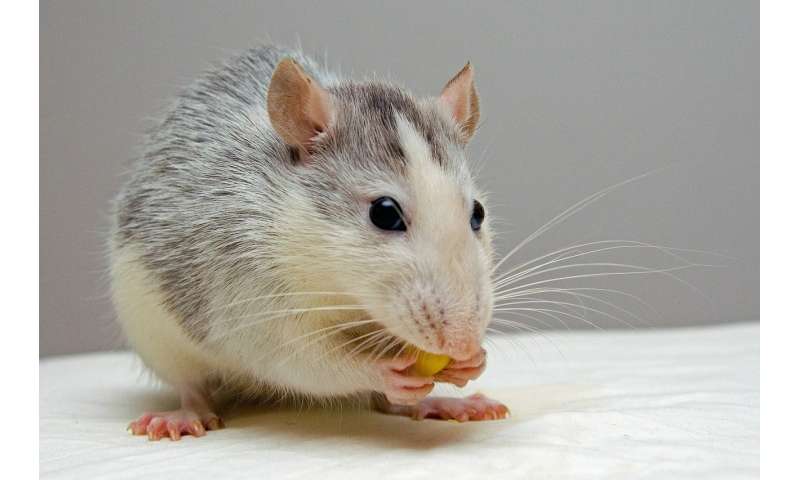
Secret lives of rats: Studying the ecology of urban ship rats

NOVEMBER 15, 2019

Credit: CC0 Public Domain

"Rats are a particularly damaging invasive species in New Zealand," Henry says. "Understanding them better, including how they move through an urban environment and what their habitat preferences are, will give insight into how to more effectively eradicate them and protect native flora and fauna, especially as there's currently very little known about the ecology of urban ship rats."

Henry and his supervisor, Associate Professor Stephen Hartley from the School of Biological Sciences, along with vet Craig Pritchard from Wellington Zoo, have spent the last three months trapping rats in the suburbs of Brooklyn, Roseneath, and Kelburn.

"We've been safely trapping a number of rats in these areas and attaching radio tracking collars to the rats," Henry says. "While attaching the collar we also record data like sex, body and tail length, species, and weight. We then release the rat at the site where they were trapped, and I then go out at different times during the day and night and attempt to triangulate their location using a directional antenna."

Sunday, 22 September 2019

New Zealand insect named after hobbit Frodo Baggins from Lord of the Rings

The newly classified species Psylla Frodobaggins is found on the South Island, where the Tolkein movies were filmed

Angela Cuming in Dunedin

Fri 20 Sep 2019 02.51 BSTLast modified on Fri 20 Sep 2019 03.38 BST

New Zealand researchers have named an insect after JRR Tolkein’s famous hobbit character Frodo Baggins. Like the famous literary character, the insect is smaller than its relations and is found in New Zealand’s South Island, the location where the Lord of the Rings and Hobbit movies were filmed.

The Psylla frodobagginsi was identified by Francesco Martoni and Karen Armstrong, who examined the psyllid insects during research for Martoni’s PhD, with the New Zealand’s Bio-Protection Research Centre.

It is not the first time Kiwi insects have been named after hobbits. In 2013 scientists discovered a new species of wasp that were small, short and stout and named them after Bilbo, Frodo, Merry, Pippin and Sam.

During their research, the pair also solved an 87-year-old mystery about why there was so much variation in what is called the kōwhai psyllid. There are in fact two different varieties of psyllid: the Psylla apicalis and the slightly smaller Psylla frodobagginsi.

For his PhD research, Martoni examined psyllids collected from kōwhai trees in 21 South Island locations and described consistent differences between two types, which allowed them to be classified as two distinct species.

Psylla frodobagginsi can be identified most easily by its small dimension, light colours, and uniformly spotted wings,” the authors wrote in their paper outlining the research.

Psylla frodobagginsi is smaller than P. apicalis, with males as small as 1.24 mm, compared to the 1.65mm of P. apicalis, and females as small as 1.56 mm, against the 2.03 mm of P. Apicalis.”

The name is likely to be seen as an improvement on the psyllids’ more common name of jumping plant lice.

Thursday, 11 July 2019

Predator Free 2050: New Zealand ramps up plan to purge all pests


By Phil MercerBBC News, Wellington
9 July 2019
"Wake up in paradise" is New Zealand's proud boast. It has a rightful swagger: its turquoise glacial lakes are ringed by untouched mountain ranges, while historic Māori sites speak of a people at one with the natural world.
But there are stains on the environment. In this corner of the South Pacific, waterways are increasingly polluted and, from the suburbs to the alpine peaks, an untold army of feral pests is running amok, putting about 80% of New Zealand's bird species at the risk of extinction.
It's four years since the former prime minister John Key set a goal of eradicating stoats, rats and possums by mid-century in arguably the world's most ambitious bio-diversity fight-back.
"It is a massive project but it is starting to track really well," Brent Beavan, the programme manager for Predator Free 2050, told the BBC. "Over the next five years I think you'll see that momentum accelerate and then we'll start stepping into some really large-scale programmes."
The task ahead appears truly Herculean, but Jessi Morgan from the Predator Free New Zealand Trust, which supports grassroots organisations, believes there has been a decisive cultural shift in the attitudes of New Zealanders.
"What has changed is the main-streaming of this movement," she explained to the BBC.
"It is now becoming something that we all do and we all have bought into this vision of removing predators from New Zealand. In Wellington [the capital] there is now not a suburb within the city that doesn't have a predator-free community, and that's pretty massive."


Monday, 4 March 2019

From exotic pets to pests, New Zealand – via Herp Digest


Animal protection groups say the global exotic pet trade is a growing multibillion-dollar industry that’s having a devastating impact on wildlife populations across the world. In New Zealand, lizards and turtles are traded freely, legally and in increasing numbers, and when the odd one has escaped our cold temperatures have largely stopped them reproducing. But those temperatures are heating up. 
The World Animal Protection is urging people not to buy, own or breed a wild animal as a pet.  It’s commissioned polling that found a quarter of exotic pet owners did no research before buying a wild animal as a pet ... and more than half of them didn’t realised their pet was classified as 'exotic'.
Cassandra Koenen heads the group's campaign on exotic pets.
“There’s an assumption that a reptile can be released into the wild and it will be fine,” she says. “But that doesn’t take into account the biodiversity (of the place it’s being released to). In countries like New Zealand that’s something that’s highly challenging,” she says.
“One of the challenges in owning an exotic pet is that in many countries it’s legal. There’s a perception that because it’s legal then it’s a great idea. That’s not the case.”
Koenen is talking to state and federal governments in several countries about the concept of a “positive list” – a list of species that are allowed to be kept as pets. It’s basically restricted to domestic animals (cats, dogs, guinea pigs, horses) and anything not on the list is banned. Belgium introduced it in 2001 for mammals. Koenen, who is based in Canada, says for example in Toronto it’s not legal to have a flamingo as a pet because if released, it wouldn’t survive in the wild. 
Department of Conservation science advisor, biosecurity, Rod Hitchmough, says quite a number of species now have the potential to establish in this country and become a problem. Some Australian lizards in particular, such as blue tongue skinks, are a worry - another that’s been found in several water ways are Water Dragons. They are carnivorous and go for New Zealand's giant land snails. 
He says imported birds are an issue as well – he names rainbow lorikeets and ring necked parakeets as flashy flying creatures that are prone to escaping, where they compete with native wildlife. 
Hitchmough says it’s not illegal to keep these lizards and birds as pets, but problems arise when people don’t want them any more or they escape … particularly when people release them to reserves. That is illegal. He says the extent of any damage they do isn't exactly known, but it's not just direct damage to the environment that could be a problem. Diseases may well be transmitted to native species, and there's predation to worry about as well. 
The most worrying are the ones that have the potential to establish. For birds that’s rainbow lorikeets and ring necked parakeets; with reptiles it’s water dragons first with blue tongue skinks second. “Water dragons can be very elusive,” he says. But they're also very expensive, which means owners are more likely to hang on to them.
The assumption is that either pet owners just get sick of them and let them go – they turn out to be too expensive or they just get too big. "It's pure speculation though.”
Trade Me is awash with red-eared slider turtles, which is the species being collected most often by reptile rescue services. "Kids have lost interest", one honest seller says. 
Red-eared slider turtles - one of the world's 100 worst invasive species - are increasingly being found on urban edge areas, and in the water ways of towns and cities. Auckland's Western Springs Park is a popular dumping ground and they’re often spotted in marsh at Bethells Beach. At the moment it’s not too much of a problem because sex determination is temperature-dependent, and it’s too cold in New Zealand for females to hatch. But Hitchmough points out that with global warming, that may change.
“It’s about being a conscientious pet owner,” he says. “If you no longer want your pet, do the right thing and find it a good home, or give it to a rescue organisation. Also, not breeding if you don’t know what you’re doing. Breeding them is not illegal but whether it’s ethical or not is a personal decision.”  
Hitchmough points out that making the turtles readily available cheaply increases the likelihood of impulse buying, regretting the decision, and letting it go.
He says turtles were rare as pets in New Zealand until the 1960s. “A lot of species have only been in the New Zealand pet trade for 30 years at the most and the numbers have been building up, so it’s quite recent. We don’t know why that is. There’s no proof that a lot of these things were illegally imported ... and it would be very difficult to prove.”
Pet accord 
There are 1800 different pet species here not native to New Zealand, most of them ornamental fish. The Ministry for Primary Industries is setting up a Pet Accord, which has assessed 35 species as being of high risk of becoming established. New Zealand has the highest rate of pet ownership in the world, but there's a list of escapees which have gone on to form wild populations here. 
At the moment MPI is working on an eradication programme for the European Alpine Newt, which has been seen near Waihi - that's on the verge of a successful conclusion. 
MPI's principle conservation advisor, Erik van Eyndhoven, says several programmes are also underway to catch Indian ring-necked parakeets, including near Thames and in Christchurch. They are easier to find than amphibians, with the public happy to report them. Red-eared slider turtles, he says, are "certainly on our radar and something that needs to be watched closely", but they have been assessed of being of medium concern when it comes to establishing feral populations. Adult males and females have been released but temperature bias does keep the numbers down - however van Eyndhoven says there are micro-sites where females have been produced. 
"Anecdotally we are getting more and more reports of red-eared slider turtles," he says. However data is not collected on it - and reports also go to councils around the country, and DoC. "Definitely we want owners to realise that they can't release them into the wild." The cheap price of replacement pets also concerns him - that makes it easier to just go and get another one. 
Van Eyndhoven says there are a variety of reasons as to why pets get out - including people who can't bring themselves to euthanise a pet and let them go instead. He says there's also a religious element where releasing animals is enshrined in practices. 
DoC and Biosecurity New Zealand recently issued a press release aimed at the Chinese community, reminding Buddhists that the practice of 'saving lives' of animals should not extend to releasing invasive species such as red-eared slider turtles and koi carp into lakes and streams. 
"This action is not only against the law, it is extremely harmful to the native species living in these areas. Native species do not co-habitat well with these imported species as we know from the disastrous introduction of rats, stoats, possums and weasels," it said. 
The Chinese Conservation Education Trust has offered to let Buddhists attend a native species release instead. 
Not good for the natives - or the turtles
 Sarah Liggins, a trained veterinary nurse, runs North Shore Reptile Rescue from her home. She gets turtles passed on from the SPCA or pet shops, or they’ve been dumped in a box outside her gate, or handed in by people who find them on the road. Often they have rotting shells or dog bites from fending for themselves in the wild. It’s not the damage to the country’s water ways that worries her, but the cavalier treatment dished out to the turtles.
They’re creatures that need a lot of care and attention, and that costs money. Initial setup costs are around $1000, for a tank, ultra-violet heat lamp, water conditioner, food, filters – “a lot of people get put off when you tell them that,” says Liggins. They also smell. When they get bigger they need a proper pond – they will end up being about 30cm long. And they can live up to 40 years. 
“It’s definitely time-consuming (looking after them),” she says. “Finding a savvy vet can be hard too – people don’t want to pay for that. A lot of people think they can buy one of those blue sandpits from The Warehouse and it’ll be fine.”
She had to find homes for 20 turtles before Christmas but has none at the moment – the job goes in fits and starts.
Liggins says they’re being mass produced by breeders who are simply feeding demand – they’re going for $38 on Trade Me. “I’ve spoken to a couple of people who breed red-ears for the pet market and they don’t have any problem with it,” she says. “They say it’s doing minimal damage to the environment, that hardly any get released. But we’ve seen a lot of them at Western Springs, most of them big adults. They’re in Lake Pupuke, I’ve rescued axolotls from there too. I’ve seen turtles in a stream at Belmont, one down at Takapuna beach, some from a creek in Brown’s Bay – you find them everywhere.” Many are in salty water or filthy ponds, in terrible conditions or with damaged shells.
Liggins says the turtles do eat native fish, and if there’s a shortage of those they will come up on land to eat mice and skinks, but to her knowledge they’re not causing huge environmental damage. She says Australian water dragons and blue-tongued lizards are another story however – the water dragons can grow a metre long.
Liggins would like to see pet stores adopt a ‘no questions asked’ policy for people to return unwanted turtles instead of releasing them into the wild.


Monday, 3 December 2018

New Zealand whales: Why are so many getting stranded?

By Gareth EvansBBC News

30 November 2018


The pictures are striking: dozens of whales lie stranded on an idyllic beach in a remote part of New Zealand.

The group were found by a walker on Stewart Island earlier this week. And just a few days later, a further 51 pilot whales died after becoming stranded on a beach on the Chatham Islands.

While whale strandings are not uncommon, they usually involve just a single animal rather than a whole group. The recent flurry of mass strandings has brought a renewed focus on the mysterious, and rare, phenomenon.

So why does it happen? While the exact reasons remain unclear, experts say many different factors could play a part.
Sickness and injury

"Quite often animals that turn up on a beach are getting exhausted, they're malnourished, or they haven't eaten because they're ill," says Dr Simon Ingram, a Professor of Marine Conservation at the University of Plymouth.

"They can be in the final stages of being ill or die at sea and end up getting washed up on a beach," he adds.

But Dr Ingram says that sickness or injury mainly plays a part when a single animal is found stranded.

Thursday, 30 August 2018

Divers Find Enormous, Creepy Squid on New Zealand Beach


By Kimberly Hickok, Reference Editor | August 27, 2018 04:33pm ET
Divers visiting New Zealand's south coast of Wellington were looking for a nice spot to go spearfishing Saturday morning (Aug. 25) when they spotted one of the ocean's most impressive creatures of the deep: a dead, but fully intact, giant squid.
"After we went for a dive we went back to [the squid] and got a tape measure out, and it measured 4.2 meters [13 feet] long," one of the divers, Daniel Aplin, told the New Zealand Herald.
A representative from the New Zealand Department of Conservation told the Herald that the divers most likely found a giant squid (Architeuthis dux) and not a colossal squid (Mesonychoteuthis hamiltoni). [Photos of the Stunning Deep-Sea Squid Feeding]
Strange News Snapshot: Week of Aug. 19, 2018
A “sky glow” named ‘Steve’, an ant making a break for it with a diamond , and new signs of life in a field riddled with hundreds of dead headless reindeer.
Both species of squid are formidable sea creatures, with giant squid typically reaching 16 feet (5 m) long, according to the Smithsonian, and the colossal squid reaching over 30 feet (10 m) long, according to the International Union for Conservation of Nature.
Scientists know very little about these deep-sea-dwelling species, because the animals are so rarely seen. Most observations come from the occasional specimen washing ashore, as in this case, or getting accidently captured by fishers.

Wednesday, 6 June 2018

New Zealand 'marine heatwave' brings tropical fish from 3,000km away


Out-of-place Queensland groper seen off New Zealand coast after water temperatures soared

Eleanor Ainge Roy in Dunedin
Tue 29 May 2018 01.53 BSTLast modified on Tue 29 May 2018 03.16 BST

Rare tropical fish from Australia have been spotted in New Zealand waters after a record-breaking hot summer and warm ocean temperatures lured the creatures across the Tasman sea.
The Queensland groper, also known as the giant grouper, is the aquatic emblem of the state and was spotted swimming around the wreck of the HMNZ Canterbury in the Bay of Islands on Sunday, more than 3,000 kilometres away from its usual cruising spots on the coral reefs and estuaries off the Queensland coast.

New Zealand experienced its hottest summer on record this year, largely propelled by a “marine heatwave” during which sea temperatures rose as much as six degrees in some areas, and 2-4 in the region where the groper was spotted.

Figures released by the National Institute of Water and Atmospheric Research found the average temperature during January was 20.3C – more than three degrees above normal.

The Queensland groper, a bony fish that can grow up to three metres long and weigh 600kg, is a protected species in Australia, was spotted and recorded by a skipper from Paihia Dive, a small coastal town in the far north of the country.


Friday, 25 May 2018

New Zealand has its own population of blue whales


 Date:  May 17, 2018
Source:  Oregon State University

Summary:
A group of blue whales that frequent the South Taranaki Bight (STB) between the North and South islands of New Zealand appears to be part of a local population that is genetically distinct from other blue whales in the Pacific Ocean and Southern Ocean, a new study has found.


Thursday, 3 May 2018

Tweezers and talcum powder: butterfly wing transplants take flight in New Zealand


Insect lovers are going to extraordinary lengths to give injured butterflies an extra few weeks of life

Eleanor Ainge Roy in Dunedin
Tue 1 May 2018 03.51 BST Last modified on Tue 1 May 2018 06.17 BST

New Zealand’s love affair with the monarch butterfly has reached bizarre new heights, with some devotees performing wing transplants on the insects to give them a few extra weeks of life.

Although the butterflies are not classified as threatened or endangered, some lepidopterists have carried out the unusual surgery using techniques picked up from YouTube.

The operations involve removing the deformed or injured wings and repairing or fitting a new one from a dead monarch using tweezers, superglue and talcum powder.

On average monarchs live for between two to six weeks.

The operation is not painful for the butterfly, but experts and conservationists say the outcome for the animal is unknown, and efforts would be better directed towards cultivating flowers and plants that would attract and aid the wider population.


Sunday, 22 April 2018

New species of ancient whale identified and named by Otago palaeontologists


April 18, 2018, University of Otago

University of Otago palaeontologists are rewriting the history of New Zealand's ancient whales by describing a previously unknown genus of baleen whale, alive more than 27.5 million years ago and found in the Hakataramea Valley.

The new genus and species of extinct baleen whale is based on a skull and associated bones unearthed from the Kokoamu Greensand, a noted fossil-bearing rock unit in the South Canterbury and Waitaki district from the Oligocene period, which extends from about 33.9 million to 23 million years ago. At this time, New Zealand was an archipelago surrounded by shallow, richly productive seas.

Former Ph.D. student in the University of Otago's Department of Geology, Cheng-Hsiu Tsai and his supervisor, Professor Ewan Fordyce, have named the new genus Toipahautea waitaki, which translates in Māori as a baleen-origin whale from the Waitaki region.

Friday, 16 February 2018

New Zealand female-only stick insect produces 'rogue' male in UK


The specimen, which was discovered by an insect enthusiast in Cornwall, could mean the animal is ready to start having sex

Eleanor Ainge Roy in Dunedin
Tue 6 Feb 2018 01.08 GMTLast modified on Tue 6 Feb 2018 06.50 GMT

A species of New Zealand stick insect that was thought to produce only females has hatched a rogue male in the UK countryside – and scientists say the rare event could mean the animal is ready to start having sex.

Scientists at Massey University in New Zealand said they were “disbelieving” when colleagues in the UK reported they had found a male of the Acanthoxyla inermis stick insect, as the species has only ever been known to produce females.

“All Acanthoxyla species use parthenogenetics to reproduce, which means that the females lay viable eggs without the need for fertilisation by a male,” said Professor Morgan-Richards of the School of Agriculture and Environment at Massey University

“No males of any Acanthoxyla species have ever been recorded, until now.”


Friday, 19 January 2018

Giant extinct burrowing bat discovered in New Zealand


Date:  January 10, 2018
Source:  University of New South Wales

Summary:
The fossilized remains of a giant burrowing bat that lived in New Zealand millions of years ago have been found by a UNSW Sydney-led international team of scientists. Teeth and bones of the extinct bat -- which was about three times the size of an average bat today -- were recovered from 19 to 16-million-year-old sediments near the town of St Bathans in Central Otago on the South Island.


Thursday, 7 December 2017

2 kiwi birds are rare bright spot in grim extinction report


December 5, 2017 by Elaine Kurtenbach

Two types of New Zealand kiwi birds are a rare bright spot in a mostly grim assessment of global species at risk of extinction.

The International Union for the Conservation of Nature upgraded the Okarito kiwi and the Northern Brown kiwi from endangered to vulnerable thanks to New Zealand's progress in controlling predators like stoats and cats.

But the conservation group's latest update Tuesday mostly reported grave threats to animals and plants due to loss of habitat and unsustainable farming and fisheries practices.
The group said the Irrawaddy dolphin and finless porpoise that roam coastlines of Southeast Asia are now designated as endangered, imperiled by entanglement in fishing nets and other human activities.

For its Red List of Threatened Species, the group assessed the status of 91,523 species, of which 25,821 are threatened, 866 are extinct and 69 extinct in the wild. It said 11,783 species are vulnerable, 8,455 are endangered and 5,583 critically endangered.

Behind the numbers are life-and-death struggles for survival as human populations grow and industrialize and habitats are transformed by global warming.

Australia's Western Ringtail possum has slipped from vulnerable to critically endangered, the IUCN said, as its population plunged by 80 percent over the past decade.

Once widespread in peppermint and eucalyptus forests of Western Australia, now it has only a few fragmented habitats and is prone to heat stress at temperatures above 35 C (95 F) that are becoming increasingly common where it lives.

The group said three reptile species on Christmas Island, also in Australia, had gone extinct in the wild: the Whiptail-skink, the Blue-tailed skink and Lister's gecko. The group said the losses of reptiles were mysterious but might be due to introduction of a disease and the arrival of the yellow crazy ant.

The IUCN and Global Invasive Species Database list that ant as one of the 100 worst invasive species. The creature has wreaked havoc on Christmas Island, devouring the famous endemic red crabs that were a key part of its ecosystem.

Apart from many animal species the IUCN said many wild crops, such as wild wheat, rice and yam, face threats from overgrazing, use of herbicides and urbanization.

Monday, 23 October 2017

Snapper family ties provide new evidence on marine reserves


October 18, 2017 by Anne Beston

A higher proportion of young snapper in fishing areas north of Auckland are related to adult snapper from the Goat Island Marine Reserve, confirming what scientists have long suspected: the reserve acts as a giant snapper nursery.

The new study from the University of Auckland's Institute of Marine Science is the first time scientists have studied a temperate commercial fishing species to find evidence of a direct parental link between adults in a marine protected area to juveniles outside.

Led by Professor John Montgomery, Dr Shane Lavery, and former University of Auckland postdoctoral fellow Dr Agnès Le Port, the research team used a combination of genetic testing and hydrodynamic modelling of snapper larvae.

They found at least 11 percent of juvenile snapper up to 40km away were the offspring of spawning adults from the reserve at Leigh north of Auckland, whereas no offspring matches were found to adult snapper sampled from non-reserve areas.

"The contribution from the reserve is about 10 times higher than would be expected if snapper larval contribution was simply proportional to geographic area," Professor Montgomery says.
An area of 400 square kilometres was included in the study, from Mangawhai in the north to Mahurangi in the south. Goat Island Marine Reserve makes up just 1.3 percent of the area studied. It is a 'no take' marine reserve meaning fishing is strictly prohibited.

Friday, 13 October 2017

Lusius malfoyi wasp: New Zealand insect named after Harry Potter villain

Entomologist names parasitoid wasp after ‘redeemed’ character Lucius Malfoy in hope of showing not all wasps are bad


Tuesday 10 October 2017 05.55 BST

A Harry Potter fan turned entomologist has named a wasp after a redeemed villain in the series in the hope of drawing attention to the much maligned insect.

Tom Saunders named and described a New Zealand parasitoid wasp as part of his masters study at Auckland University.

The wasp, which he named Lusius malfoyi, is one of 3000 wasps endemic to New Zealand, none of which sting or cause any problems to humans.

“The dominant narrative is wasps are bad and they sting people and they are awful,” said Saunders.

“But if you look at the diversity of wasps around the world you’ll find only a tiny fraction, less than 1% are pests and problems. And the vast majority of them play a fairly critical roles in the ecosystems they live in.”

The wasp Lusius malfoyi was named after the fictional character Lucius Malfoy, who is the father of Draco Malfoy in the Harry Potter series.

Friday, 9 June 2017

New species discovered behind a pub – then saved from extinction


In 2007, conservationists discovered a new species inhabiting a beach just behind a pub in Granity, New Zealand. But could they save it before erosion and rising waters wiped it off the face of the planet? 

Jeremy Hance
Thursday 1 June 2017 14.47 BST Last modified on Thursday 1 June 2017 15.24 BST 

Who says village life has to be boring? Granity, New Zealand may be home to less than 300 people, but this lovely seaside village on the western coast of South Island was also – until last year – home to a species found no-where else on Earth. And today, the town has quite the tale to tell.

In 2007 reptile expert Tony Jewell noticed there was something very different about the little lizards that skittered beneath the cobble stones on the beach behind Miners on Sea pub and hotel in Granity. Built in 1892, the pub has a long history of serving nearby mining communities. 

Jewell was so convinced of the reptile’s distinctness that he included them as a separate species in his 2008 edition of A Photographic Guide to Reptiles and Amphibians of New Zealand. Although similar to the more common speckled skink, these Miners-on-Sea skinks were smaller and sported bigger eyes.

“Perhaps adaptations to wriggling through the gloomy spaces beneath the ‘cobble’,” Richard Gibson, with the Auckland Zoo, explained. 

Conservationists began referring to this population as ‘cobble skinks,’ since they only inhabited the cobble stones that lined the beach near Granity. 

But things quickly became dire for the newly discovered skinks. Eight years after Jewell discovered the population, two surveys, one in 2015 and 2016, counted only around 30 animals left. 


Related Posts with Thumbnails

ShareThis