Showing posts with label New South Wales. Show all posts

Friday, 20 March 2020

State MPs dismayed at NSW Forestry logging unburnt habitat after bushfires

Endangered species have lost up to 82% of their habitat but Environment Protection Authority says logging of unburnt forest is legal


Sat 14 Mar 2020 19.00 GMTLast modified on Sat 14 Mar 2020 23.55 GMT


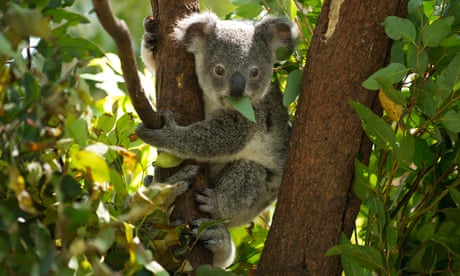
Logging is continuing in NSW forest north-west of Coffs Harbour in bushland that is proposed for the Great Koala national park. Photograph: International Fund For Animal Welfare

The New South Wales Forestry Corporation has continued to log unburnt forest that is habitat for some of the most imperilled species in the aftermath of the state’s bushfire crisis.

Logging operations have continued in the Styx River state forest on the north coast that is now remnant habitat for endangered species including the greater glider and the Hastings River mouse.

Both the federal and state governments have identified the mouse, which had 82% of its habitat burnt, as one of the species most at risk of extinction as a result of the bushfire disaster.

Trucks have also moved into an area of the Lower Bucca state forest north-west of Coffs Harbour in bushland that is part of the proposed Great Koala national park.

Twenty-four per cent of koala habitat in eastern NSW was burnt in the fire crisis and the environment minister, Sussan Ley, has said up to 30% of the koala population on the mid north coast may have been killed.

Environment groups and the independent state MLC Justin Field have expressed dismay that NSW Forestry Corporation has been able to continue with harvest plans in unburnt forest that is now important remnant habitat for wildlife.

The Nature Conservation Council of NSW asked the NSW Environment Protection Authority (EPA) to investigate the logging. But the council’s chief executive said it was told that operations could not be halted when Forestry Corporation was not in breach of its approvals.

The council is now calling on the state government to suspend the coastal integrated forestry operations approval (IFOA) until assessments of the impact of the fires are complete.

Thursday, 7 November 2019

It's not 'wild dog' management—we are just killing dingoes


NOVEMBER 1, 2019

by University of New South Wales

Dingo or just wild dog? A new study busts the misconception that pure dingoes are extinct in NSW—and finds several 'dingo hotspots' around the state.

Almost all wild dogs in NSW are dingoes or dingo-dominant hybrids, a study from UNSW Sydney and collaborators has found, challenging the widely held view that pure dingoes are virtually extinct in the state.

The study, published this week in Conservation Genetics, tested the genetic makeup of 783 wild canids (animals belonging to the Canidae family, such as dingoes, domestic dogs, foxes and wolves) across north-eastern NSW.

Crucially, the study found nearly one in four animals sampled were likely pure dingoes.

Dingo-dominant hybrids—i.e. animals whose genetic make-up is dominated by dingo genes—accounted for 75 percent of the animals tested, while hybrids with mostly domestic dog genes only made up 2 percent. Surprisingly, less than 1 percent were feral dogs with no dingo ancestry.

The researchers also identified several 'hotspots' in north-eastern NSW where more pure dingoes exist than expected: Port Macquarie, Myall Lakes and the Washpool National Park area.

"Our study shows that for all intents and purposes, wild dogs and dingoes are one and the same," says UNSW Professor Mike Letnic, co-author of the study.

Friday, 25 January 2019

New South Wales government largely culpable for fish kill, report finds


Exclusive: Australia Institute calls for inquiry similar to royal commission and greater MDBA transparency
Fri 18 Jan 2019 19.00 GMTLast modified on Sun 20 Jan 2019 23.21 GMT
The crisis on the Lower Darling, which has seen up to 1 million fish die, is largely due to the decisions by the Murray-Darling Basin Authority on instructions from the New South Wales government, a report by the Australia Institute finds.
It says the reasons for those decisions appear to be about building the case for the new Broken Hill pipeline and the Menindee Lakes project, which will see the lakes shrink and “save” water by reducing evaporation.
“It is clear what has caused the Darling River fish kill – mismanagement and repeated policy failure,” said Maryanne Slattery, senior water researcher with the Australia Institute. “To blame the fish kill on the drought is a cop-out, it is because water releases were made from the lakes when this simply shouldn’t have happened.
“It’s time to stop passing the buck.
 'It's happening again': Menindee residents devastated as fish kill conditions return
 “Drought and high temperatures are a factor, but a key issue is that smaller flow events now rarely reach Menindee,” the institute says after a detailed analysis of flows and releases from the Menindee Lakes system. “Large floods still occur, but smaller flows to regularly replenish the system have largely stopped.”


Friday, 15 June 2018

Josh Frydenberg urged to step in to save national park from NSW brumby plan


Conservationists say federal environment minister has obligation to protect areas of national significance

Fri 8 Jun 2018 23.00 BSTLast modified on Sat 9 Jun 2018 01.04 BST

Conservationists have called on the federal environment minister, Josh Frydenberg, to intervene to protect the Kosciuszko national park from brumbies after a New South Wales bill was passed giving heritage protection to the feral horses.

The Australian Conservation Foundation says the federal government has an obligation under national environment law to protect areas of national significance, including the national heritage-listed Australian Alps national parks and reserves.

The Berejiklian Liberal government, with support from the Shooters, Fishers and Farmers party and the Christian Democrats, passed the Kosciuszko wild horse heritage bill through the state’s upper house this week.

The move has attracted widespread criticism from the conservation and science community, which is now pushing for the issue to be addressed under the federal Environment Protection and Biodiversity Conservation Act.

ACF policy analyst James Trezise said several nationally listed threatened species and ecological communities occurred within the national park.


Sunday, 21 January 2018

Conservationists decry NSW shark net trial after protected species caught and killed


One bull shark caught during November and December period along with marine turtles and rays


Fri 12 Jan 2018 02.13 GMTLast modified on Fri 12 Jan 2018 02.14 GMT

New South Wales shark nets caught just one targeted shark but continued to kill protected species this summer, a result environmentalists have described as “unfathomable”.

Figures released this week from a trial of shark nets on northern NSW’s beaches show they have caught a single bull shark in November and December.

The nets caught no tiger or white sharks – the two other species they are aimed at – but did kill a series of turtles, rays and other sharks. The nets also caught a critically endangered grey nurse shark, although it was released alive.


Tuesday, 22 November 2016

Destruction of kelp forests by tropical fish shows impact of ocean temperature rises


Deforestation near Coffs Harbour coincided with 0.6C temperature rise, which had ‘catastrophic’ effect of attracting fish

Monday 14 November 2016 20.50 GMT Last modified on Tuesday 15 November 2016 01.46 GMT

Herbivorous tropical fish have destroyed kelp forests in northern New South Wales, showing that even small increases in ocean temperature can lead to kelp deforestation, an Australian study has found.

The University of NSW study, published in the Proceedings of the National Academy of Sciences on Tuesday, found that the disappearance of kelp from waters near Coffs Harbour coincided with a threefold increase in the number of tropical fish in the region.

The deforestation coincided with an 0.6 degree temperature rise. While that was not enough to directly impact the kelp, lead author Dr Adriana Vergés said it had the “truly catastrophic” effect of attracting hungry fish.

The study examined video footage of 12 sites between 2002 and 2011. In 2002, six of the sites contained kelp. By 2010, all the kelp was gone.

The proportion of kelp showing signs of bite marks increased from less than 10% in 2002 to more than 70% in 2008, before there was no kelp to measure. At the same time the proportion of tropical fish in the ecosystem increased from less than 10% to more than 30%.
Most prolific were surgeonfish, which increased from 9% of the local fish population in 2002 to 33% at the end of the study period in 2011.

Once the kelp had been removed, the ecosystem changed “quite dramatically” to become more tropical, in a trend Vergés said could potentially be seen globally.

Friday, 11 November 2016

Koalas 'under siege' from policy changes set to destroy habitat, report finds


New South Wales government is failing to protect koalas by allowing further land clearing, logging and habitat destruction, National Parks Association says

Michael Slezak

Sunday 6 November 2016 19.15 GMT Last modified on Sunday 6 November 2016 19.17 

Koalas are “under siege” across NSW, with three separate policies poised to be implemented set to destroy their remaining habitats, according to a briefing paper written by the National Parks Association of NSW.

In light of the increasing threats, the paper calls on the NSW EPA to protect koala habitats.

“The NSW government is completely failing to conserve and protect koala habitat,” the report says. “Koalas can lay claim to be the most poorly managed species in eastern Australia at present – which is hugely disappointing in light of their beloved status.”

The report finds the habitats of the declining koala populations are being threatened on public land by plans to renew agreements allowing the logging of native forests; on private lands by weakened clearing laws proposed by the Baird government; and by a failure of local government protections to identify more koala habitats as they are intended.

Between 1990 and 2010, Koala populations in NSW were estimated by the federal government to have declined by 30%. And a report released in May by the NSW Environmental Protection Agency found that all koala populations in NSW, with one possible exception, have continued to decline, with at least one population now considered endangered.

That EPA report also found there were more koalas in forests that were more mature. It therefore concluded that logging was bad for koalas, since even if the forests are replaced, it reduced the maturity of the forests.


Continued

Sunday, 8 May 2016

Bob Carr backs bid to abolish dolphin captivity in NSW


Former premier supports legislation, which has cross-party backing, as well as campaign by dolphin advocacy group to end captivity at the state’s only dolphin park in Coffs Harbour


Thursday 5 May 201604.24 BST Last modified on Thursday 5 May 201605.35 BST

A legislative bid to abolish dolphin captivity in New South Wales, targeting the remaining park in the state in Coffs Harbour, has gained cross-party support as well as that of the former premier Bob Carr.

More than 85,000 people have already backed advocacy group Australia for Dolphins’ appeal to premier Mike Baird to end dolphin captivity in the state since it launched on 9 April.

Carr, Labor members Penny Sharpe and Mick Veitch, Greens NSW MP Mehreen Faruqi, and Animal Justice party member Mark Pearson threw their support behind the bid to “convince Coffs” on Thursday morning.

“Those two words, dolphins and captivity, don’t sit happily together,” said Carr, citing the “magnificent” animals’ intelligence and abilities.

“To think of these creature being confined in a pool, one-third of the size of an Olympic swimming pool, is to know what this is all about. It’s plain cruel.”Only two dolphin parks remain open in Australia, one of which is Dolphin Marine Magic in Coffs Harbour.

It has five bottlenose dolphins in its care, which perform tricks and swim with visitors.


Monday, 19 January 2015

NSW Labor leader Luke Foley promises to establish koala national park

The Great Koala National Park would cover more than 300,000 hectares on the state’s mid north coast north between Macksville and Woolgoolga

Australian Associated Press

theguardian.com, Sunday 18 January 2015 22.05 GMT

The NSW opposition leader is promising to create Australia’s first koala national park on the state’s mid north coast, covering an area of more than 300,000 hectares.

As he heads to the March election, Luke Foley said his party had a clear plan to protect koalas.

Labor said it would work with the Wilderness Society to help nature conservation in NSW.

Thursday, 8 January 2015

Deadly brown snake emerges from surf, causing alarm to NSW swimmers

Unexpected arrival of the snake, from between the lifesaving flags at Forster beach, causes visitors to flee and lifeguards to warn people away


theguardian.com, Wednesday 7 January 2015 05.15 GMT

Visitors to a beach on the mid-north coast of New South Wales made a hasty retreat on Tuesday after spotting an eastern brown snake, one of the most venomous snakes in the world, emerge from the surf and glide along the sand.
The unusual incident occurred at One Mile beach at Forster. The unexpected arrival of the snake, which emerged right between the lifesaving flags, caused visitors to flee as lifeguards warned people away.

Beachgoer Olivia Moffatt said that visitors were initially afraid it was a shark when lifeguards blew their whistles.

“The snake travelled out of the water and remained on the shore for a while until waves washed up against it,” she told the Great Lakes Advocate.

“Raising its head, it headed for shade towards the lifeguard trailer and happily sat there until again moving up along the beach to the bush.”

Friday, 12 December 2014

Australian foxes are pests not pets, NSW declares

8 December 2014 Last updated at 04:31

Foxes have been officially declared a pest in New South Wales but there is concern people are taking them as pets.

The NSW government has for the first time announced a pest control order for foxes, which are not native to Australia.

The order will make it easier for local land services to target foxes and to control who keeps them in captivity.

Foxes are estimated to be responsible for about A$227.5m (£121m) of damage to Australia's environment and economy.

"The introduction of the pest control order brings NSW into line with all other states in Australia in ensuring that foxes must be controlled by landholders on their properties," said NSW Minister for Primary Industries Katrina Hodgkinson.

"Foxes are not companion animals - this pest control order sends the clear message that they are pests, not pets," she said.

"Foxes cause extensive damage for livestock producers, with studies showing lamb losses to fox predation can be as high as 30%."

Wildlife 'devastated'
People who currently keep foxes in captivity will have to apply for a permit.

Friday, 20 December 2013

Young Australian describes vicious attack by two kangaroos

A 13-year-old girl suffered a vicious 25-minute attack by two kangaroos while out jogging in the bush in Australia.

Jade Bassett was left bleeding with deep scratches down her legs as well as injuries to her face and arm after confronting the two eastern grey kangaroos in bushland in Oakhampton in the Hunter region of New South Wales.

Her grandfather, Kevin Henderson, had taken her to the track and sat down on a bench to wait for her to return from a 15-minute run.

Bassett had only jogged about 10 metres when she spotted kangaroos, two of which she said were "really big" and one slightly smaller, though still bigger than her.

Wednesday, 23 October 2013

'The matter is closed': new report into Blue Mountains big cat

A doctor, dentist, solicitor, clergyman and Qantas pilot have all seen it, as have numerous Rural Fire Service volunteers and an officer from the Department of Agriculture. A NSW detective spoke of how he watched the beast, from barely 50 metres away, for more than a minute. And like most others, he is "convinced" it was a black panther.

Rumours have circulated for decades about a colony of "Big cats" roaming Sydney's western fringes and beyond. But today, a report commissioned by the State Government has concluded that the many hundreds who have seen the panther are wrong.

In a review of "large free-ranging felines in New South Wales", a New Zealand-based invasive species expert, John Parkes, said the accounts were "at best prima facie evidence".

"The sightings are mostly of black animals but the occasional reports of brown or tan cats suggest either more than one species is present or people are mistaking other animals for cats. Large dogs, large feral cats or swamp wallabies have been suggested as candidates by some."
Advertisement

He added: "There is no conclusive evidence that large cats exist in the wild in NSW."

The NSW Minister for Primary Industries, Katrina Hodgkinson, said: "The NSW Government will not commit further expenditure to this issue and, as far as I am concerned, the matter is closed.”


Saturday, 1 June 2013

One will really amaze you, the other just eats his mates

High in the mists that shroud Mount Kaputar, near Narrabri in north-western NSW, scientists have discovered a secret world.

By day it is an isolated pocket of snow gums, wrapped in straggling native vines.

But on rainy nights, it is the domain of giant, fluorescent pink slugs - up to 20 centimetres long - and carnivorous, cannibal land snails that roam the mountaintop in search of their vegetarian victims.

''It's just one of those magical places, especially when you are up there on a cool, misty morning,'' said Michael Murphy, a national parks ranger for 20 years, whose beat covers the mountain top.

''It's a tiny island of alpine forest, hundreds of kilometres away from anything else like it. The slugs, for example, are buried in the leaf mould during the day, but sometimes at night they come out in their hundreds and feed off the mould and moss on the trees. They are amazing, unreal-looking creatures.''

Locals had long reported seeing bizarre pink slugs after rainfall in the area, but it was only very recently that taxonomists confirmed the slugs, Triboniophorus aff. graeffei, as well as several of the snail species - which prey on other vegetarian land snails - were unique to the mountaintop.


Friday, 5 October 2012

Sea Urchin's Spiny Strength Revealed

ScienceDaily (Oct. 2, 2012) — For the first time, a team of Australian engineers has modelled the microscopic mechanics of a sea urchin's spine, gaining insight into how these unusual creatures withstand impacts in their aquatic environment.

The skeleton of the purple-spined sea urchin (Centrostephanus rodgersii), found in tidal waters along the coast of New South Wales, has many long spines extending from its core. These spiky features are used for walking, sensing their environment, and for protection against predators and rough surf.

The long hollow spines are made from a single crystal of calcite -- which is essentially glass -- arranged in a porous, intricate structure. Material scientists are interested in the chemical composition of these spines, but there has been no exploration of how they respond to mechanical stress.

Read on:  http://www.sciencedaily.com/releases/2012/10/121003094642.htm

Monday, 1 October 2012

Australian teenager bitten by most venomous snake

Police in Australia are investigating how a teenager near Sydney came to be bitten by the world's most venomous snake.

The 17-year-old boy was bitten on the hand by an Inland Taipan snake, which usually lives in desert areas.

The boy is in a serious but stable condition in hospital after being given anti-venom.

A drop of Inland Taipan venom is enough to kill 100 people and causes paralysis.

The snake is also more commonly known as the fierce snake, because of the venom's strength rather than the reptile's temperament.

"Police are now attempting to establish how the youth came to be bitten, and hope to speak to the young man once he is considered well enough,"New South Wales police said in a statement.

Officials at Mater hospital in Newcastle City, where the boy is being treated, said that the anti-venom was crucial to his survival.
Continued: http://www.bbc.co.uk/news/world-asia-19739656

Sunday, 9 September 2012

Plans for emu underpass across Australian highway abandoned


Australian road officials have been considering ways to save a coastal emu habitat in northern New South Wales from the impact of a proposed highway which will cut through the birds’ territory. The emu, one of the world’s largest birds, can run at speeds of more than 30 miles per hour but has come under threat in recent years from drought and land clearing.
Gary Whale, from a local bird group called Clarence Valley Birdos, said the proposed highway upgrade would lead to the extinction of the region’s emus.
"They need a certain critical number to survive and if you cut them in half, and have half on either side of this new road, then it virtually guarantees their extinction," said.
The state’s Roads and Maritime Service has proposed underground tunnels to help protect the emus – a measure which has been used to save koalas and reptiles. Elsewhere in Australia, authorities have built suspension rope bridges for others animals such as possums.
However, environmentalists believe underpasses will not save the emus, which lack the intelligence to use them. The population in the area is now numbered at around 120.

Thursday, 19 July 2012

TV fisherman films shark attacking giant squid off coast of Australia


The giant squid, one of the most elusive creatures of the ocean, was already dead when it was found floating off the coast of New South Wales by Al McGlashan and his crew.
A fishing columnist for Australia's Daily Telegraph, Mr McGlashan was filming for a new series of his television series Strikeforce, when he came across the "mythical" cephalopod.
"In all my time of fishing, I've never seen calamari rings so big," he told local media. "It was massive."
"It must have died not that long before we found it because it didn't smell at all and its colours were still strong - most giant squid remains are smelly and rotten and just off-white by the time someone finds them,"
Soon after the discovery the carcass was soon attacked by an 8ft blue shark, an event that McGlashan and his team were able to record.


Continued:  http://www.telegraph.co.uk/earth/wildlife/9314376/TV-fisherman-films-shark-attacking-giant-squid-off-coast-of-Australia.html


Friday, 22 June 2012

Honey war sting feared in beehive poisonings


DETECTIVES on the NSW south coast are investigating the possibility of vicious rivalry in the honey industry after a massive and deliberate chemical attack on hundreds of beehives.

About 740 hives were sprayed with a toxic chemical at the weekend, killing tens of thousands of bees and poisoning honey worth $150,000.

Several different beekeeping businesses were affected near Batemans Bay, some of them in remote bushland sites up to 40 kilometres apart.One company, Australian Rainforest Honey, which provides honey to Woolworths around the country, said about 240 of its 5000 hives had been sprayed, killing all the bees inside. ''All I know is they've been sprayed - all the bees are dead,'' a company spokeswoman, Wendy Roberts, said. She said the offender appeared to know where to find the hives and how to poison them efficiently.

''I'd say they would have had to have a good knowledge of bees.''

The honey on some of the hives was ready to be harvested, but is now contaminated. The company estimated the loss was tens of thousands of dollars.


Continued:  
http://www.smh.com.au/environment/animals/honey-war-sting-feared-in-beehive-poisonings-20120619-20m54.html
Related Posts with Thumbnails

ShareThis