Showing posts with label seaworld. Show all posts

Thursday, 17 August 2017

SeaWorld's matriarch 42-year-old killer whale is euthanized, the second orca death to hit the marine parks in a month

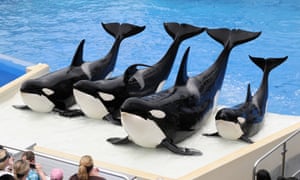
Kasatka, a 42-year-old orca was euthanized at SeaWorld Tuesday 
She had battled a lung disease for years and her health took a turn for the worse
The killer whale was one of the last to be captured in the wild for SeaWorld
Criticism and pressure have mounted on SeaWorld's care of orcas which has led them to promising to end the whales' performances by 2019
The entertainment company also ended its breeding program in 2016 under pressure from animal rights groups and activists 
Pressure reached a pinnacle when the 2013 documentary titled 'Blackfish' was released criticizing SeaWorlds' care of orcas 


PUBLISHED: 02:00, 17 August 2017 | UPDATED: 04:19, 17 August 2017


One of the last killer whales caught in captivity for SeaWorld was euthanized in San Diego, making her the second orca death at the marine parks in a month.

The whale named Kasatka was put down Tuesday evening after battling a lung disease for years.

SeaWorld says Kasatka was 'surrounded by members of her pod, as well as the veterinarians and caretakers who loved her,' when she died. 


Sunday, 30 July 2017

Orca Calf Dies at SeaWorld: Why Killer Whales Get Sick in Captivity


By Tracy Staedter, Live Science Contributor | July 27, 2017 06:15pm ET

A 3-month-old orca calf named Kyara died this past weekend, possibly from pneumonia, at SeaWorld San Antonio. This isn't the first occasion of a killer whale dying in captivity.

Dozens of other captive killer whales, including the SeaWorld orca named Tilikum, who was made famous in the documentary "Blackfish," have also died from bacterial infections.

According to SeaWorld’s press statement, Kyara's death, which is still being investigated, was not the result of living in captivity. But some experts in marine mammal research say that the living conditions contribute to disease.

Sunday, 8 January 2017

Tilikum, orca that killed trainer, dies at SeaWorld Orlando

By Mike Schneider and Jennifer Kay | AP January 6

ORLANDO, Fla. — Tilikum the orca has died after more than two decades at SeaWorld Orlando, where he gained notoriety for killing a trainer in 2010 and was later profiled in a documentary that helped sway popular opinion against keeping killer whales in captivity.

He will not be replaced. He was the first of SeaWorld’s orcas to die since the company announced the end of its orca breeding program in March 2016.

In a statement announcing Tilikum’s death early Friday, SeaWorld officials said he had serious health issues including a persistent and complicated bacterial lung infection. Tilikum was estimated to be 36 years old. A necropsy will determine the cause of death.

The 2010 death of SeaWorld trainer Dawn Brancheau during a performance with Tilikum after a “Dine with Shamu” show shocked the public and changed the future of orcas at SeaWorld parks.

Brancheau was interacting with Tilikum before a live audience at SeaWorld Orlando when he pulled her from a platform by her arm and held her underwater. An autopsy report said Brancheau drowned but also suffered severe trauma, including multiple fractures.

Former SeaWorld orca trainer John Hargrove said Tilikum’s death offered some closure in the violent death of his friend and colleague. But he said Tilikum also finally found relief.

Continued

Monday, 13 June 2016

Bubbles, the oldest pilot whale in captivity, dies at SeaWorld


Bubbles was in her early 50s and had lived at the park in San Diego for nearly 30 years

Staff and agencies

Sunday 12 June 201601.36 BST Last modified on Monday 13 June 201610.10 BST

Bubbles, a female pilot whale at SeaWorld in San Diego that was believed to have been the oldest animal of her species in a zoological park, has died.

In an online statement, SeaWorld Entertainment Inc said Bubbles was in her early to mid 50s and had been at the park for nearly 30 years.

 “SeaWorld San Diego is saddened to announce the passing of one of the world’s most beloved animals, Bubbles the pilot whale,” the company said on its website.

A necropsy was planned to determine the cause of death. The company, which operates marine parks in San Diego, San Antonio, Texas, and Orlando, Florida, did not say when she died.

Pilots whales, which have rounded heads and mouthlines that curve upward to resemble a smile, are part of the dolphin family and are smaller than orcas, or killer whales.

Pilots, which live in pods of 20 or 90 animals, are about as intelligent as dolphins and easily trained, according to the American Cetacean Society.

Weighing roughly 3,000 pounds (1,360kg) and measuring 15 feet (5m) long, Bubbles was considered the “grande dame” of SeaWorld. She was known for her ability to jump out of the water and spin at great speed.

SeaWorld has faced intense public scrutiny over its public display of marine animals, especially killer whales, following the highly-critical documentary Blackfish.

In March, the company said it would stop breeding killer whales in captivity, but would still put on performances with orcas at its three parks.

The death of Bubbles reignited anger on social media over the practice of keeping whales and other marine animals in captivity.

Sunday, 27 March 2016

Campaigners call for release of SeaWorld-owned wild-born killer whale in Tenerife

The orca captured off the Dutch coast and now performing shows should be released into a sea pen, say animal rights activists

 By Senay Boztas, Amsterdam
4:54PM GMT 22 Mar 2016

Calls are growing for the release of a wild-born killer whale who performs to British tourists in Tenerife in the wake of a decision by America's SeaWorld to stop breeding and end “theatrical shows”.

The director of a new short film on Morgan – an orca born wild, captured off the Dutch coast – has called for her to be released into a sea pen or sanctuary.

Heiko Grimm, director of the short film ‘I am Morgan – Stolen Freedom’, believes the orca, who belongs to SeaWorld, was considered valuable as she potentially introduced a new blood line to widely in-bred orcas. “The whole situation could now change for Morgan with SeaWorld’s latest announcement to stop their breeding programme,” he said.

“Because of that, Morgan is not essential for SeaWorld any more. Additionally Morgan is a good candidate for a sea pen or sea-sanctuary because she was born in the wild…Can the last part of her ‘capture, rehabilitation and release’-permit now be fulfilled? I believe so.”


Friday, 18 March 2016

SeaWorld to stop breeding orca whales

The US theme park operator SeaWorld says it is ending its controversial orca breeding programme.

The decision means the orca whales currently at the parks will be "the last generation", the company said.

SeaWorld, which has 12 parks across the US, has faced heavy criticism over alleged poor treatment of its captive orcas, also known as killer whales.

Activists have called for the orcas to be released into the wild but SeaWorld claims they would likely die.

"For as long as they live, the orcas at SeaWorld will stay in our parks," the company said in a Los Angeles Times op-ed.

SeaWorld has previously announced that it will phase out live orca shows.


Monday, 14 March 2016

Ripe Old Age: SeaWorld's Killer Whale Tilikum Near Death at 35

by Laura Geggel, Staff Writer   |   March 09, 2016 06:22pm ET

The killer whale named Tilikum, who made headlines after killing his trainer at SeaWorld in 2010, has a respiratory infection that may ultimately take the orca's life, at age 35. But compared with its counterparts in the wild, the aquarium showstopper has lived a long time, experts say.

Tilikum's health has declined during the past few weeks, likely because of a drug-resistant bacterial infection in his lungs, officials said.

"Tilikum's behavior has become increasingly lethargic, and the SeaWorld veterinary and animal care teams are concerned that his health is beginning to deteriorate," SeaWorld Cares said in the statement. 


Sunday, 8 November 2015

SeaWorld fights to restore its image as shares sink in the wake of Blackfish

Documentary has made opposition to orca practices ‘the mainstream view’, says expert as company grapples with $10m blow to profits

Rupert Neate in San Diego

Friday 6 November 2015 20.42 GMTLast modified on Friday 6 November 201522.01 GMT
Sina Schmocker asks for a minute to think before responding. “I have really enjoyed seeing the whales and the other animals,” she said. “But I am really shocked by how little space they have.

“I knew it would be quite small, but I wasn’t expecting it to be quite this small,” Schmocker said of the 5.8m gallons (the equivalent of just under nine Olympic swimming pools) of tanks behind her that are home to the 11 orca whales of SeaWorld San Diego.

“I told my boyfriend I really wanted to come here and see them because we couldn’t see whales up close like this at home,” said Schmocker, 30, who is on vacation in California from her home in Bern, Switzerland. “But now I feel bad because I have given them $178 (£118) more towards keeping animals like this [day tickets to SeaWorld are $89 each]. And they make them perform tricks. I don’t think that should be allowed in 2015.”

Schmocker isn’t alone in feeling uncomfortable about SeaWorld’s treatment of orca whales, dolphins, sea lions and other animals at its parks in San Diego; San Antonio, Texas; and Orlando, Florida. Growing public concern over the welfare of the whales has plunged SeaWorld, a corporate giant worth more than $1.65bn, into crisis.

Customers are deserting its attractions – particularly at this park in San Diego, where attendance fell 17% last year to 3.8 million, according to city authorities – and the company warned profits will evaporate. SeaWorld refused to specify by exactly how much attendance was currently falling at the San Diego park, but said that without the drop-off in California and Texas, overall attendance for the company, which also operates the Busch Gardens chain, would have been up on the previous year. The overall number came in 0.4% down, when analysts had expected 1.5% growth.


Friday, 21 August 2015

My film Blackfish plunged Seaworld into crisis – but it’s not only killer whales we must protect


The crisis at SeaWorld reflects people facing up to uncomfortable truths about animal welfare and what it means to be humane – and not before time
Thursday 20 August 2015 09.25 BSTLast modified on Thursday 20 August 201511.11 BST

When I started work on Blackfish, I could not possibly have imagined the effect it would have on SeaWorld. Let’s be honest. Not a lot of people see documentaries. And not a lot of people want to see a movie that sucker punches a beloved cultural icon. But it seems as though the movie has indeed changed how many view the park.

Over the past couple of years, SeaWorld’s visitor numbers have fallen, its stock has plummeted, lawsuits have confronted their business practices, legislation has challenged what goes on at Shamu Stadium, and reported profits were down 84% on the previous year.

People ask me whether this is a win. I can only say that it was inevitable, and that I hope it’s only the beginning. Today’s kids are increasingly becoming part of the “I can’t believe we used to do that” generation. They know that killer whales are not suitable for captivity.

Instead of acknowledging this, SeaWorld has decided to spend its way out of the crisis. With its glossy, protracted PR fight, it continues to claim it is battling an image problem. Yet I see no meaningful change. I guess this is what happens when a corporation operates essentially ungoverned for 45 years. But I know many of us still hold out hope that SeaWorld, in one final Hail Mary pass, will do something drastically progressive – like stopping their breeding programme. This would mean no more baby Shamus for SeaWorld. It would mean that the whales currently at SeaWorld would be the last it will ever have in captivity.

After this, SeaWorld could almost singlehandedly pioneer a sea sanctuary where it could retire the remaining whales. SeaWorld’s whales are unlikely to know how to hunt for their own food because they are given antibiotics and might die if they’re not in human care, so they can’t simply be tossed back into the open ocean. But a killer whale sanctuary would provide these animals with a massive, cordoned off, ocean cove where they could live out their lives in a healthier and more dignified way.

Saturday, 18 October 2014

Virgin America drops Seaworld from reward scheme

US airline Virgin America has dropped SeaWorld from its customer reward scheme. The scheme allowed its customers to earn points toward travel when they spend money at SeaWorld parks.

The airline, which was founded by Richard Branson and is still part owned by him, is the latest in a line of big company names, including Southwest Airlines and student travel firm, STA, to cut ties with SeaWorld following global public backlash against keeping whales, in particular orcas, and dolphins in captivity. 

However Virgin Holidays have announced in a statement they will continue to work with aquariums, such as SeaWorld, providing they don’t take whales and dolphins from the ocean. This announcement follows the company’s review of its partnership with marine parks that hold captive whales and dolphins.

Saturday, 4 October 2014

Change for US aquariums

Orcas remain a popular attraction at SeaWorld aquariums

After the 2013 documentary film Blackfish brought the world’s attention to the controversy surrounding keeping marine mammals in captivity, many North American aquariums have began to react by scaling back dolphin and whale shows, or eliminating them altogether, while also facing government crackdowns on whale breeding. 

The Vancouver Aquarium has this summer faced a city park board vote to end most whale breeding at the centre, however the aquarium is currently challenging this in court. Baltimore’s National Aquarium stopped using dolphins in its shows in 2012, and announced earlier this year that it is considering creating an ocean retreat for the animals. 

Meanwhile, plans were announced at Clearwater Marine Aquarium for a 2,000-seat amphitheatre, which raised suspicions that it would begin to have dolphins perform there. However the aquarium states that the seating was intended to let people see staff and dolphins interact with one another, and was not for the purpose of watching the animals perform stunts. They have now withdrawn plans to build the theatre, saying that they needed to cut costs. 

Saturday, 12 April 2014

Decision on SeaWorld postponed

April 2014: Environmentalists and wildlife campaigners are dismayed by California State Assembly’s ruling to delay a decision on the proposed ‘Blackfish’ bill that would ban shows featuring killer whales and captive breeding programmes.

Despite impassioned arguments for and against a bill that would force SeaWorld San Diego, which currently has 10 orcas, to stop using orcas in its shows, the issue never came to a vote, TIME.com reports. Instead the committee recommended that further investigations are needed before a decision can be made, which could take up to a year.

The bill was proposed by Richard Bloom, a Democrat who represents Malibu and Santa Monica, last month. It comes in the wake of the Blackfish film that exposes the realities of keeping orcas in captivity. The petition in favour of the bill was signed by 1.2 million people.

However John Reilly, president of SeaWorld San Diego Park told the Press Association that the argument orcas are too intelligent and too large for captivity “is not based on credible peer-reviewed science. It's based on emotion and a propaganda film."


Wednesday, 9 April 2014

California Bill Would End SeaWorld Killer Whale Shows

SeaWorld San Diego would have to end its killer whale shows and remove 10 orcas from their tanks under a bill inspired by a documentary blasting the marine park's animal welfare practices.

The California Assembly is holding its first hearing on AB2140 Tuesday morning. The bill's backers say killer whales are too large and intelligent for captivity, while SeaWorld says the animals are well treated and help conservation through research.


The 2013 film "Blackfish" blames attacks and deaths of SeaWorld trainers on the mistreatment of the animals, increasing their aggression. SeaWorld calls the film anti-captivity propaganda.

The bill by Democratic Assemblyman Richard Bloom also bans the import and export of orcas. Under his measure, SeaWorld could keep the animals it has in a larger sea pen until they die.

Sunday, 9 March 2014

SeaWorld San Diego killer whale shows could end if new legislation passes


The popular US attraction has been criticised following allegations made in the documentary 'Blackfish'

Friday 07 March 2014

A US lawmaker in California has proposed legislation to stop killer whales performing at shows in the popular marine mammal park SeaWorld, in San Diego.
More than 4 million people each year visit the attraction, which has come under scrutiny following the release of the 2013 documentary Blackfish.

Assemblyman Richard Bloom said his decision was influenced by allegations made in the film.

Blackfish drew attention to how killer whales, or orcas, are treated at SeaWorld, where they are trained to perform tricks in live shows.

It also claimed that SeaWorld employees are not safe, and focused on trainer Dawn Brancheau, who died in Orlando, Florida.

During the incident in 2010, she was allegedly pulled into the pool by an orca called Tilikum and subsequently drowned.


Saturday, 4 January 2014

12-year-old animal rights activist arrested in California for Seaworld orca protest

The New Year’s Day Rose Parade in Pasadena, California, was interrupted by the arrest of 19 animal rights activists, including a 12-year-old girl who tried to stop a SeaWorld float depicting a family of orcas swimming free in the ocean.

The arrests, which resulted in a significant delay of the event, occurred when the animal rights group, People for the Ethical Treatment of Animals (PETA), ran onto the float’s route, attempting to stop it.

The demonstrators were immediately apprehended by the police and sheriff’s deputies without much of a struggle, and detained for violating the Pasadena municipal code that bars “interfering with a special event,” Pasadena police Lt. Terysa Rojas said.

Monday, 16 December 2013

Blackfish, SeaWorld and the backlash against killer whale theme park shows

Willie Nelson is just one of the artists rushing to cancel gigs at SeaWorld after seeing Blackfish, the documentary about killer whales who have attacked their trainers.

Heart are an unlikely bunch of revolutionaries. But the American soft rockers' decision to cancel a concert at SeaWorld in Florida may mark a turning point in the relationship between humans and one of the most magnificent mammals of the ocean. The band this week joined Willie Nelson and Barenaked Ladies in cancelling shows at the Orlando theme park because they had watched Blackfish, a film about Tilikum, a five-tonne male orca that has been involved in the deaths of three people. This modest yet riveting documentary has made ever-bigger ripples across the pond since its premiere at Sundance earlier this year, with an audience of 20 million recently watching it on CNN. It is now on the Oscar longlist.

Tilikum's plight – enduring violence from other captive whales and forced to entertain crowds in return for fish ever since he was captured in the wild in 1983 – is vividly depicted by former trainers. The film's conclusion is inescapable: we have no business keeping such large, intelligent mammals in such crippling confinement. We too might get a little psychotic, it suggests, if we were imprisoned in a bath for 30 years.

Friday, 15 November 2013

SeaWorld fights to save its whale shows

A federal ban on contact between killer whales and their trainers, imposed after a bull orca drowned a SeaWorld trainer, faces a challenge in federal court today as the marine park fights to keep its signature attraction.

SeaWorld, famous for its "Shamu" killer whale shows, says the Labor Department judge went too far when he prohibited "close contact" between the killer whales and their keepers after the Feb. 24, 2010, death of veteran SeaWorld Orlando trainer Dawn Brancheau.

Brancheau died after Tilikum yanked her from a platform into a pool during the "Dine with Shamu" show and thrashed her until she drowned. The whale held Brancheau in his mouth for nearly 45 minutes before other trainers could extricate her body.

The Labor Department's Occupational Safety and Health Administration investigated Brancheau's death and cited SeaWorld for "willfully" violating federal safety laws that require a workplace to be free from "recognized hazards."

Friday, 8 March 2013

SeaWorld Orlando Announces the Rare Birth of Weedy Sea Dragon Babies


It's a birth for the books!
A weedy sea dragon father has hatched his first babies at SeaWorld Orlando. Yep, you read that right — we said his.

Male weedy sea dragons, which are found in tropical coastal waters off Australia, are the ones in charge of bearing young, just like the closely related sea horse.

According to SeaWorld, here's how it works: "The female deposits the eggs onto a spongy patch found on the underside of the male’s tail. The eggs are fertilized during this transfer and remain on their father for the next five to nine weeks. Dad is responsible for incubation and care of the eggs until they reach full term."
Credit: SeaWorld Orlando

Truly Unique Aquarium Feat
This birth marks the first time that weedy sea dragon eggs have successfully hatched at SeaWorld. In fact, only three other aquariums in the U.S. have successfully bred the protected species, which has experienced a dramatic population drop due to human invasion and pollution.

And these babies are just the beginning: The female laid close to 100 eggs in June, which will hatch over the next couple of weeks.

Visitors can get a glimpse of the baby sea dragons within SeaWorld Orlando's Manta exhibit.


http://www.vetstreet.com/our-pet-experts/seaworld-orlando-announces-the-rare-birth-of-weedy-sea-dragon-babies?WT.mc_id=Taboola

Thursday, 13 September 2012

Four Baby Whales Rescued in Florida


Four rescued baby pilot whales have been taken to SeaWorld Orlando after washing up on a Florida beach. The whales, one male and three females, are the only survivors of a mass stranding that left 18 other whales dead. On Saturday (Sept. 1), a pod of 22 short-finned pilot whales turned up at Avalon State Park Beach near St. Lucie on Florida's east coast. 


Volunteers and environmental officials responded to the scene to try to keep the whales — the largest of which was more than 25 feet (7.6 meters) long — hydrated and shaded. But 17 died or had to be euthanized. The remaining five, all young whales, were brought to a rehab center at Florida Atlantic University's (FAU) Harbor Branch Oceanographic Institute. There, they were treated for malnutrition, dehydration, stress and infection, FAU officials said.


Continued:
 http://www.livescience.com/22968-four-baby-whales-rescued-in-florida.html

Friday, 27 July 2012

SeaWorld Orlando: Rescued manatee gives birth


A manatee that was rescued from Sykes Creek in Brevard County by SeaWorld Orlando early last month has given birth to a healthy calf.

The mother had severe injuries to one flipper caused by a crab pot line, and fishing line was wrapped around both front flippers. 
After being transported to SeaWorld, it was discovered that she was pregnant. She gave birth early Wednesday. Mother and calif are being kept in a back area pool, where the park’s Animal Care team is monitoring them. Both are doing well, SeaWorld reports.
SeaWorld has rescued 12 manatees this year.


Related Posts with Thumbnails

ShareThis