Showing posts with label Seychelles. Show all posts

Wednesday, 25 October 2017

Seychelles home to new species of caecilian, a legless amphibian


by Mongabay.com on 19 October 2017

The petite Praslin caecilian (Hypogeophis pti) is the world’s newest — and possibly the smallest — caecilian, a type of legless amphibian.

Scientists discover the animal on the island of Praslin in Seychelles, an archipelago in the Indian Ocean.

The new species is the seventh caecilian species found in the Seychelles, where the amphibians have been evolving for 64 million years.

A team of scientists from Seychelles, the United States and the United Kingdom has found a new caecilian, perhaps the smallest species of the legless amphibian on Earth.

“As soon as I saw it I knew it was a new species,” said Simon Maddock, a conservation biologist at the University of Wolverhampton in a statement. “[It] is a very exciting discovery and I was delighted to be able to formally describe it and present it to the world.”

Maddock and his colleagues discovered what they’re calling the petite Praslin caecilian (Hypogeophis pti), named for the island of Praslin in Seychelles where they found it in 2013 and 2014. They reported their findings Oct. 6 in the journal Zootaxa.


Tuesday, 23 December 2014

One extinct turtle less: Turtle species in the Seychelles never existed - via Herp Digest

Date:
April 4, 2013

Source:
Senckenberg Research Institute and Natural History Museum

Summary:
The turtle species Pelusios seychellensis regarded hitherto as extinct never existed. Scientists discovered this based on genetic evidence.

The turtle species Pelusios seychellensis regarded hitherto as extinct never existed. Scientists at the Senckenberg Research Institute in Dresden discovered this based on genetic evidence. The relevant study was published today in the journal PLOS ONE.

Turtles are the vertebrates under the greatest threat. Among the approximately 320 turtle species, the species confined to islands have been especially hard hit -- humans have caused the extinction of a whole number of species. One of them -- or at least it was thought so -- is the Seychelles mud turtle Pelusios seychellensis. Just three specimens were collected at the end of the 19th century; they are still kept at the Natural History Museum in Vienna and the Zoological Museum in Hamburg.

Despite an intensive search for this species, which was declared as "extinct" by the International Union for Conservation of Nature (IUCN), no further specimens have been found since those in the 19th century. "Consequently, it was assumed the species had been exterminated," says Professor Uwe Fritz, director of the Museum of Zoology at the Senckenberg Natural History Collections in Dresden. The Dresden biologist states quite clearly that this is not true. "We have examined the DNA of the original specimen from the museum in Vienna and discovered that these turtles are not a separate species."

The genetic analyses have shown that this supposed Seychellois species is in reality another species, Pelusios castaneus, that is widespread in West Africa. "The species Pelusios seychellensis has therefore never existed," adds Fritz. "In fact, for a long time researchers were amazed that the supposed Seychelles turtles looked so deceptively similar to the West African turtles. But due to the great geographic distance, it was thought this had to be a different species, which is why the assumed Seychelles turtles were also described as a new species in 1906."

Another species classified as native therefore disappears from the list of Seychelles species. Last year, Fritz and his team had already proved that another mud turtle species, Pelusios subniger, was not endemic to the Seychelles but had been introduced by man.

"In the Seychelles there is therefore at most one mud turtle species that could be native. And even with this species we are still uncertain whether it really is endemic," says Fritz. So far, the biologists from Dresden have not been able to explore this possibility due to the incomplete sampling available, however.

"But what is certain even now is that the protection programmes for turtles in the Seychelles will have to be revised, so that truly endemic animal species are protected and the scarce funds available for species protection are put to good use," says Fritz in conclusion.


Story Source:

The above story is based on materials provided by Senckenberg Research Institute and Natural History Museum. Note: Materials may be edited for content and length.


Journal Reference:
Heiko Stuckas, Richard Gemel, Uwe Fritz. One Extinct Turtle Species Less: Pelusios seychellensis Is Not Extinct, It Never Existed. PLoS ONE, 2013; 8 (4): e57116 DOI: 10.1371/journal.pone.0057116


Cite This Page:

MLA
APA
Chicago
Senckenberg Research Institute and Natural History Museum. "One extinct turtle less: Turtle species in the Seychelles never existed." ScienceDaily. ScienceDaily, 4 April 2013. <www.sciencedaily.com/releases/2013/04/130404072916.htm>.

Sunday, 13 July 2014

Invasion of yellow crazy ant in a Seychelles UNESCO palm forest: Threats and solutions

Date:
July 10, 2014

Source:
Pensoft Publishers
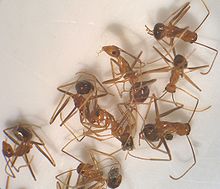
Starr 050610 2340 anoplolepis gracilipes.jpg
Summary:
The yellow crazy ant Anoplolepis gracilipes is ranked amongst the top 100 worst global invasive species and is responsible for catastrophic ecological impacts on islands. A new study examines and assesses the effects and dangers of the introduction of the yellow crazy ant to the unique and often endemic ecosystems of the mature palm forest of the Vallée de Mai, a UNESCO World Heritage Site, on the Seychelles.


Friday, 8 February 2013

Hawksbill turtles' monogamous sex life revealed


By Michelle Warwicker, BBC Nature
The sex lives of critically endangered hawksbill turtles have been revealed by scientists studying the animals in the Seychelles.

Previously, little had been understood about the mating habits of the turtles, which live underwater and often far out at sea.

Researchers were surprised to find that the turtles are mainly monogamous, with females storing sperm from one male and using it to fertilise multiple egg clutches.

The study, led by researchers from the University of East Anglia, Norwich, UK, was published in the online journal Molecular Ecology.

"Sperm storage" is found in animals including reptiles, birds and some turtles, tortoises and terrapins.

Females can store viable sperm from multiple males for long periods of time, meaning that their egg clutches are sometimes fertilised by more than one father.

Researchers carried out DNA testing from hawksbill turtle hatchlings on Cousine Island in the Seychelles to identify how many males were involved in fertilising eggs during a breeding season.

The tests revealed a monogamous mating system: most egg clutches were sired by just one male, and no males had fertilised more than one female during the 75-day season.

Thursday, 10 May 2012

Brendon Grimshaw, 86 Year Old Owner & Caretaker of a Tiny Tropical Island


On a whim in 1962, British newspaper editor Brendon Grimshaw bought the tiny deserted Moyenne Island in the Seychelles for £8,000. In 1972 he moved to the island and has remained its caretaker ever since. Now 86 years old (and yet remarkably spry and fit), Grimshaw has planted 16,000 trees and reintroduced giant tortoises to the island (see this BBC clip on Grimshaw). Developers have reportedly offered him $50 million dollars or more for the island, but he has always refused to sell. The island is now a national park.
Grimshaw and his island are the subject of a documentary, A Grain of Sand by Joseph Johnson Cami (trailer andfeature).

Tuesday, 13 March 2012

Climate change threatens Seychelles habitat

Bursts of torrential rain lash the idyllic white beaches of the Seychelles, where conservationists fear that rare species such as the giant tortoise are at severe risk from climate change.

As changing season patterns bring harsher storms and much longer dry spells, international organisations are helping fight climate change in the tiny nation, the only one in the world where 50 percent of the land is a nature reserve.

"The seasons are merging, there's more rain but in short bursts, with long dry periods. Drinking water dries up and the climate plays havoc with breeding and feeding patterns," said Seychelles climate change expert Rolph Payet.

Recognising the risks, the United Nations Development Programme and Global Environment Facility have approved $8.7 million (6.6 million euros) this year for climate change adaptation projects in the Indian Ocean archipelago.

While part of the funds will go to tackling issues affecting Seychellois people such as drought, the rest is earmarked for further research into protecting the vast array of species from the fallout from global warming.

"We have a range of animals at risk, from the rare turtles and tortoises which lay their eggs on our beaches, to mountain frogs and birds such as the Black Parrot, which are endemic to the Seychelles," Payet said.

On the remote Aldabra atoll, a UNESCO World Heritage Site more than 1,100 kilometres (685 miles) from the main Seychelles islands, more than 100,000 wild giant Aldabra tortoises lumber and doze together in groups in the baking sun.

One of the biggest tortoises in the world, the Aldabra is listed by the International Union for Conservation of Nature (IUCN) as at risk of extinction, and small but notable shifts in the climate have sparked concern among experts.

"Climate change causes storm surges and higher tides, both of which erode the coast. As the sea warms up, it also kills off the coral reefs, which provide food for fish but also protect the coast from the waves," Payet said.

The Aldabra atoll lies only a few metres above the turquoise waves of the Indian Ocean and the fear is that rising sea levels and tropical cyclones may eventually swallow it up, taking the giant Seychelles tortoises with it.

"It's not only the Aldabra which is at risk," said David Rowat from the Seychelles marine conservation society, which heads up a programme to tag and monitor critically endangered Hawksbill sea turtles on Mahe Island's beaches.

"Hawksbills have always been hunted for their shell to make tortoiseshell jewellery. Their numbers are low but we have the fifth largest population in the world here, and it's imperative we act to protect them," he said.

Changes in temperature play havoc with breeding patterns because the Hawksbills, which live in tropical coral reefs and have prominent hooked beaks, tend to produce only females if the eggs are left in a very warm nest, he said.

"The warming also means there are violent and more frequent storms. The turtles lay their eggs in the sand, but if you have a bad storm surge, you can lose big tracts of sand and a whole season of nesting turtles," Rowat said.

"We move the nests we come across to above the high water line on the beach, but even doing that cannot always protect them from a flash surge," he added.

A significant part of the new funds will go to projects aiming to protect and restore the coral reefs and shore up the coastline against storms.

"The ideas we're testing include using wooden poles as a barrier to protect the coast and replanting trees to help prevent erosion, as well as attempting to regrow coral or transplant and grow more resilient coral," Payet said.

The Seychelles Islands Foundation which manages the Aldabra atoll also works to conserve the rare species at the Vallee de Mai, a national park on Praslin island home to Bulbul birds, fruit bats and Seychelles Skink geckos among others.

Black Parrots swoop above a canopy of towering palm trees with vast leaves, feasting on fruit while brightly coloured tree frogs and geckos lurk near the park's streams and dart over large moss-covered boulders in the gorge.

"The Black Parrot is only found on Praslin. It is a beautiful bird, but is at risk because changing seasons can lead to a decrease in food," Payet said.

Rising temperatures also bring another danger to this picturesque island -- the palm leaves covering the forest floor could catch alight.

There's a real risk of forest fires," Payet said.

Wednesday, 28 December 2011

Seychelles paradise-flycatcher - habitat danger

Habitat danger for Seychelles Paradise-flycatcher

The illegal felling of mature trees on La Digue island, the stronghold of the Critically Endangered Seychelles Paradise-flycatcher Terpsiphone corvina has been exposed by the local media. In a front page article, the newspaper Le Seychelles Hebdo revealed the shocking story. The damage includes the felling and cropping of several native tree species used by the bird.


The owner of the land had made an application for a tourism development but the Department of Environment had put this on hold so as to carry out a survey. The owner apparently went ahead with land clearing. “Clearing of land and felling of the tree species in question which are protected by law require authorisation by the land use & planning authority and the Department of Environment respectively”, said Nirmal Shah, Chief Executive of Nature Seychelles (BirdLife Partner).

The land owner and the contractor who undertook the works have been fined 50,000 Seychelles Rupees each (about US$ 4,000) by the environment authorities. According to sources on La Digue those fined are refusing to pay and have their own case against the government.

Nature Seychelles, the flycatcher’s BirdLife Species Guardian is currently undertaking a small education and advocacy project on La Digue in collaboration with the Seychelles National Parks Authority (SNPA). The project is funded by Viking Optical, the BirdLife Species Champion.

“The habitat on this tiny island will always be under threat because of increasing development, and consumerism. This is why we established a second population on Denis Island”, says Nirmal Shah. There is a now a breeding population on Denis after the translocation of 23 birds in November 2008 by the Durrell Institute of Conservation and Ecology and Nature Seychelles.

La Digue is a picturesque but rapidly changing island. The Seychelles Government is now investigating the possibility of making La Digue carbon neutral after Cousin Island Special Reserve, managed by Nature Seychelles, showed the way forward by becoming the world’s first carbon neutral nature reserve. “In fact, recent news that the government will phase out all fossil fuel vehicles on La Digue so that only electric ones are used in the future is an excellent move for general environmental protection and eco tourism on the island”, says Shah.

This news is brought to you by the BirdLife Preventing Extinctions Programme.

http://www.birdlife.org/community/2011/12/habitat-danger-for-seychelles-paradise-flycatcher/

Wednesday, 17 August 2011

Shark attack Briton 'had no chance'

A British man killed by a shark in the Seychelles had "no chance of surviving", local police have said.
Ian Redmond, 30, from Lancashire, was on honeymoon when the attack happened off Anse Lazio beach on Praslin, the second largest island in the Indian Ocean archipelago.

One onlooker said she saw the victim's wife saying she "still had hope" for her husband while he lay on the beach with horrific injuries.

But police spokesman Jean Toussaint said Mr Redmond had been "badly injured" on the hips and lost an arm in the attack, which occurred while he was swimming in the early evening.

"We haven't got the autopsy report yet but he definitely lost a lot of blood. He had no chance of surviving because of the nature of the injuries," he added.

Earlier this month a 36-year-old French tourist was killed by a shark in the same area. Government officials have issued a ban on swimming in certain areas until the shark is captured.

Jeanne Vargiolu, 56, owner of a nearby restaurant, said she went to the beach after hearing ambulance sirens to find a French doctor treating the man and "a lot of police officers" surrounding him.

She said police told her the man had lost one arm, had a badly damaged leg and holes in his chest and stomach from shark bites. She added: "They were trying to help him but they could not get him alive."

Mr Toussaint confirmed that Mr Redmond and his wife were in the second week of their honeymoon and had been due to fly home on Sunday.

He said "a big effort" is now under way to catch the shark. "We had this first incident two weeks ago and for the local community it was a freak incident because it had never been reported before around the islands. It took everybody by surprise," he added.

Wednesday, 24 June 2009

Paradise-flycatcher breeds on second island for first time in 60 years


Hope for Seychelles' last Critically Endangered species
Courtesy of Birdlife InternationalJune 2009. The first Seychelles Paradise-flycatcher chicks to fledge successfully outside La Digue Island in the Seychelles for over 60 years are flying on Denis Island, a coral island in the inner Seychelles group. The newly-fledged birds are flying well, very noisy, and being fed by their parents -"typical normal and healthy flycatcher chicks", according to Nirmal Shah, Director of BirdLife Partner Nature Seychelles, the Species Guardian for the paradise-flycatcher.

Critically Endangered Species including Seychelles Magpie-robin, Seychelles White-eye and Seychelles Scops-owl have all been downlisted as a result of conservation action. The population of the paradise-flycatcher has been steadily increasing in recent years. In 1996 there were 69-83 pairs; this had risen to 104-139 pairs by the last comprehensive survey in 2000.

Has not spread naturally

Seychelles Paradise-flycatchers, probably "overspill" birds from the population on La Digue, are regularly seen on neighbouring islands, but have been unable to establish viable populations.

Seychelles Paradise-flycatcher requires mature stands of indigenous badamier and takamaka trees. However, its habitat requirements may be less strict than previously thought. As the population on La Digue has increased, a number of birds have established territories in open woodland with housing encroachment, and an increasing number of tree species are used for nesting.

Nature Seychelles began ecosystem restoration on Denis Island in 2002, with funding from two Global Environment Facility projects facilitated by the World Bank and with the collaboration of the island owners, and this work has continued under the current Darwin Initiative-funded flycatcher project. The island is free of alien predators.

Denis Island reintroduction

The reintroduction to Denis Island is part of a three-year project, funded by the UK Government's Darwin Initiative, and carried out by Nature Seychelles together with the Durrell Institute of Conservation and Ecology (DICE) and the collaboration of other organisations and the Seychelles Ministry of Environment and Natural Resources.

In November 2008, 23 Paradise-flycatchers were translocated from La Digue to Denis Island by Nature Seychelles and DICE, in collaboration with the La Digue Development Board and other partners. Nature Seychelles currently knows the whereabouts of 21 of these birds, with the recent reappearance of a male which had been replaced or ousted from his territory by another young male.

It is believed that the population on Denis could reach 40-50 birds. Other islands are being assessed for their suitability for future translocations.

"We predict that we will have a large enough population to downlist it to Endangered in the next two years or so", said Nirmal Shah. "This will be another huge triumph for Nature Seychelles with its international partners BirdLife, the RSPB and DICE."
http://www.wildlifeextra.com/go/news/paradise-flycatcher.html

Related Posts with Thumbnails

ShareThis