Showing posts with label Uganda. Show all posts

Sunday, 9 February 2020

Four rare mountain gorillas 'die in Uganda lightning strike'

8 February 2020

Four rare mountain gorillas, including a pregnant female, have died in Uganda after being hit by lightning, a conservation group says.

The three adult females and a male infant were found in Uganda's Mgahinga National Park with "gross lesions" on their bodies indicating electrocution.

The Greater Virunga Transboundary Collaboration (GVTC) called this a "big loss for the species".

There are just over 1,000 mountain gorillas in existence.

The species is restricted to protected areas in the Democratic Republic of Congo, Rwanda and Uganda.

The four that died were part of a 17-member group, which has been called the Hirwa family by the authorities.

Sunday, 30 September 2018

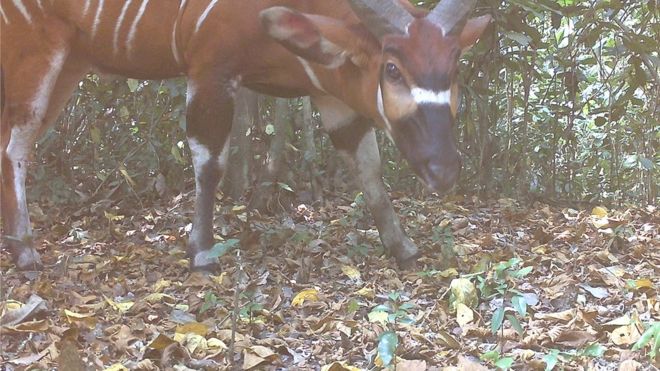
Secret life of rare antelope revealed


29 September 2018


Image copyright CHESTER ZOO

The world's largest forest antelope has been caught on camera in Uganda for the first time.

The elusive striped antelope, known as the lowland bongo, was snapped in dense forest near the border with the Democratic Republic of Congo.

Scientists say there could be more new discoveries in the remote, unexplored, lowland rainforest.

The forest-dwelling antelope is classed as Near Threatened on the extinction list, due to habitat loss and hunting.

Populations in central and western Africa have declined to about 30,000 individuals.

Thursday, 28 December 2017

Chimpanzee deaths in Uganda pinned on human cold virus


Date:  December 13, 2017
Source:  University of Wisconsin-Madison

Summary:
In the wild, chimpanzees face any number of dire threats, ranging from poachers to predators to deforestation. That’s why scientists, investigating an outbreak of respiratory disease in a community of wild chimpanzees in Uganda’s Kibale National Park, were surprised and dismayed to discover that a human “common cold” virus known as rhinovirus C was killing healthy chimps.


Monday, 15 May 2017

Famed Tree-Climbing Lions Running Low on Prey


By Stephanie Pappas, Live Science Contributor | May 12, 2017 07:06am ET 

A rare group of tree-climbing lions living in Uganda must range farther and farther to find enough prey to survive, a new study found.

The research discovered that the lions of the country's Ishasha district have expanded their ranges and shrunk the size of their prides since the 1970s. The lions live in Queen Elizabeth National Park and are one of only two populations of lions in the world that climb trees daily, according to the park. (The other group lives in a park in Tanzania.) The lions may climb to avoid the heat at ground level or to escape from biting flies. Their unusual behavior makes them a major tourist draw for Uganda.

Poaching in the park has slashed the biomass, or total weight, of prey animals for the lions, like antelope, down from 50,7000 lbs. per 0.6 square miles (23,000 kilograms per square kilometer) in the 1970s to just 17,750 lbs. per 0.6 square miles (8,050 kg per square km) today, researchers from the Wildlife Conservation Society wrote in the Journal of East African Natural History.

Home on the range
To find out how the animals have adapted, the researchers fitted radio collars to 12 lions from the two prides in Ishasha and followed the big cats between 2005 and 2010. The scientists used the radio collar data to determine the lions' home ranges, calculating the distances roamed both for the pride as a whole and for individual lions.

The data showed that the ranges of the prides today vary between 18.7 square miles (48.5 square km) and 22.6 square miles (58.5 square km). In the mid-1970s, Ishasha lions stuck a little closer to home: The northern pride had an average range of 13 square miles (34 square km), while the southern pride stayed within an area of 14.7 square miles (38 square km), the researchers said. These are already small range sizes for lions, the researchers wrote; in the Serengeti, lions sometimes roam over 155 square miles (400 square km). 

Tuesday, 13 September 2016

Elephants’ footprints leave behind tiny oases for aquatic life

31 August 2016

Christer Fredriksson/Lonely Planet/Getty
By Karl Gruber

That’s one small step for an elephant, but a giant leap for the survival of tiny aquatic animals. In the swamp forests of Kibale National Park, Uganda, every step elephants take can give rise to a footprint-shaped mini-pond, holding up to 200 litres of water and dozens of invertebrate species.

“I was surprised to find out that these footprints were water-filled all year round, and that they harboured such a high diversity,” says Wolfram Remmers at the University of Koblenz in Germany. Surveying 30 such prints over a three-day period in 2014, Remmers and his colleagues found over 60 species, including beetles, spiders and worms – plus tadpoles.
Many smaller species may live there, too – the team’s sampling method meant they only caught things bigger than 2 millimetres.

The footprints probably play an important role in allowing these small life forms to spread, as they form a network of connected ponds.


Friday, 11 March 2016

Suffering warthogs seek out nit-picking mongooses for relief

Date: March 7, 2016
Source: Wildlife Conservation Society

Warthogs living in Uganda have learned to rid themselves of annoying ticks by seeking out the grooming services of some accommodating neighbors: a group of mongooses looking for snacks.

Specifically, the warthogs of Queen Elizabeth National Park have learned to lie down in the presence of banded mongooses. In response, the mongoose cleaning crew have learned to inspect the wild pigs for ticks, going so far as to climb on top of their customers to gain access to more parasites.

A short article in the most recent edition of the journal Suiform Soundings describes the behavior, which has been observed by tourists to the park and was featured in a BBC video, and encourages further research on it.

"Such partnerships between different mammal species are rare, and this particular interaction illustrates a great deal of trust between participants," said Dr. Andy Plumptre, Director for WCS Albertine Rift Program and author of the published description of the behavior. "It makes you wonder what else may be happening between species that we don't see because, in order to see it, both species need to be unafraid of people."

The common warthog is widespread throughout sub-Saharan Africa and inhabits grasslands, savannas, and woodlands. The species can grow up to five feet in length and is characterized by a pair of tusks, which the warthog uses for both digging and defense. The banded mongoose is a small cat-like carnivore that, as its common name suggests, possesses a series of bands across its back. The species grows up to 1 ½ feet in length and travels in family groups numbering up to 40 individuals.

The warthog-mongoose encounter is a rare example of mammals exhibiting a symbiotic relationship called mutualism, where two animal species form a partnership with benefits for both groups. The warthogs get a cleaning and the mongooses get a meal. Other examples of mutualism include rhinos, zebras, and other animals that receive visits from parasite-eating birds called oxpeckers, and bees that feed on the nectar of flowers and deliver pollen to other plants.


Monday, 20 April 2015

Chimps 'know their Green Cross Code'

Chimps in Uganda have been seen taking steps to stay safe while crossing a high-speed road that cuts through their forest home in Kibale National Park.

The asphalted, 13m (43ft) wide, two-lane road through the Sebitoli area of the park poses a problem for the wildlife travelling through their habitat.

But, by analysing dozens of observations of chimps making the crossing, scientists have found more than 90% of individuals looked right and left before and while crossing the hazardous road, sometimes standing on their feet to check for traffic.

Saturday, 5 April 2014

Giant Man-Eating Crocodile Captured In Uganda

A 1,000kg crocodile said to have eaten four people on the shores of Lake Victoria has been captured.

Locals begged wildlife officials to hunt the reptile after it claimed its most recent victim, leaving Ugandan fishermen too scared to go out in their boats.

Friends of father-of-two Bosco Nyansi said they were only able to recover his clothes, which were found floating on the water, after he was mauled by the beast.

The crocodile was also blamed for seriously injuring a number of other fishermen at Wairaka, Rwabitooke, Masese and Wanyange in Jinja district, and Ntinkalu in Mayuge.

Experts managed to trap the animal with meat on a hook and it will now be transferred to the Murchison Falls national park.

More than a hundred locals and fishermen gathered to look at the crocodile as it was loaded on to a truck at Kakira.

Officials in Uganda believe the animal is 80 years old and weighs just 47kg less than the largest crocodile ever held in captivity - a 21ft saltwater crocodile named Lolong captured in the Philippines.

Sunday, 2 March 2014

Uganda defies CITES and returns ivory to smuggler

February 2014: In a shock decision that has sent alarm bells ringing across the globe, a high court judge inUganda has ordered the return of 2.9 tonnes of impounded ivory to the ivory trafficking suspects.

This is despite the cargo entering the country fraudulently, having been declared as coffee, and the fact that any onward export would clearly be in stark contravention of international regulations under CITES (the Convention on International Trade in Endangered Species of Wild Fauna and Flora). 

Maria Mutagamba, Uganda’s Minister of Tourism, Wildlife and Antiquities expressed her dismay and shock at the Judge’s ruling and called for the criminal prosecution of the owners of the confiscated ivory.

“We have received with shock the ruling of Justice Wilson Masalu Musene that Uganda Revenue Authority should hand over confiscated ivory to criminal suspects who are on the run and have arrest warrants issued against them,” she says.

Monday, 24 February 2014

Uganda sets up an online database to monitor arrests and identification of repeat poachers

The new database will help Ugandan authorities to give appropriate sentences to repeat offenders

February 2014: The Wildlife Conservation Society (WCS) and Uganda Wildlife Authority (UWA) have announced a collaboration to produce an online tool that will allow law enforcement officials to access a database that tracks offenders of wildlife crime in real-time and across the country. The announcement was made as conservationists gathered from around the world for the United for Wildlife symposium last week in London.

The database, which can be updated online at all Uganda parks and headquarters, will enable better monitoring of arrests and identification of repeat offenders and their associates. It will allow park managers to better track prosecutions while enabling the export of data for further analyses.

In addition, the database allows UWA staff to assess which wildlife crimes are on the increase by providing summary statistics by park and also to profile those involved in wildlife crime in the country. The results will be used to identify where and when people are undertaking illegal activities and who is involved.


Friday, 1 November 2013

30 percent decline in lion numbers in Uganda

The downward trend in lion numbers has conservationists concerned about the species’ long-term chances in the country

King of beasts losing ground in Uganda
October 2013. Uganda's lions, a mainstay of the country's tourism industry, are on the verge of disappearing from the country's national parks according to conservationists from the Wildlife Conservation Society and the University of St. Andrews.

30% decrease in 10 years due to poisoning
According to the results of a recent survey, lion populations in Uganda have decreased by more than 30 percent over the past 10 years in some areas of the country, mostly the result of poisoning by local cattle herders, retaliations for livestock predation, and other human-related conflicts. The downward trend in lion numbers has conservationists concerned about the species' long-term chances in the country, often described as the "Pearl of Africa" for its natural wonders.

"African lions are a vital component of these ecosystems," said WCS conservationist Edward Okot Omoya, the lead author of the study. "They play an important role in disease control of antelopes and buffalo by killing the sick animals."

Lure count
The paper describes the results of a "lure count" analysis survey to estimate the density and population distribution of lions and spotted hyenas in Uganda's three major conservation areas, conducted by researchers between November 2008 and November 2009. The researchers used a buffalo calf distress call (broadcast via speakers mounted on a vehicle roof rack) to attract both medium and large carnivores to the "call stations" as a means of calculating a current population estimate for the study locations. Previous survey methods used to count lions have included counting roars, identifying individual cats, and mark-recapture methods, but the methods are time-consuming and expensive.


Thursday, 31 October 2013

Entomologist Finds Possible New Tick Species... Up His Nose

When entomologist Tony Goldberg got back from a trip to Kibale National Park in southwestern Uganda, he soon found that he hadn't returned alone — he had a tick up one of his nostrils. "When I got back to the U.S., I realized I had a stowaway," Goldberg told Entomology Today. "When you first realize you have a tick up your nose, it takes a lot of willpower not to claw your face off."

It turned out to be a type of Ugandan nose tick, known to burrow into chimpanzee nostrils. Goldberg, a University of Wisconsin researcher who studies how infectious diseases spread in the wild, got the genome of the tick sequenced (it was a nymph and couldn't be identified from its bodily features). This revealed that the tick is either a new species, or is a known species that hasn't yet been sequenced, Entomology Today reported.

The ticks appear capable of infesting both chimps and humans, and may represent a new way for diseases to spread between the two, Goldberg said.

Thursday, 11 April 2013

30% off gorillas until the end of May

Uganda Wildlife Authority discounts gorilla permits until the end of May 
April 2013. The management of Uganda Wildlife Authority (UWA) has launched a Gorilla tracking promotion. Foreign Non Residents will pay US $ 350 for a permit, Foreign Residents US$300 and East Africans will part with U sh 150,000 a permit.

This applies to unsold permits for this period and does not include prepayments before announcement of this promotion. 


Wednesday, 3 April 2013

Mountain gorilla dies after falling from tree


 Subordinate silverback fell 20 - 30 metres
March 2013. Ruhemuka, a subordinate Silverback in the newly habituated Kahungye Mountain gorilla family in Uganda has died after falling from a tree.

The robust silverback, estimated to be around 30 years old, is believed to have fallen out of a tree from a height of 20-30 metres on March 6th, 2013. The post-mortem and necropsy of the silverback and revealed that the SB who was the second in command after Rumanzi, had sharp trauma and deep injuries on the face, nose and mouth. One of the maxillary incisor teeth was broken.

The report further shows a deep brain injury from the fractured skull and neck. The vertebrae (neck bones) had protruded into the cranium/ brain. The diaphragm had been burst and abdominal organs were in the chest. Internal bleeding was massive in the chest region

The silverback died in the area of Kahunge hill on a steep side with Maesa. In the morning of Wednesday, March 6th, the group was found in Kahunge area. The gorillas had been in Maesa plants feeding on fruits.


Monday, 26 November 2012

Estrogenic Plants Linked to Altered Hormones, Possible Behavior Changes in Monkeys


ScienceDaily (Nov. 19, 2012) — Eating certain veggies not only supplies key nutrients, it may also influence hormone levels and behaviors such as aggression and sexual activity, says a new study led by researchers at the University of California, Berkeley, that could shed light on the role of diet in human evolution.

The research is the first to observe the connection between plant-based estrogenic compounds, or phytoestrogens, and behavior in wild primates -- in this case, a group of red colobus monkeys in Uganda.

The more the male red colobus monkeys dined on the leaves of Millettia dura, a tropical tree containing estrogen-like compounds, the higher their levels of estradiol and cortisol. They also found that with the altered hormone levels came more acts of aggression and sex, and less time spent grooming -- an important behavior for social bonding in primates.

The study, published in the current issue of the journal Hormones and Behavior, suggests how potentially important consuming phytoestrogens is in primate ecology and evolution.


Monday, 26 March 2012

Mysterious ‘Zombie’ Disease Is Afflicting Thousands Of Ugandan Children

Agnes Apio has to tie up her son Francis before she can leave the house. In his state, he is a danger to himself. Where once he walked and talked like a normal child, now he is only able to drag himself along in the dirt. Francis is suffering from “Nodding Disease,” a brain disorder that, according to CNN, afflicts at least 3,000 children in northern Uganda, leaving them physically stunted and severely mentally disabled.
“I feel dark in my heart,” Apio says as she waves flies away from her son’s face and mops up his urine after a seizure, “This boy has become nothing.”
“Reportedly the children gnaw at their fabric restraints, like rabid animals,” says The Daily Tech.  The article calls them “zombie children,” having “no cure” and “no future.”
First the victims become restless and can’t concentrate. They say they have trouble thinking. Then comes the nodding, an uncontrollable dipping of the head that presages the disease’s debilitating epilepsy-like seizures. It is this nodding motion that gives the illness its name.
Nodding Disease first attacks the nervous system, then the brain. As the seizures progress and worsen, the children become less and less like themselves, and more and more distant and blank. Eventually the brain stops developing and the victims’ bodies stop growing. So far, no patients have recovered.
Grace Lagat also has to tie up her children in order to leave the house. Daughter Pauline, 13, and son Thomas are bound hand and foot to keep them from shuffling away and getting lost. Pauline recently disappeared for five days.
Experts are baffled as to what causes the disease, which only occurs in children. Early findings suggest a confluence of the presence of the black fly-borne parasitic worm Onchocerca Volvulus, which causes river blindness, and acute vitamin B6 deficiency.
According to the Centers for Disease Control, onset usually takes place at the age of five or six and progresses rapidly, leaving the victims severely mentally and physically handicapped within a couple of years.
Victims can wander off and disappear. Some 200 “secondary deaths” have occurred due to fires and accidents caused by children with the disease.
Physicians and workers with the Ugandan Red Cross are frustrated by what they see as a lack of urgency in the government’s handling of the disease. After months of lagging, officials have only begun an official tally of cases within the last two weeks.
The situation was already dire when a team from the World Health Organization visited northern Uganda in 2009. CNN quotes one doctor from the team, Dr. Joaquin Saweka, as saying, “It was quite desperate, I can tell you. Imagine being surrounded by 26 children and 12 of them showing signs of this. The attitude was to quickly find a solution to the problem.”
Solutions, however, have been slow in coming.
Doctors have been treating the seizures caused by the disease with epilepsy drugs, but their efficacy is limited. The drugs only slow the progression of the disease, but fail to stop it.
Currently, Ugandan government officials say that they are doing everything they can to fight the epidemic. They say that new epilepsy drugs are being tried and special training has been instituted for local health officials. This, they say, is as much as can be done for a disease whose cause and cure are largely unknown.
Saweka said, “When you know the root cause, you address the cure. Now you are just relieving the symptoms. We don’t expect to cure anybody.”


Read more: http://articles.businessinsider.com/2012-03-21/home/31218548_1_seizures-brain-disorder-rabid-animals#ixzz1q3GUutGu
 

Read more: http://articles.businessinsider.com/2012-03-21/home/31218548_1_seizures-brain-disorder-rabid-animals#ixzz1q3GJgAES
 

Read more: http://articles.businessinsider.com/2012-03-21/home/31218548_1_seizures-brain-disorder-rabid-animals#ixzz1q3GDacBt
 

Monday, 19 March 2012

Uganda: Crocodile Chews Man's Buttocks

A 25-year-old fisherman at Musoli landing site located in Mutumba Sub County in the eastern district of Namayingo was rushed to hospital in critical condition after a crocodile chewed off his buttocks.
The fisherman, George Musinde reportedly went to fish at around 7.30 pm on Sunday. He reportedly jumped into the lake to evade law enforcement officials on patrol.
According to one of the locals, Juma Wabwire, it was then that the fisherman was grabbed by the crocodile chewing off all his entire buttocks. Musinde managed to escape after pushing a big stick into the jaws of the reptile.
He said he later raised an alarm that attracted law enforcement officials who rescued him from being eaten up by the crocodile.
The secretary for defence Musoli landing site beach management unit, Moses Wesonga said the fisherman was rushed to Tororo main hospital in a critical condition.
He cautioned fishermen and locals against moving to the shores of Lake Victoria especially during late night hours.
Wesonga said most crocodiles usually take advantage of the night to attack people who come to take a bath or to fish.
The deputy fisheries officer Namayingo, Deo Mwogererwa said seven people were eaten up by the crocodiles at the same spot last year.
He said five of those killed were children who had gone to bathe as twilight approached.
Related Posts with Thumbnails

ShareThis