Showing posts with label trafficking. Show all posts

Wednesday, 21 August 2019

Two tigers seized from traffickers every week, report finds

Closure of tiger farms among urgent steps needed to protect species, wildlife summit hears

Two illegally smuggled tigers per week are being seized by officials, according to a report, but this represents only a tiny fraction of those being killed.

The report, by the wildlife trade experts Traffic, was released at a summit of 183 countries under the Convention in the International Trade in Endangered Species (Cites), where many delegates have called for stronger action.

Traffic also found a surge since 2012 in seized carcasses, skins and bones from tiger farms. International trade in the species is banned, but the researchers said the captive-breeding facilities, mainly in China, undermine their protection by maintaining demand in domestic markets and enabling the laundering of wild tiger products.

There are fewer than 4,000 tigers in the wild but more than 7,000 in tiger farms, which sometimes masquerade as zoos. In 2016, more than 180 animals were seized at a tiger temple in Thailand.

Wednesday, 10 April 2019

Hunt for bogus asthma cure threatens pangolins


The most trafficked mammal on the planet is in dangerous decline
Sun 24 Mar 2019 08.59 GMT
One of nature’s most remarkable creatures, the pangolin, is being driven to extinction as hunting and trafficking have soared in recent years. Studies have discovered that hundreds of thousands of these distinctive, scaly animals are now being killed every year to satisfy markets in Asia, making it the most trafficked and poached mammal on Earth.
The pangolin is hunted for its meat – and also for its scales, which are believed to have important medicinal properties as cures for poor circulation, skin complaints and asthma.
Last January, authorities in Hong Kong seized 8.3 tonnes of pangolin scales in a shipment from Nigeria bound for Vietnam. It was one of the largest confiscation of the animal’s scales ever made and its weight suggests that around 13,800 animals died to make up the consignment.
In addition, in February, Malaysian customs officers seized 1,800 boxes that contained 30 tonnes of frozen pangolins and pangolin parts. Ironically, the confiscation was made only a few days before World Pangolin Day was held on 16 February this year.

Monday, 19 November 2018

Hundreds of Poisonous Frogs Worth Up to $2,000 Found in a Colombia Airport Bathroom – via Herp Digest


By Inside Edition Staff, 11/8/18

Feeling Froggy?

Hundreds of poisonous frogs have been recovered from an airport bathroom in Bogota, Colombia.

Police say 216 frogs were hidden in little containers inside of a bag filled with clothes. According to authorities, the bust happened right before the frogs were going to be illegally trafficked and sold in Germany.

The amphibians can go for up to $2,000 each on the illegal wildlife market. They are highly sought after by collectors for their venom.

The types of frogs rescued included dark orange and black Lehmann’s poison frogs. They are native to Colombia’s Pacific Coast.

Investigators are still trying to figure out who is responsible.

Thursday, 19 October 2017

Replenish the swamp: 7,500 trafficked Turkish frogs returned to wild


Five men arrested after police find minibus loaded with thousands of frogs in nets, allegedly part of lucrative export trade

Wednesday 18 October 2017 14.00 BSTLast modified on Wednesday 18 October 2017 22.00 BST

Turkey’s gendarmerie has released 7,500 frogs into the wild after capturing five poachers involved in one of the largest frog trafficking operations in the country.

The country’s state news agency said the men were detained when their minibus was examined during a routine check as they travelled through the Cappadoccia region. Officers found dozens of nets with thousands of frogs inside. The men were allegedly destined for Adana, where they intended to sell them to an exporter.

The export of edible frogs is a lucrative trade, with large markets in France and China where the amphibians are a delicacy. Turkey issues licenses for frog hunters, but it is only permitted in certain seasons and some frog species cannot be legally traded.

“We just released the frogs back to nature because they were caught without permission and outside permitted hunting areas,” said Hasan Hüseyin Doğançay, head of the district livestock agency, in a statement on the state-run Anadolu agency.

Doğançay said it was the largest poaching operation he had ever seen.

The number of captured frogs was huge in comparison to previous operations, said F Gözde Çilingir, a Turkish PhD candidate at the National University of Singapore, who studies conservation genomics of endangered animals. 


Wednesday, 28 June 2017

Nemley Junior: chimp rescued from traffickers dies

David Shukman Science editor
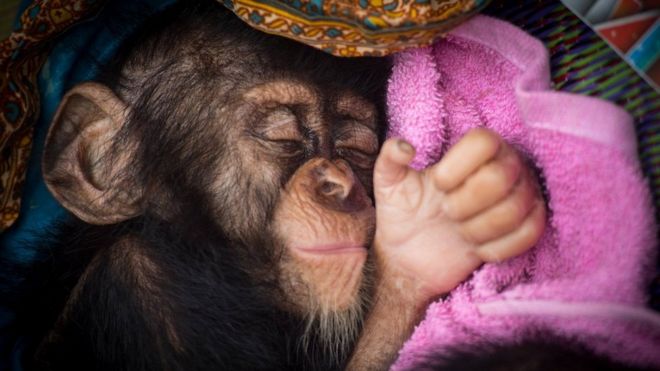
Nemley JrAn orphaned baby chimpanzee whose plight moved people around the world has died.

Nemley junior had been seized by poachers in West Africa and offered for sale but was then rescued following a BBC News investigation.

Despite dedicated care in the past few weeks, he succumbed to a series of illnesses including malaria.

A leading vet who helped care for him said that, without his mother, Nemley suffered from a "failure to thrive".

In the wild, baby chimps usually live with their mothers for at least four to five years.

During his capture, Nemley would have witnessed the killing of his mother during a poaching raid that would have seen as many as 10 adults in his family shot. The two men who were found guilty of his trafficking were released from jail 10 days ago.

Sarah Crawford, an American NGO worker who had been caring for Nemley full-time for the past three weeks, said: ''He died in my arms. He did not die alone in a cage. He really fought to stay alive. He was taking fluids until 30 minutes before he died. I am still in shock. None of us can quite believe what has happened.''


Continued

Tuesday, 29 March 2016

Pangolins, the World's Most Trafficked Mammals, Move Closer to U.S. Endangered Species Act Protection

Washington, D.C. -- Responding to a scientific petition by conservation groups, the U.S. Fish and Wildlife Service today said Endangered Species Act protections may be warranted for seven species of pangolin, one of the most sought-after and poached wild animals in the world. With more than 1,100,000 pangolins estimated to have been trafficked globally from 2006 through 2015, Born Free USA, the Center for Biological Diversity, Humane Society International (HSI), The Humane Society of the United States (HSUS), and the International Fund for Animal Welfare (IFAW) petitioned to protect the species in July 2015.

Following today's preliminary positive finding on the petition, the U.S. Fish & Wildlife Service will now invite information from scientists and the public about the pangolins' status and threats to determine whether an Endangered listing would be appropriate.

"This is an important first step in the fight to protect pangolins," said Jeff Flocken, North American Regional Director for IFAW. "Pangolins have been silently killed and trafficked for far too long. It's time to recognize the grave situation threatening the survival of the species and offer them the protections they rightfully deserve."

Tuesday, 10 March 2015

Beihai clampdown leads to significant reduction in marine turtle trafficking


Illegal trade in marine turtles in Beihai has fallen dramatically following a suit of measures including a concerted enforcement clampdown, finds monitoring of the city’s markets by TRAFFIC. 

Surveys this January found just 5 Hawksbill Turtle specimens concealed in a single retail outlet in Beihai. By comparison, in May 2014 TRAFFIC had found more than 80 Hawksbill specimens and thousands of Hawksbill shell products during just two days of monitoring. 

Beihai had previously been identified by TRAFFIC as a hotspot in the illegal marine turtle trade.

The May 2014 findings had been included with a letter sent by the Guangxi Management Authority for the Convention on International Trade in Endangered Species of Wild Fauna and Flora (CITES MA) to the Beihai municipal government, urging them to take prompt action against the trade. 

The latter responded with an intensive, multi-agency enforcement action against the marine turtle trade, involving the Industrial and Commercial Administration, Fishery Department, Forest and Security Police Forces. Between June and October 2014, 12 marine turtle cases were detected and 14 Hawksbill specimens and 959 Hawksbill shell products confiscated. 

The action was coupled with public awareness raising initiatives, measures to improve the co-operation between different enforcement agencies and regular inspections of retail outlets in Beihai.

Saturday, 24 January 2015

Bulgarian customs seize 2 million endangered baby eels

SOFIA (Reuters) - Bulgarian customs officials said on Friday that had seized two million endangered European baby eels stashed in containers.

Two alleged Chinese traffickers were detained at Sofia airport for trying to smuggle the eels in eight Styrofoam containers. They were traveling from Madrid to Sofia and declared the eels as food items, officials said.

The European eel is classified as a critically threatened species of fish protected by the Convention on International Trade in Endangered Species of Wild Fauna and Flora.

Tuesday, 4 November 2014

Thousands of animal skins seized in Senegal crackdown

A staggering 2,600 skins and other animal parts, including the remains of 12 lions, have been seized in Senegal and five suspected traffickers have been arrested and charged.

The seizure was the result of two back-to-back sting operations carried out by the Senegalese Ministry of Environment and the police, in collaboration with SALF (Sénégal-Application de la Loi Faunique), a wildlife law enforcement project funded by the Born Free Foundation. 

SALF has been carrying out undercover activities investigating a large scale international trafficking supply centre in Dakar, Senegal’s capital city. This supply centre is responsible for the illegal import of skins across the continent (from Niger, Mali, Republic of Congo and Kenya among others), and their export to Lebanon and Europe, as well as supply for local use.

The approximately 2,600 wildlife parts impounded include hyena, leopard, python and lion skins, as well as lion teeth and bat heads.

Thursday, 2 October 2014

Manta Ray Traffickers Busted in Indonesia

By Megan Gannon, News Editor | October 02, 2014 07:30am ET

Authorities in Indonesia are cracking down on wildlife traffickers who illegally sell the parts of sharks, rays and other marine creatures.

In a series of arrests from August to September, police caught four people peddling the gills, snouts and other parts of rays, among other animal products, the Wildlife Conservation Society (WCS) announced.

On Aug. 22, in Surabaya, Indonesia, authorities arrested a trader named Suep who owns the company Sido Mampir Seafood and was involved in a shipment of 28 lbs. (13 kilograms) of turtle meat and 110 lbs. (50 kg) of gill plates — nearly half of which came from manta rays newly protected under Indonesian law.


Tuesday, 22 July 2014

Illegal wildlife trade along the Burma-China border - in pictures


Alex Hofford

Monday 21 July 2014 07.00 BST


Mong-La is a notorious sin city of a border town, a lawless black hole where the trafficking of arms, drugs and women is rife.

In order to reach it, you have to travel illegally by motorbike across an international border, along a bumpy dirt track that winds its way through rubber plantations and leafy jungle. It takes around 20 minutes, and along the way you pass impromptu checkpoints set up by local people, ethnic militia and the National Democratic Alliance army, before finally being admitted by Burmese government troops.

Sunday, 28 July 2013

Turtle Trafficking Prompts Arrests in Puerto Rico

Eight people were arrested in Puerto Rico on charges of selling endangered sea turtles for human consumption, federal authorities said.

The suspects were allegedly involved in selling the meat of 15 hawksbill turtles and seven green turtles, an undercover operation revealed.

The eight individuals, all residents of Patillas and Arroyo, were taken into custody Thursday (July 18) on felony and misdemeanor charges. They face a maximum sentence of five years in prison and a $250,000 fine, according to the U.S. Department of Justice.


Sunday, 5 May 2013

Madagascar Tortoise Trafficking Rages out of Control

May 2, 2013 — Illegal trafficking of two critically endangered tortoise species from Madagascar has reached epidemic proportions, according to the Wildlife Conservation Society, Durrell Wildlife Conservation Trust, Turtle Survival Alliance, Madagascar Biodiversity Partnership, Turtle Conservancy, Conservation International, World Wildlife Fund and other groups who urge authorities to clamp down on wildlife smuggling before some species are collected out of existence.

According to the groups, more than 1,000 radiated and ploughshare tortoises have been confiscated from smugglers in the first three months of 2013 alone. In late March, 54 ploughshare tortoises made it as far as Thailand before being seized by authorities. A recent report by TRAFFIC states that the radiated tortoise is now the most common tortoise for sale in Bangkok's infamous Chatuchak wildlife market. 

The groups say that since the beginning of Madagascar's continuing political crisis in 2009, smuggling has increased by at least ten-fold due to weak governance and rule-of-law. In addition, erosion of cultural protection of the tortoises for short term monetary gain has contributed to their sharp decline. In the past, tortoises were protected by "fady" -- a local belief that harming the tortoises is taboo. However, with years of drought and increasing levels of poverty, people from regions outside the tortoise's natural range, who do not practice these types of fady, are capturing and illegally selling tortoises. 

"These tortoises are truly one of Madagascar's most iconic species," said James Deutsch, WCS Executive Director for Africa Programs. "This level of exploitation is unsustainable. Unless immediate action is taken to better protect the wild populations, their extinction is imminent."


Sunday, 22 March 2009

Turtle Traffickers Continue To Target South Carolina

By Sarita Chourey| Morris News Service
Sunday, February 22, 2009

COLUMBIA - The Chinese are feasting on South Carolina's turtle population.

They have devoured their own turtles half a world away and have turned their appetite to the Palmetto State, waging "open warfare" on the South Carolina's unprotected turtle populations, according to Steve Bennett, a herpetologist for the S.C. Department of Natural Resources.

But a bill that cleared a House committee this week, H. 3121, tries to protect spiny softshells, cooters and yellowbelly turtles by fining someone $200 for taking 10 of the freshwater animals out of the state.

The reason the state's turtles are being seized and funneled into China's exploding food market is that the life cycle of the animals is so long and their offspring are so few that it's impractical to farm them domestically, said Scott Pfaff, curator of herpetology for the Riverbanks Zoo & Garden in Columbia.

With no limits or regulations in place, commercial harvesters easily pluck them from South Carolina's waterways.

And it will have long-term effects, warn experts.

"If people go across the Savannah River, for example, going into Augusta or Aiken ... if someone were to go out there and took all those turtles in a trapping session, they're gone," said Kurt Buhlmann, a scientist at the University of Georgia's Savannah River Ecology Laboratory in Aiken.

"You're not going to see turtles there next year."

South Carolina is particularly attractive to turtle traffickers who supply Chinese markets because, unlike the rest of the region, the unregulated Palmetto State is considered a turtle free-for-all.

North Carolina, Virginia, Tennessee, Louisiana and Florida all either have some protections in place or have restrictions in the works, said Pfaff. Georgia is similarly unregulated, like South Carolina, except that it protects many more individual turtle species, he said.

Bennett noted that hunters and fishermen in South Carolina must purchase licenses from the state, but it costs nothing to take the South Carolina's turtles.

"This is being exploited," by the Chinese, he said. "With turtles, it's just open warfare."
Related Posts with Thumbnails

ShareThis