Showing posts with label Scottish Highlands. Show all posts

Wednesday, 3 September 2014

Water vole returns to RSPB site in Scottish Highlands after 20 year hiatus

The endangered water vole has returned to RSPB Insh Marshes after 20 year absence.

The small chubby rodent, which inspired the character Ratty in the children’s novel Wind in the Willows, was last seen at the reserve in Strathspey more than two decades ago and ecologists believe its reappearance is a result of work to eradicate American mink.

Predation by the American mink and habitat loss has led water vole to being the UK’s fastest declining mammal with numbers having dropped by 90 per over the last 40 years.

However, since 2011 the Scottish Mink Initiative has worked alongside organisations and landowners like the RSPB to eradicate mink from large parts of northern Scotland, including the Cairngorms National Park and Insh Marshes. This has allowed water voles to re-establish themselves in those areas.

RSPB Officer, James Silvey, said: “Water voles are extremely important mammals because they’re a really good sign of a healthy wetland environment.

Monday, 21 July 2014

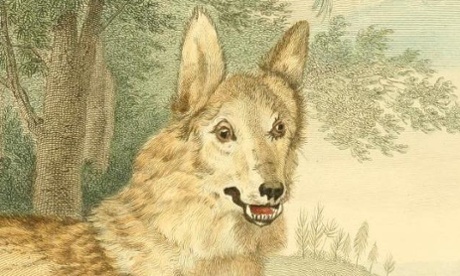
Was this the last wild wolf of Britain?

Adam Weymouth picks up the trail of the wolf folklore suggests was the last to roam wildly in Great Britain before being shot in the Scottish Highlands in 1680

Not far from the village of Killiecrankie in the Scottish Highlands, there is a densely wooded gorge through which the River Garry rushes. According to folklore, it is here (or somewhere very like it) that Sir Ewen Cameron of Lochiel shot the last wild-living wolf in Great Britain in 1680.

In May I walked across the Highlands to find out how local people feel about the idea of bringing the wolf back, a prospect that is gaining momentum and one that the UK government is obliged to consider underan EU Directive of 1992. For some this is a necessary reevaluation of a once-persecuted animal; for others it’s yet another scheme concocted by city folk who don’t understand the countryside.

I had read about Cameron’s wolf in James Edmund Harting’s 1880 classic British Animals Extinct Within Historic Times (With Some Account of British Wild White Cattle). There, in a footnote to the text, he notes that “a noble animal in a large glass case” had come up for sale in 1818, a specimen that claimed to be “the last Wolf killed in Scotland by Sir E. Cameron.” Could this really be true, I wondered?

I decided to start in 1818 and work backwards to 1680. According to Harting, the wolf had been listed as “Lot 832” in the sale catalogue of the “London Museum” or the London Museum and Institute of Natural Historyas it was properly known. This had been the brainchild of Edward Donovan, an amateur zoologist, author, artist and budding entrepreneur who had opened its doors on Catherine Street just off the Strand in 1807. But the project had cost him the colossal sum of £15,000 and within a decade he was broke. Unable to find a benefactor, Donovan had little option but to auction off his entire collection, including the wolf.

Thursday, 15 March 2012

Prongwort discovery 'unique' to the Highlands

A nature reserve in the Scottish Highlands is the only place in the world where a type of liverwort plant has been found growing.
DNA analysis confirmed northern prongwort was unique to the Beinn Eighe national nature reserve in Wester Ross.
Scientists from Royal Botanic Garden Edinburgh also said they had identified a previously unknown species of liverwort in Shetland.
Called Viking prongwort, it has also been found in a Norwegian fjord.
Beinn Eighe is Britain's oldest reserve, having been created in 1951. It is managed by Scottish Natural Heritage (SNH).
Liverworts thrive on cool, damp, north facing mountain slopes.
Royal Botanic Garden Edinburgh and SNH said the discoveries of the northern and Viking prongworts were exciting.

Wednesday, 7 March 2012

Last of red kites introduced to the Highlands dies

The rare bird is thought to be the last of more than 90 brought from Sweden as chicks nearly 20 years ago.


The last of the original red kites introduced to the Highlands from Sweden has died.
The rare bird was only a chick when it was flown by the RAF from Sweden into Kinloss in 1993.
The red kite was found dead close to Munlochy on the Black Isle at a site where he and his mate had nested for the past eight years.
Brian Etheridge, RSPB raptor monitoring officer, said: "I must say finding this bird, known to me as Red T on account of his wing tag code, made me particularly sad.
"He was in his nineteenth year and, undoubtedly, raised a lot of youngsters over his life-time.
"The wood in which he was found was in the process of being clear-felled when his body was discovered. His mate of 15 years was circling overhead, her life-long mate gone and her nest cut-down.
"I strongly suspect that Red T will be the last survivor of the birds that were born in Sweden. Nineteen is a very old age for a kite particularly in this area.
"Unfortunately illegal poisoning, particularly on the grouse moors south of Inverness, continues to take a terrible toll on our red kites and other birds of prey."
More than 90 red kites were introduced into the Black Isle between 1989 and 1993.

Sunday, 6 November 2011

Planners put rare bird’s future before 70 homes

THE capercaillie gained a victory yesterday when officials said that proposals for more than 70 homes in the Highlands should be refused because of the impact on the endangered bird.

Planners for the Cairngorms National Park said that proposed mitigation measures at the site of 77 homes at Boat of Garten in Strathspey would not significantly reduce the risk to the bird.

Millions of pounds have been given to schemes to boost populations of the capercaillie, which is frequently on the endangered list.

For the full story, pick up a copy of today’s Press and Journal or read our digital edition now

Monday, 25 July 2011

Pilot whales die after Highland beaching (via Dawn Holloway)

Fifteen whales have died and many others have become stranded at Kyle of Durness, on the north Highland coast.


The Maritime and Coastguard Agency (MCA) said the whales were believed to be from a pod of as many as 60.

The long-finned pilot whales may have been hunting prey or had sought a place to rest.

Rescuers trying to save the pod said the whales had perished when they stranded at low tide. About 35 beached as the water in the sea loch receded.

Some 20 of them were refloated to deeper water using inflatable pontoons as the water returned, but the remainder had died, the British Divers Marine Life Rescue (BDMLR) charity said.

'Narrow channel'
It said many of the whales had stranded on their sides, on top of each other and upside down and were breathing in sand.

A further 20 are thought to be in deeper water and not in imminent danger.

On Friday three pilot whales, including a calf, beached on the shore of the loch.

A Royal Navy bomb disposal team training in the area offered its help in any rescue effort.

Scottish SPCA inspectors also headed for the scene.

Highland Council countryside ranger Donald Mitchell and nine coastguard volunteers monitored the situation.

Mr Mitchell said that at low tide only a narrow channel of sea remained.

Kyle of Durness opens out into Balnakeil Bay.

On Friday, Charlie Phillips, a Whale and Dolphin Conservation Society (WDCS) field officer, said: "It is going to be tricky.

"It is a remote and difficult place to get to."

Mr Phillips added: "The whales may have come in from the Pentland Firth, following prey or trying to find somewhere to rest."

Marine strandings
He said a young female pilot whale was found at Scourie, in Sutherland, a few weeks ago.

SAC vet Dr Andrew Brownlow of the Scottish Agricultural College (SAC), who leads the Scottish Marine Animal Strandings Scheme, drove to the scene.


The college said: "Should any of the whales fail to make it back out to sea and do not survive, Dr Brownlow will lead post mortem examinations with the aim of identifying what has caused them to come ashore.

"This enables the Strandings Scheme to monitor trends in causes of marine strandings which in turn allows identification of any new or developing hazards to marine mammals in Scottish waters."

In May, two pilot whales were found dead in a Hebridean loch after experts feared more than 60 of the animals had been at risk of becoming beached.

The pod had got into difficulty in Loch Carnan in South Uist.
http://www.bbc.co.uk/news/uk-scotland-highlands-islands-14258149

Wednesday, 8 July 2009

The butterfly only visible at 1,500ft

Trying to see all Britain's 58 species of butterfly in a single summer is not easy – quite a few are found only in isolated localities – but only one really involves the sweat of your brow and the ache of your leg muscles.

The mountain ringlet is our one true montane or Alpine butterfly, for it is restricted to mountainsides in the Lake District and in the Scottish Highlands, usually at an altitude of between 1,500 and 2,500ft. Its flight period is a short fortnight or so from mid-June to early July, and when the sun goes in, so does the butterfly – it disappears into the grass in cloudy weather. All of which makes finding Erebia epiphron something of a challenge, and so last week, in The Independent's Great British Butterfly Hunt, we enlisted expert help, in the shape of two northern representatives from the charity Butterfly Conservation, Dave Wainwright and Martin Wain.

The principal problem was to locate an attractive insect, but one that did not stand out against its background and was no bigger than a wristwatch, in the vast and seemingly featureless expanse of the Lake District's high fells. We were fortunate in that we had a series of precise grid references where mountain ringlets had been seen in the past, and we based our search on them.
The area we chose to look was south of the Langdale Pikes, starting from the Wrynose Pass which leads from Langdale over the mountains into Eskdale. We began our hike up from a well-known Victorian landmark, the three counties' stone (marking the boundary of Lancashire and the old counties of Westmoreland and Cumberland), on a hot and sultry afternoon which necessitated a constant water intake.

We climbed steadily for about an hour and a half, and although we saw various butterflies, they were meadow browns, or small heaths, or painted ladies. We also spotted fascinating mountain birds – a pair of ravens, a wheatear, and several meadow pipits, and Dave Wainwright found and showed us a meadow pipit's nest, complete with two brown spotted eggs – but nothing resembling a mountain ringlet came into view, even as the air got cooler and we began to see the Lake District's peaks, with Skiddaw in the far distance.

Suddenly there was a shout from Martin, and I spotted him running across the slope, followed by Dave, who seemed to be trying to head something off. It was a mountain ringlet – they said. It might have been the man in the moon for all I could see of it, and as we carried on slogging upwards with nothing more appearing, and the sweat ran down my brow, I began to feel we would be out of luck.

But then there was another shout, from both men, and I spotted a little whirring ball of black with an orange halo around it. It was a mountain ringlet, buzzing over the grass, and then there was another, and another.

When we sat down to take a breather, we found there was a mountain ringlet resting in the grass stems just behind us, and we were able to look closely at its brown wings, each with an orange band containing "eyespots", which give the illusion of an orange glow when it flies. Eventually I had the best moment of all – a mountain ringlet on my hand, which seemed reluctant to fly off. I asked Dave how high we were, and the reading on his GPS said 614 metres – which is 2,014ft. On my hand was one of the hardest of all of our butterflies to see, and beyond was a staggering view of the Langdale Pikes with the Langdale Valley underneath. It was a very sweet moment.
Earlier, Dave and Martin had found us five more species of butterfly. On Arnside Knott, a limestone hill in north Lancashire, they led us to two spectacular species, the dark green and the high brown fritillaries (which we will profile at a later date) as well as the grayling and the northern brown argus, and at nearby Meathop Moss, just on the edge of the Lake District National Park, they found us the large heath (on which Dave – Dr David, to give him his proper title – is the world expert). With the mountain ringlet these six new species of butterfly brought our total seen to 41 – there are 17 to go.

Mountain ringlet Species 30 of 58 Erebia epiphron
Perhaps the hardest to see of all our butterflies, for this is a true mountain species and to find it means a hike into the hills. Dark brown, with a row of black-centred orange eyespots on the wings, it can be seen fluttering over the grass as low as 600ft in parts of the Lake District, but it is commonest between about 1,500 and 2,500 ft and has even been seen at the 3,000ft level. Most visible in strong sunshine.

Larval food plant: Mat grass, a typical heath grass of mountain sides.

Where seen: Mountain sides and mountain tops in the Lake District and in the Scottish Highlands.

Current conservation status: Difficult to assess owing to the remoteness and unpredictable weather of its mountain habitats, but its range appears stable.

31. Grayling Hipparchia semele
A butterfly of dry places such as heaths and clifftops which always rests with its wings closed, so its pretty brown and yellow upper-wing pattern is hard to glimpse; but its orange and yellow underside is attractive in itself, yet also excellent camouflage. There is concern about its dwindling numbers.

Larval food plant: Grasses such as sheep's fescue, bristle bent and marram grass.

Where seen: Commonest on cliffs, coastal heaths and sand dunes.

Current conservation status: A serious decline in recent years: 59 per cent down since 1976.

32. Northern brown argus Aricia artaxerxes
This is the northern version of a very similar species, the brown argus; although both are brown with orange wing bands, they are members of the blue family. The northern brown argus occurs from Lancashire northwards.

Larval food plant: Common rock rose, which has a lovely yellow flower.

Where seen: Sheltered sunny hillsides in the North and Scotland.

Current conservation status: 54 per cent down since 1979.

33. Large heath Coenonympha tullia
Another specialist: the large heath is our peat-bog butterfly. The dark English form, pale with spotted underwings, looks almost like a different species from the Scottish variety which is a much paler orange and has underwings without spots.

Larval food plant: Hare's tail cotton-grass or common cotton-grass.

Where seen: Boggy habitats in northern Britain, Ireland, and a few isolated sites in Wales and central England.

Current conservation status: Severe decline in range in recent years (more than 40 per cent).


Michael McCarthy
http://www.independent.co.uk/environment/nature/the-butterfly-only-visible-at-1500ft-1734418.html
Related Posts with Thumbnails

ShareThis