Showing posts with label shark cull. Show all posts

Friday, 23 January 2015

Just one surf club supported Australia's shark cull

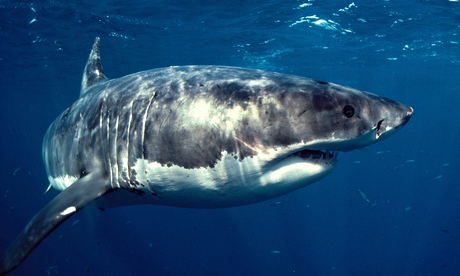
No Great Whites have been caught in the cull

Just one local surf club supported Western Australia’s controversial shark cull The Australian Guardian has reported.

The newspaper was shown documents relating to the 23 stakeholders, including government departments and Surf Life Saving WA, consulted about the ban, which showed just one, The Margaret River boardriders club, supported all aspects of the proposed cull.

The Government records show 41 groups were consulted about the proposal in December 2013 and after a four-month freedom of information application process lawyers for Sea Shepherd were given documents relating to 23 organisations the charity believed would support the policy. 

Sunday, 26 October 2014

WA abandons shark culling program, but reserves right to kill again

Western Australia’s premier, Colin Barnett, announces application for baited drum line approval has been withdrawn


theguardian.com, Friday 24 October 2014 04.11 BST

The Western Australian government has conceded defeat over its plan to systematically trap and kill large sharks near popular beaches, after scrapping a proposal to implement the strategy over the next three years.


Colin Barnett, the WA premier, confirmed on Friday that WA had withdrawn its application to the federal government for the shark culling to go ahead.

However, WA has struck an agreement with the federal government that will enable it to implement the policy without approval from Canberra in emergency situations of “imminent shark threat”. This will mean the capture of any shark that is “posing a threat” or that has just attacked someone.

Sunday, 14 September 2014

Shark cull rejected by Western Australia Environmental Protection Authority

No baited drumlines will be set this summer after concerns over program’s impact on great whites leads to EPA recommendation


theguardian.com, Thursday 11 September 2014 09.03 BST

Baited drumlines will not be deployed in Western Australia this summer after the Environmental Protection Authority recommended that the state’s controversial shark culling program not be extended, citing “a high degree of scientific uncertainty” about the impact of drumlines on the great white shark population.

Under the WA government’s proposal – which followed a three-month trial earlier this year – more than 70 hooks would be strung about 1km off popular beaches in Perth and the state’s south-west each summer for the next three years.

The state government’s own environmental assessment estimated about 25 great whites, a protected species under state and commonwealth regulations, would be snared on the hooks.

But on Thursday the EPA chairman, Paul Vogel, said a CSIRO review of the government’s estimates “stated there remained too much uncertainty in the available information and evidence about the south-western white shark population, population trends and the bycatch from commercial fisheries”.

Sunday, 6 July 2014

WA shark cull condemned by global group of marine scientists

Expert submission to WA's EPA says lethal program is ‘not scientifically supported’ and will damage ecology of the ocean

Oliver Milman

theguardian.com, Friday 4 July 2014 07.44 BST


Shark cull policy

The 13-week trial involved the setting up of baited hooks, attached to drumlines, 1km out from more than 70 beaches in the Perth and southwest WA area. Photograph: Sea Shepherd/AFP/Getty Images

Western Australia’s strategy of catching and killing sharks via baited hooks is “indiscriminate” with no evidence that it will make the ocean safer for swimmers and surfers, according to a group of 301 scientists from around the world.

In a submission to WA’s Environmental Protection Authority, the experts say the lethal program is “not scientifically supported” and will damage the ecology of the ocean.

The submission, backed by marine scientists from countries including Australia, the UK, the US and Spain, states: “The impacts on targeted wildlife and regional ecosystems are unquantified and have the potential to be significant.

“Given the range of non-lethal, demonstrably effective strategies available to mitigate risk and improve our understanding of shark distributions and behaviour, we need to move beyond lethal options.”

Thursday, 8 May 2014

More than 170 sharks caught in Australia cull policy

2 hours ago

More than 170 sharks were caught during a controversial cull policy in Western Australia following a spate of fatal attacks, figures showed Wednesday, with 50 of the biggest ones destroyed.

The policy, in place around popular west coast beaches, was given the green light in January after six fatal attacks in the past two years, angering conservationists who claim it flies in the face of international obligations to protect the great white shark.

The state government said the aim was to reduce the risks to water users. Baited drum lines with hooks were set one kilometre (0.62 miles) offshore at the busiest beaches for a trial period from January 25 until April 30.


Monday, 21 April 2014

A shark cull divides a nation

By Clarissa Sebag-MontefiorePerth, Australia
This year, for the first time, efforts have been made to catch sharks off the shore of Western Australia and to shoot the biggest of them. The state has applied for permission to continue the programme for another three years - but it's a divisive policy with many bitter critics.

Elyse Frankcom was diving with dolphins in the vast waters of Western Australia when she felt the jaws of a great white shark clamp around her legs.

"It just hit me," remembers the 22-year-old, who was violently pulled down from the surface by the 3.5m (11ft) shark in late 2010. "I tried to punch and push it. I reached down to my foot and switched on [my shark shield]. That is the last thing I remember doing."

The shield, which emits an electrical field designed to repel sharks, may have forced the animal to retreat, but when it released its grip, she sank. A tourist dived down to retrieve her, hauling her, unconscious and bleeding, to the surface.

It took Frankcom months of physiotherapy to learn to walk again. The shark's jaw cut through the bone on one leg and tore muscles on the other - its teeth were found embedded in both. For weeks every step felt like "hitting [my legs] with a baseball bat".
Frankcom has made a slow recovery

Yet, despite the pain and the narrow escape, Frankcom is one of thousands of Australians protesting against Western Australia's controversial culling of sharks.

Wednesday, 9 April 2014

Western Australia applies to extend shark cull for three years

Catch-and-kill policy will run from November to April each year until 2017 if Barnett government receives approval from Coalition

Brendan Foster

theguardian.com, Tuesday 8 April 2014 09.55 BST

The WA government wants to extend its controversial shark cull for another three years.

The catch-and-kill policy, which allows hunters to kill sharks longer than three-metres long off the coast off WA, started on 26 January.

A spokesman for the federal environment minister, Greg Hunt, told WAtoday that the Barnett government had applied to continue to drop drum lines off the WA coast. The WA government submitted a 149-page submission to Hunt's office.

If given approval by the federal government, the cull would be from November to April each year until 2017.

The WA government’s current agreement with the Abbott government lasts three more weeks.

It has to get approval from the federal environment minister to continue the drumline policy, as great whites are a protected species.

Under the new proposal, 72 baited lines would be placed off Perth and south-west beaches.

Tuesday, 25 February 2014

Western Australia's shark cull will hit breeding stock of great whites

Listen to the scientific community and look at the evidence from Hawaii to South Africa. Killing sharks doesn't work

Nicholas Ray

theguardian.com, Sunday 23 February 2014 22.00 GMT

Nearly a month since the first shark was killed in Western Australia's controversial cull, and with the recent release of attack statistics, the decision still appears to be drastic.

Global opposition from scientists, conservationists and even shark attack victims shows there is little justification for these actions.

The Australian public is up in arms over the way the country is being run and the way their wildlife is being treated, with protests in the cities of Perth, Sydney, Adelaide and the beaches of Victoria and Queensland.

The prime minister, Tony Abbott, and environment minister, Greg Hunt, have come under fire in recent weeks for their apparent lack of concern for the environment and have faced calls for a redress of the shark kill policy.

Thursday, 30 January 2014

Western Australia shark cull protesters remove bait from drum lines

Activists have taken action after the first shark is caught, shot and taken out to sea as part of controversial cull program

Shark cull activists have removed bait from drum lines in Western Australia's south-west after the first shark caught on the line was killed on Australia Day.

A three-metre female tiger shark was shot four times in the head, dragged out to sea and dumped after being caught a kilometre off Meelup Beach less than a day after the drum lines were set.

The fisherman who took the tender for the south-west said the shark was a threat to public safety and had to be removed.

"I'll continue to do it and then hopefully later we'll perhaps be able to take some samples or contribute in some way to knowledge and better understanding," he told Fairfax radio on Monday.

The fisherman, who asked not to be named, said protesters had kept away from his vessel and he believed the shark died quickly.

"I was satisfied that I managed to get the rounds in the right place and we dispatched it as quickly as we possibly could," he said.

But the president of West Australians for Shark Conservation, Ross Weir, said it was an inhumane way of killing the animal and about 22 activists were keeping an eye on the fisherman's activities.

"They have been out on the water and they have removed baits from the lines," he said.

Weir said the fisherman did not have experience with sharks and his .22 rifle was not an appropriate gun.

Sea Shepherd Australia’s managing director, Jeff Hansen, said it was a cruel and painful death for the shark, which could have been stuck for hours.

"How can we condemn Japan for the indiscriminate killing of whales and dolphins, and do this to our precious protected marine life here in Australia?" he said. "This method is utterly cruel and inhumane and these animals can take many hours to die."


Wednesday, 29 January 2014

Australia's Shark Cull Begins In Controversial Bid To Stop String Of Deadly Attacks

By ROD McGUIRK 

CANBERRA, Australia (AP) — A large shark was killed off the west Australian coast on Sunday, the first under a contentious new state government culling policy aimed at curbing fatal shark attacks.

The Western Australia government on Saturday began placing baited hooks on drum lines off popular beaches in the state capital Perth and to the south to kill white, bull and tiger sharks over three meters (10 feet) long.

The policy is a response to seven fatal shark attacks in Australia's southwest in three years.

Government spokesman Simon Beaumont said the first shark was killed by a government-contracted commercial fisherman on Sunday morning off Castle Rock near the town of Dunsborough, 250 kilometers (155 miles) south of Perth.

Tuesday, 21 January 2014

Western Australia's shark cull faces legal challenge from conservationists

Opponents claim the plan to bait and kill sharks could breach state and federal laws, as well as international agreements


theguardian.com, Monday 20 January 2014 07.34 GMT

The Greens and animal welfare groups are formulating a legal challenge to the Western Australian government’s shark cull, claiming the move would fall foul of state, federal and international obligations.

Lawyers for a loose-knit coalition of groups, including the Greens, the Conservation Council and Western Australians for Shark Conservation, are looking at whether the plan to trap and kill large sharks is legally possible.

At a state level, the cull policy could run contrary to the Wildlife Conservation Act of 1950, as well as the Fish Resource Management Act of 1994.

Federally, the environment minister, Greg Hunt, has to exempt WA from the strictures of the Environmental Protection and Biodiversity Conservation Act for the cull to proceed. The act requires a federal assessment to be made when endangered creatures – such as great white sharks – are placed at risk.

A federal department of environment spokesman said: “The Western Australian government has not referred the project, however an exemption has been requested. The minister’s decision will be announced in due course.”

Monday, 1 October 2012

Western Australia to kill sharks threatening beachgoers

Western Australia has set out measures aimed at reducing the risk of shark attacks at the state's beaches, after a string of deadly incidents.

The A$6.85m ($7.12m, £4.41m) package includes funding for catching and if necessary killing sharks "posing an imminent threat" to beachgoers.

Other funding is allocated to tagging and research programmes.

There have been six shark attacks on swimmers and surfers in the state this year, five of them fatal.

The most recent was last month, when a man suffered abdomen and arm injuries in an attack about 1,000km (600 miles) north of state capital Perth.

The series of attacks has prompted calls for a shark cull, but the authorities have ruled out that option following protests from environmental groups.

Several of the recent attacks are believed to have involved great white sharks, which are protected.

Continued: http://www.bbc.co.uk/news/world-asia-19739596
Related Posts with Thumbnails

ShareThis